
Commercial Acrylic Roof Coatings in Murrieta, CA
Review acrylic roof coatings in Murrieta, CA, including surface preparation, slope, drainage, application weather, repair details and maintenance needs.
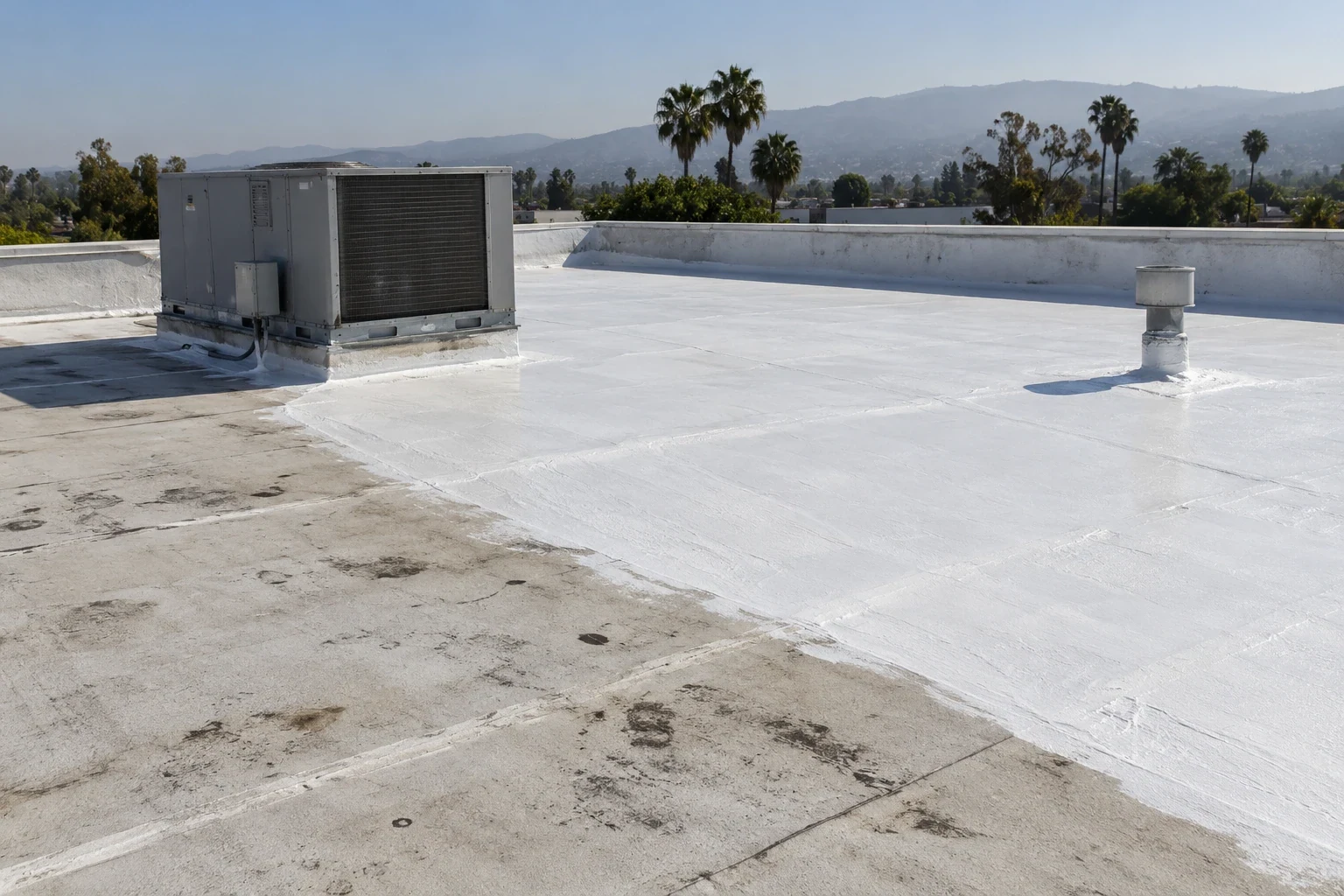
A water-based coating needs time and suitable conditions to dry into its specified film. That makes roof slope, weather and work sequence part of the selection, not details to settle after material arrives. Murrieta’s climate assessment projects 26 to 36 days annually at or above 105.1°F by 2050, compared with five days a year in the 1950 to 2005 historical period. The figures use a defined heat threshold and 2018 projections; they are not a daily application forecast. We inspect the existing roof and review product limits before proposing acrylic restoration. A roof inspection establishes the substrate, seams and drainage that the coating would cover.
Surface Preparation: Confirm Adhesion Before Ordering
A coating can adhere only when the roof surface is compatible, clean and sufficiently stable. We identify the existing membrane or surfacing, look for loose granules, chalking, oil, biological growth, open seams and previous coatings. Cleaning may expose a repair that was hidden by dirt, so the crew checks the surface again before primer or coating is applied. A test patch can show whether the selected system bonds to the prepared roof. We also sample or map moisture when stains or soft insulation raise concern; coating over wet layers does not remove the trapped water. If the substrate fails testing, we consider removal or replacement instead of adding another finish. A restoration review can set the preparation and repair boundary, while a cover-board inspection may help where a compatible substrate is needed. The product specification should name cleaning, primer, reinforcement and target film thickness.
Slope: Protect the Film From Standing Water
Acrylic coatings are commonly used on roofs with positive drainage; prolonged ponding may not suit every product. We check the manufacturer’s stated limits against measured slope, outlet location and the time water remains after rain. A coating does not make a low area drain. If the roof needs tapered insulation, drain work or a deck correction, those changes should be designed before restoration. In Menifee, the four roads associated with nonresidential uses are McCall, Scott, Ethanac, and Newport. That describes planning areas, not building roof conditions, so a site inspection still has to find the actual low points and discharge route. A drainage assessment can map the water path, and silicone coatings may be compared when a different exposure or ponding requirement is present. Product data should support the choice. We keep overflow scuppers, drain bowls and equipment paths open as part of the coating detail.
Application: Allow Each Coat to Reach Its Required Film
Acrylic systems are often installed in multiple passes, with the specified coverage and dry time between coats. The crew tracks the amount applied so the finished film meets the product requirements rather than relying on color alone. Wind, humidity, dew and heat can change drying, and an incoming rain can damage a film that has not cured enough. We review the forecast and manufacturer limits before opening each work area. At corners, seams, drains and penetrations, reinforcement may be required; the details need to remain smooth enough for water to reach the outlet. Temecula’s Old Town district extends about one mile from north to south, a compact setting where pedestrian access and deliveries can affect a project schedule. The roof and property contact determine the actual staging route. A phased work plan can protect active areas and mark when staff may return to the roof.
We monitor the amount applied across the roof rather than relying on a crew’s visual estimate. A wet-film gauge can check thickness during application, while final dry-film performance depends on product instructions and the number of coats. We note when each area is coated and whether a return pass is required. At seams and changes in plane, fabric reinforcement can add strength if the chosen system calls for it, but it needs full embedment and a smooth transition. The edge of each day’s work should be feathered or terminated according to the product detail so the next pass can bond. After drying, we look for pinholes, skips, blistering or a change in texture that signals inconsistent coverage. If conditions shift before the next coat, the crew rechecks the surface instead of applying over dust or dew. This creates a traceable record of the work boundary and material sequence.
Edges and Penetrations: Finish the Whole Assembly
Water can travel beneath a coating if a seam, termination or curb is already open. We repair membrane joints, replace unsound sealant and reinforce transitions before field application. A coating should stop at a designed termination, not end in the middle of a wet roof area. We check the base of rooftop units, pipe supports, skylights and parapets for movement and enough surface to receive flashing. If a curb is loose, a coating cannot correct the support. A curb and support check identifies that condition before the roof is closed. SPF is another option when a roof requires a designed insulation or slope system; foam roofing has its own substrate and protective-coating requirements. We describe which assembly is proposed and do not mix product details without confirming compatibility. At closeout, the owner should receive photographs of each transition and the sections that were coated.
Maintenance: Compare the Finished Surface Over Time
Project cost depends on cleaning, repairs, primer, reinforcement, coating quantity, access and how many roof details need separate work. A proposal should show those items and the target coverage so an owner can compare restoration with replacement. After application, retain product information, installed thickness, date, photos and any restricted-access instructions. Maintenance inspections should look for erosion, pinholes, cracking, peeling, ponding, drain blockage and cuts from later trades. If a new leak appears, trace it to a seam or penetration rather than assume the coating field has failed everywhere. A maintenance schedule can document repeat checks, and a photo report can map changes by roof section. A Menifee roof review should record its own slope, runoff and surface condition. Recoat timing follows product requirements and observed wear, not a single calendar interval for every property. We also record any changes made by HVAC or electrical trades that could affect the coating after the inspection. List substrate preparation, cure conditions, and the daily weather hold point for each coating area.
Commercial Roofing Questions
Can acrylic coating be used where water ponds?
Some products have specific ponding-water criteria, but many acrylic systems are intended for roofs with positive drainage. We measure the roof and compare the conditions with the selected product data before recommending a coating.
How does weather affect acrylic coating work?
Temperature, humidity, dew, wind and rain affect application and drying. We schedule work within the manufacturer’s limits and protect each section until the film can handle expected conditions.
Does an acrylic coating repair an open seam?
The seam should be repaired and prepared as required before the field coat is applied. We check the membrane beneath it and use reinforcement where the product detail calls for it.
How do we know if the old roof can accept acrylic?
We identify the substrate, remove contamination, test adhesion and check for moisture or loose material. If the surface is unstable or incompatible, we recommend a different scope rather than coat over it.
What should be included in the coating closeout?
Keep product data, coverage or thickness records, work dates, photographs and any repair notes. The maintenance team can use those details to inspect transitions and compare wear at later visits. We include the roof section and repair location in the record.
Related Roofing Work
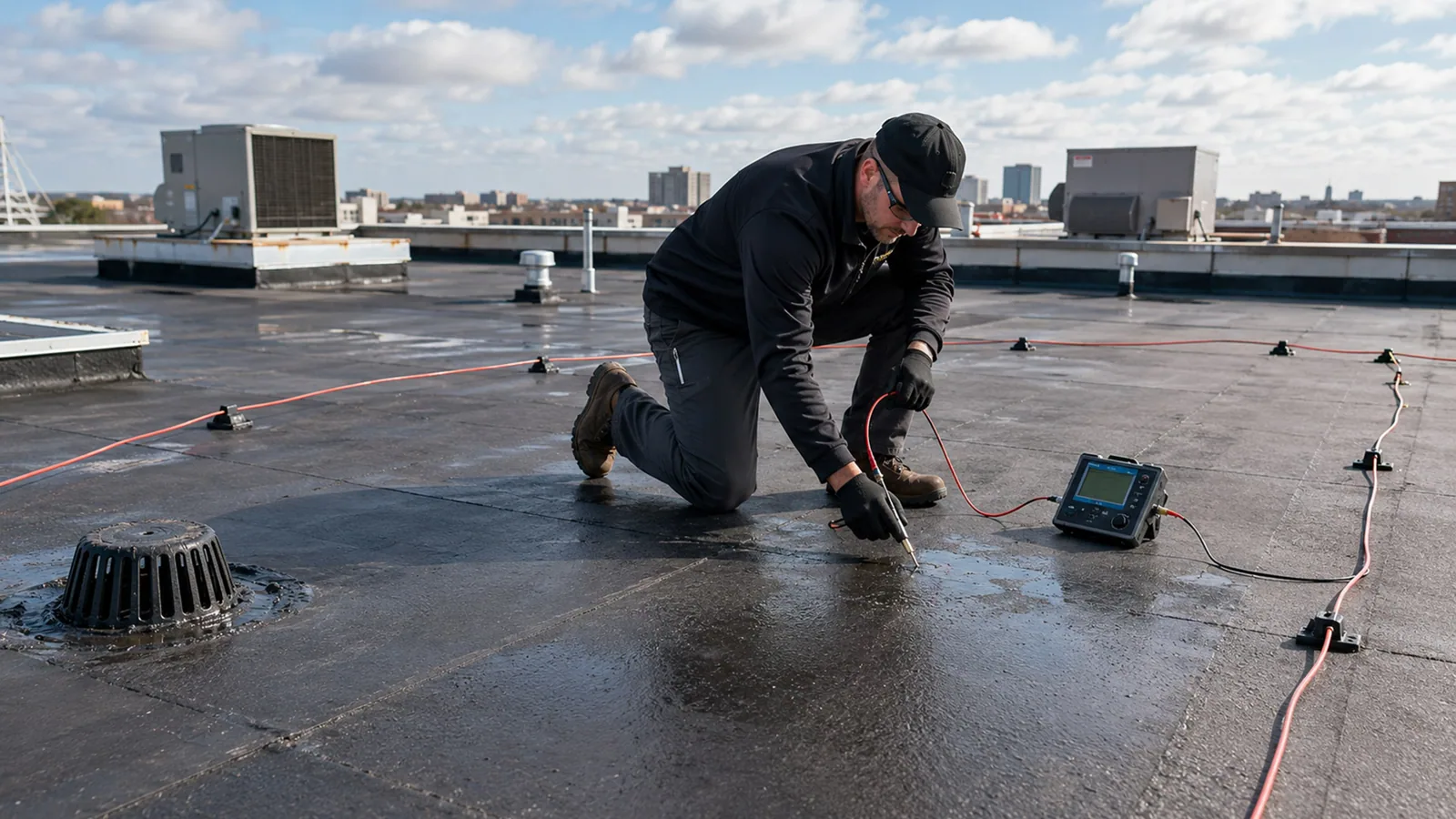
Commercial Roof Inspection in Murrieta, CA
See how this work fits the roof, the building and the schedule.
Learn More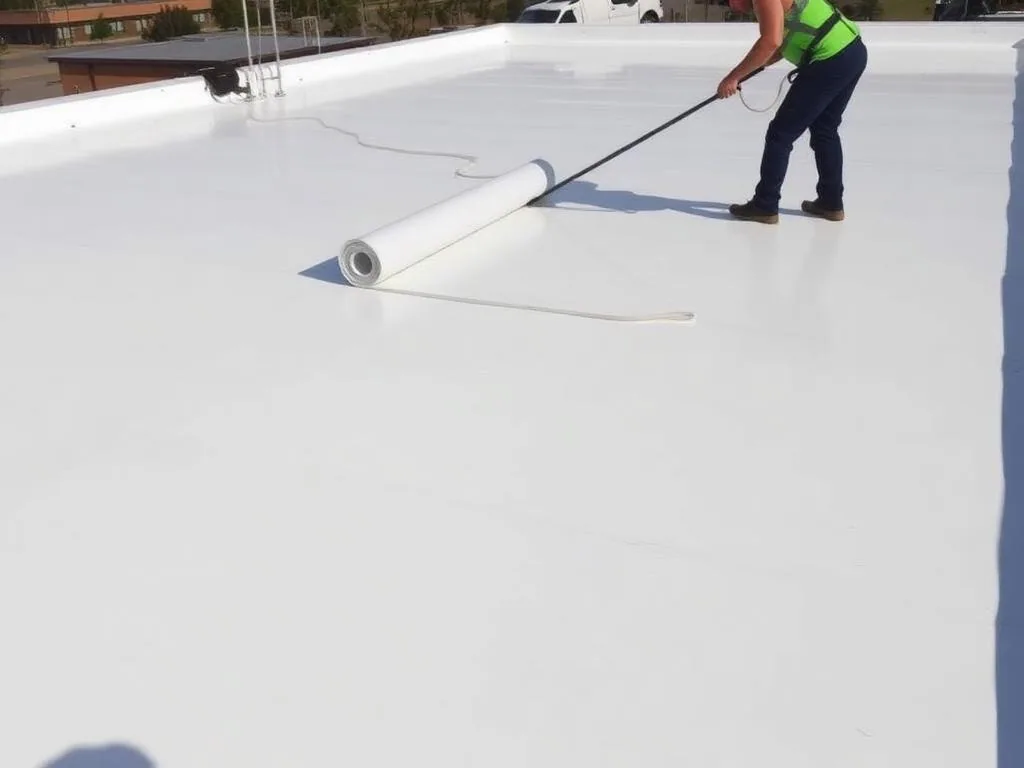
Commercial Roof Coating Restoration in Murrieta, CA
Related scope, access notes and questions to ask before work starts.
Learn More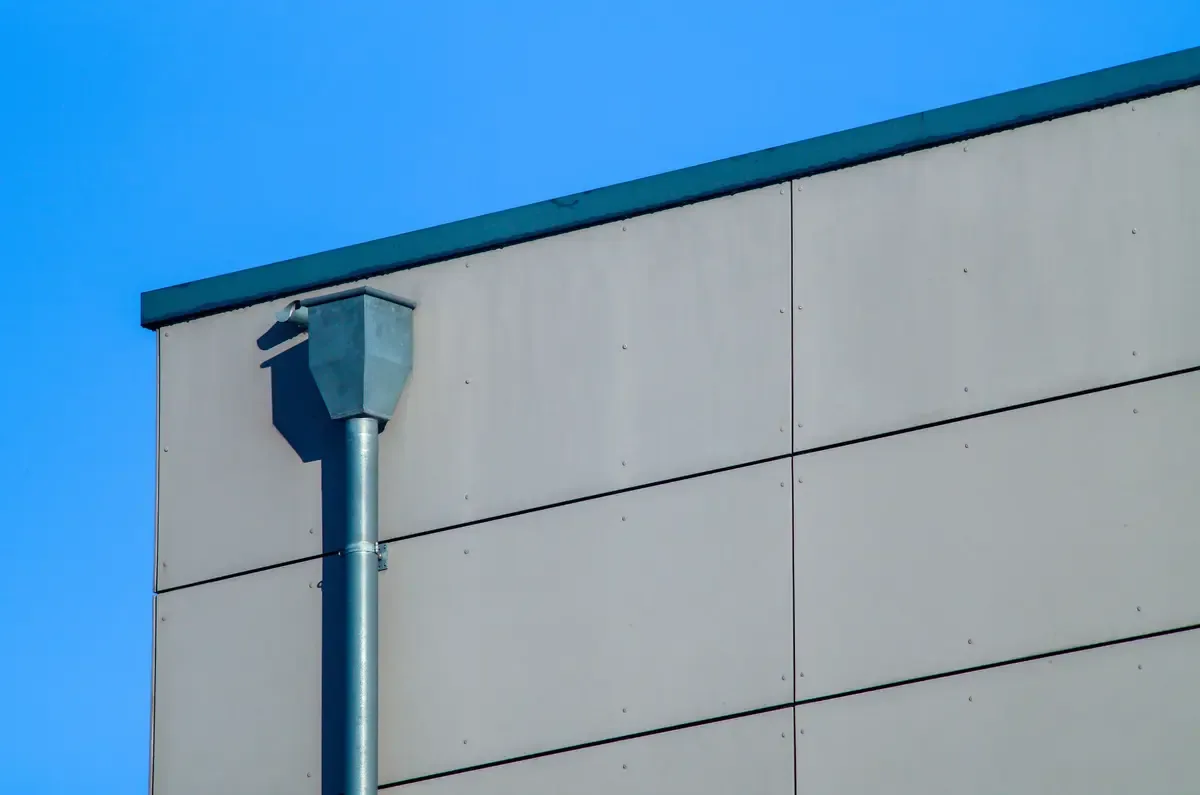
Commercial Roof Drains and Scuppers in Murrieta, CA
Read the full description and the questions owners ask about it.
Learn More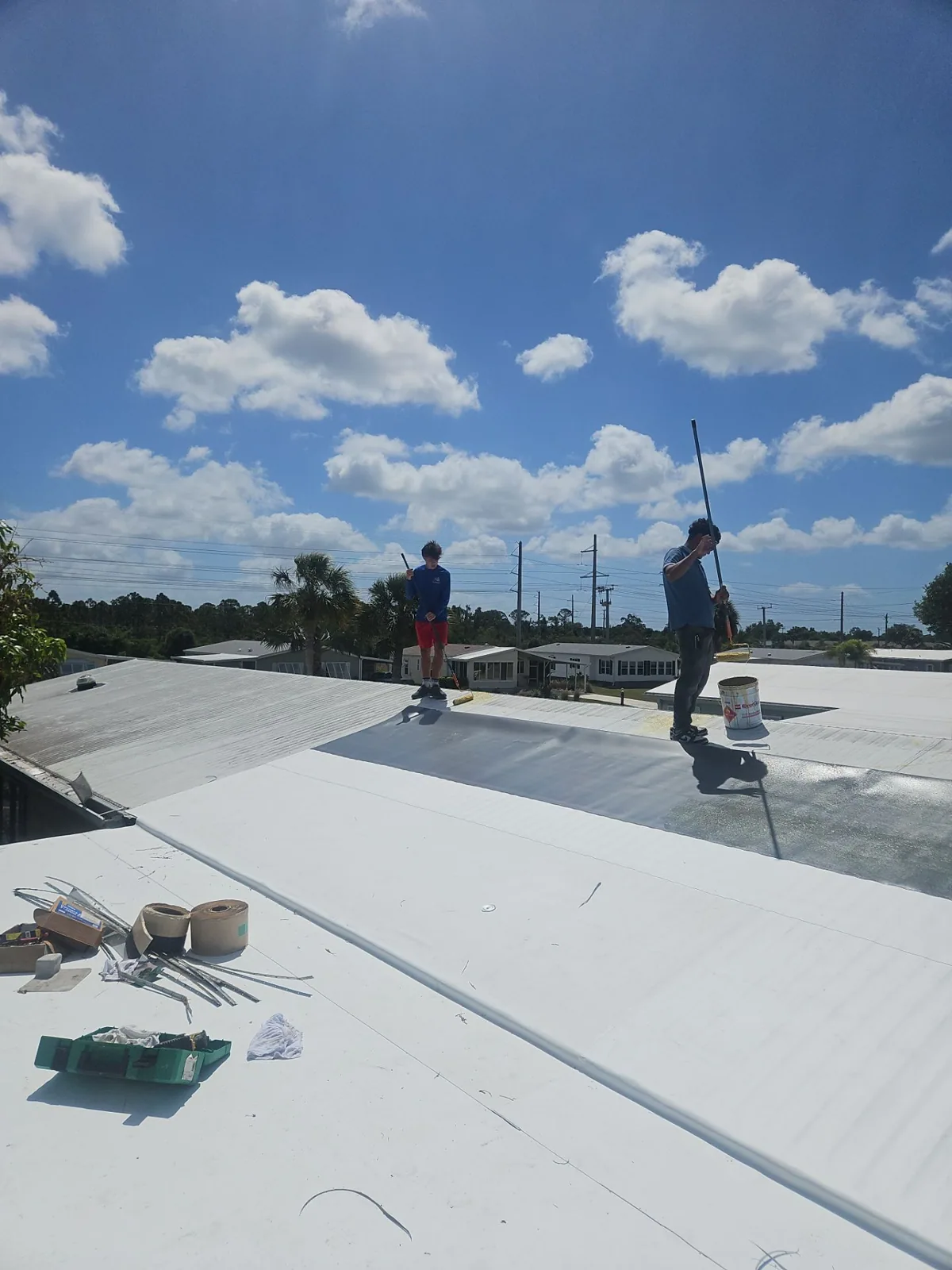
Commercial Silicone Roof Coatings in Murrieta, CA
See how this work fits the roof, the building and the schedule.
Learn More
Occupied-Building Commercial Reroofing in Murrieta, CA
Related scope, access notes and questions to ask before work starts.
Learn More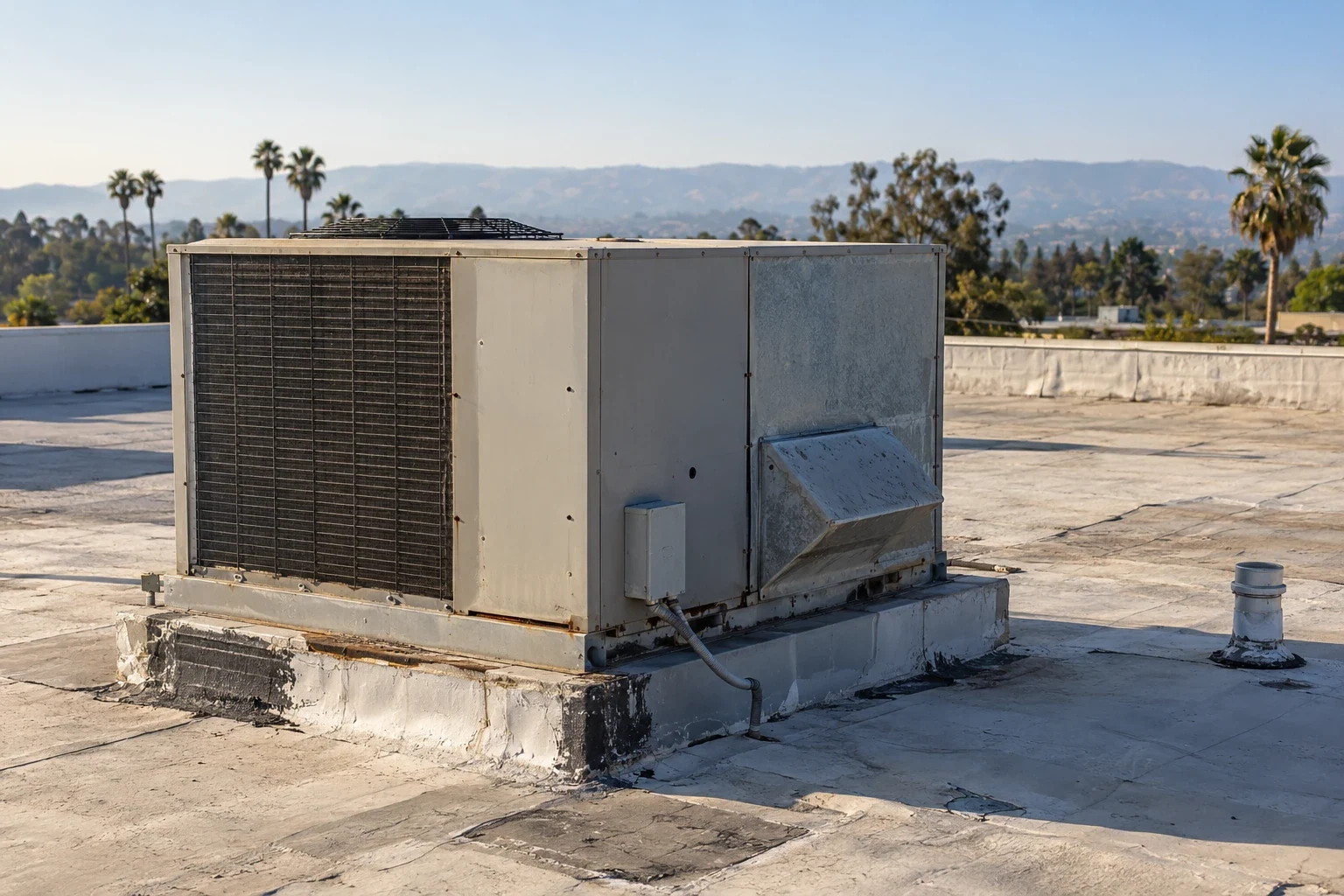
Rooftop Equipment Curbs and Supports in Murrieta, CA
Read the full description and the questions owners ask about it.
Learn MoreEvaluate Acrylic Coating in Murrieta
Arrange a roof inspection to test surface compatibility, measure drainage and plan an acrylic coating work window.