Commercial EPDM Roofing in Murrieta, CA
Evaluate EPDM roofing for Murrieta commercial properties, including seams, attachment, flashing, drainage, repair choices, installation access and upkeep.
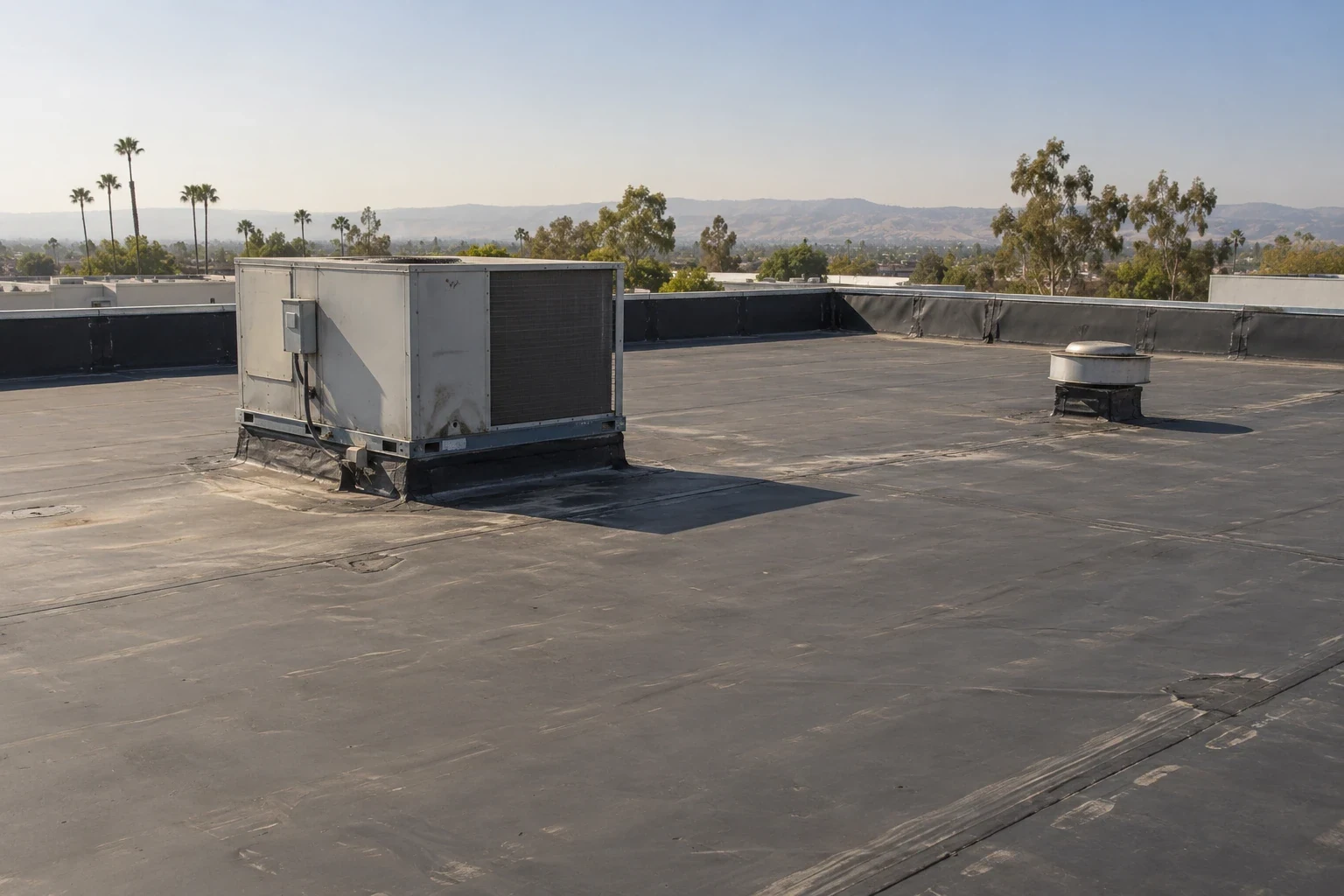
Black membrane in the field does not tell an owner whether an EPDM roof is still serviceable. The decision turns on seam bond, attachment, flashing, insulation and how the roof handles water. Murrieta’s climate appendix gives a historical precipitation average of 15 inches a year for 1950 to 2005 and a scenario range of 15 to 21.4 inches annually by 2099. The range comes from scenario modeling rather than a forecast for this roof or a description of a recent storm; drainage and edge review still belong in the material conversation. We inspect the assembly and compare localized repair, recover and replacement before recommending another layer. A roof condition review starts that comparison with the installed system.
Membrane Layout: Check How the Sheet Is Held
EPDM is a flexible synthetic-rubber membrane supplied in sheets that are joined with seam tape or adhesive, depending on the system and detail. The assembly may be fully adhered, mechanically attached or ballasted where design conditions allow. Each approach changes how the deck is prepared, how the sheet moves and where perimeter restraint matters. We identify the membrane thickness, insulation, cover board and attachment pattern before laying out a repair. A wrinkle near a wall may be excess sheet, movement or a detail pulling away; the inspection looks at the condition around it before a patch is selected. Lake Elsinore extends on both sides of I-15 and State Route 74, with the lake itself covering about 3,000 acres. That local geography is not a roof fact, but it makes stormwater routes a practical part of nearby commercial property reviews. A recover assessment determines whether the existing assembly can stay below a new roof or should be removed.
Seams: Repair the Bond, Not Just the Visible Edge
EPDM seams are not heat-welded like thermoplastic membranes. They rely on a clean, prepared surface and compatible tape or adhesive, with pressure applied according to the product instructions. Dirt, moisture, old sealant or a rushed lap can interrupt the bond. At a repair, we remove material that prevents adhesion and check whether the sheet beneath remains sound. Patches need rounded corners and adequate overlap onto prepared membrane; a narrow bead of sealant is not a replacement for a sound seam detail. We inspect field joints, T-joints, penetrations, corners and perimeter terminations as separate conditions. Owners can compare TPO seam welding and PVC assemblies when repair method, chemical exposure or future service changes the material choice. A flashing review can identify a transition that needs rebuilding before water moves into the insulation.
Water and Surface: Read Ponding With the Assembly
EPDM can remain flexible, but ponding water still deserves a look at drains, slope, insulation and the deck. We mark low areas, check whether outlets are clear and trace water toward seams or penetrations. A membrane surface that darkens after rain may be holding water or simply drying at a different rate; the roof walk compares it with the surrounding slope and drainage time. Lake Elsinore’s planning materials describe 16 geographically defined district plans, a sign that land-use context varies across the city rather than presenting one uniform commercial pattern. For a roof, we still measure the actual section and do not infer drainage from a district map. Tapered insulation or an added drain may help in some designs, but curb height, overflow paths and structural limits have to be checked. A drainage correction should preserve primary and overflow flow, while insulation and cover board can address slope and protection where the design supports it.
Where water repeatedly collects, we compare the roof plan with elevations at the outlet and adjacent high points. A repair can clear debris or rebuild a damaged drain connection, while a slope correction may require insulation design and review of the deck. An added drain changes the primary path and needs an overflow route, so it should not be treated as a quick surface fix. We also check rooftop service traffic: a technician walking around a unit can compress insulation or drag tools across the membrane, creating a condition that resembles a seam defect. Walk pads may protect a service route, but their edges and attachment need to be compatible with the EPDM system. The inspection record identifies what is visible and which concealed areas need a test opening before the owner authorizes a broad repair.
Repair Choice: Separate a Local Defect From Broad Wear
A small seam opening on an otherwise stable roof may be repaired without replacing the field. Widespread adhesive failure, shrinkage pulling at terminations, brittle material or wet insulation can point to a broader project. We map the repair boundary and take moisture readings where the surface evidence is not enough to tell whether insulation can remain. If a recover is proposed, the added system must have compatible attachment and sufficient perimeter height; an overlay can make existing drainage or flashing problems harder to access. A replacement scope should state removal layers, deck review, edge metal, drains, equipment curbs and temporary dry-in. Ethanac, Newport, McCall, and Scott Roads mark several of Menifee's nonresidential concentrations. That is a corridor-planning description, not a claim about any roof, so material selection remains tied to the property inspection. A replacement evaluation can compare those scope items with a localized repair plan before the owner commits to a system.
Service Record: Keep the Next Inspection Comparable
EPDM maintenance should track seam edges, patches, penetrations, perimeter restraint, drains and roof traffic. A service team may need to add equipment or route conduit later, and those changes can create fresh cuts or block access. Keep the roof map, product information and repair photos together so a future inspector can distinguish the original installation from later work. We note where a repair stops, what material was used and whether a follow-up check is needed after the next wet period. Project cost depends on removal, insulation, attachment, access, flashing quantity and deck repairs, not only the membrane roll. A condition report can record what was observed, and a Lake Elsinore roof review should still document its own outlets, slope and access points. The maintenance interval follows the roof’s condition and use. If recurring leakage appears at the same seam, we revisit the bond and surrounding assembly rather than keep adding a surface patch.
Commercial Roofing Questions
Can EPDM seams be heat-welded?
No. EPDM joints use compatible tape or adhesive with the surface prepared and pressure applied as specified. We check the existing seam type before choosing repair materials, because a thermoplastic patch is not interchangeable with a rubber membrane detail.
Why does an EPDM seam open again after a patch?
The original surface may not have been clean or dry, the bond may be weak beyond the patch, or movement may continue at the edge. We inspect the seam length and termination, then set a repair boundary that reaches sound membrane.
Can standing water remain on an EPDM roof?
We record where water remains and how long it takes to drain, then check the outlet, slope and insulation. Ponding can expose a broader drainage issue, so the correction may involve taper, outlet work or deck review rather than a membrane patch.
Is a recover a good option for an older EPDM assembly?
It can be considered if the existing roof is secure, dry enough and compatible with the new attachment. We test concealed conditions and review edge height, drains and curb elevations before comparing recover with removal.
What should we retain after an EPDM repair?
Keep the roof section map, repair material, seam photographs and any follow-up note. Those details help the next inspector see whether a later opening is new, whether the repair boundary remains sound and what surface preparation was used.
Related Roofing Work
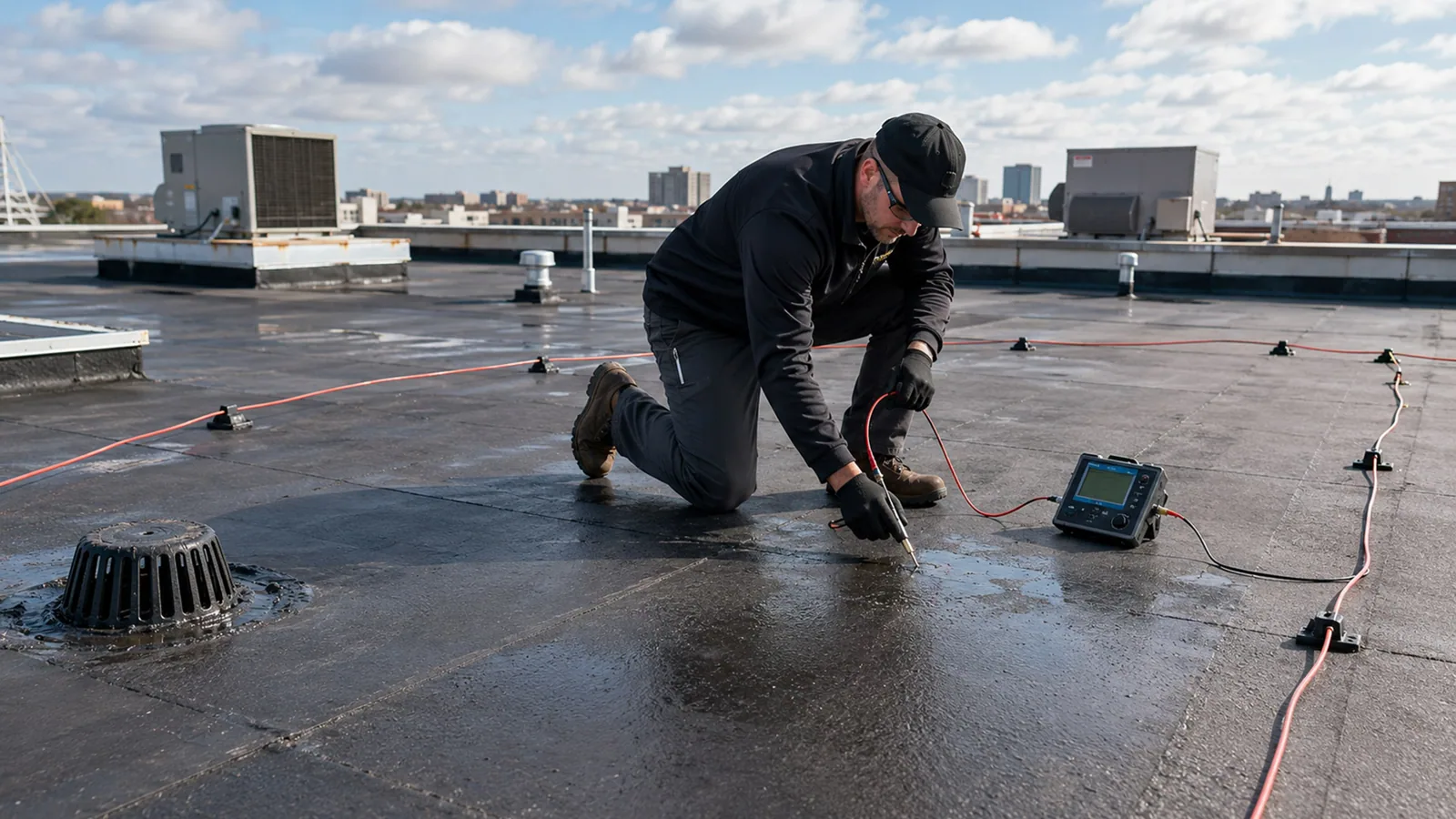
Commercial Roof Inspection in Murrieta, CA
See how this work fits the roof, the building and the schedule.
Learn More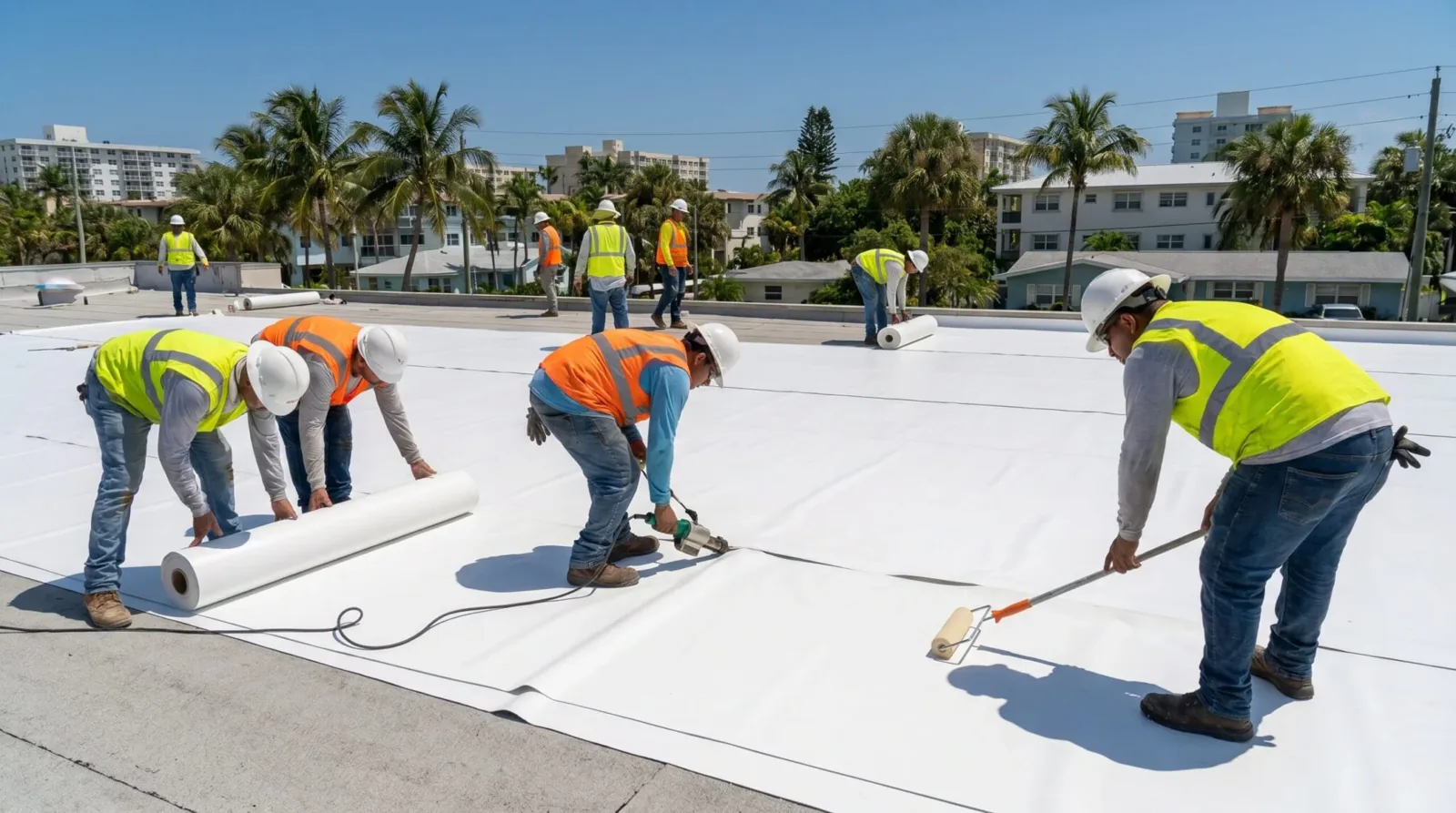
Commercial TPO Roofing in Murrieta, CA
Related scope, access notes and questions to ask before work starts.
Learn More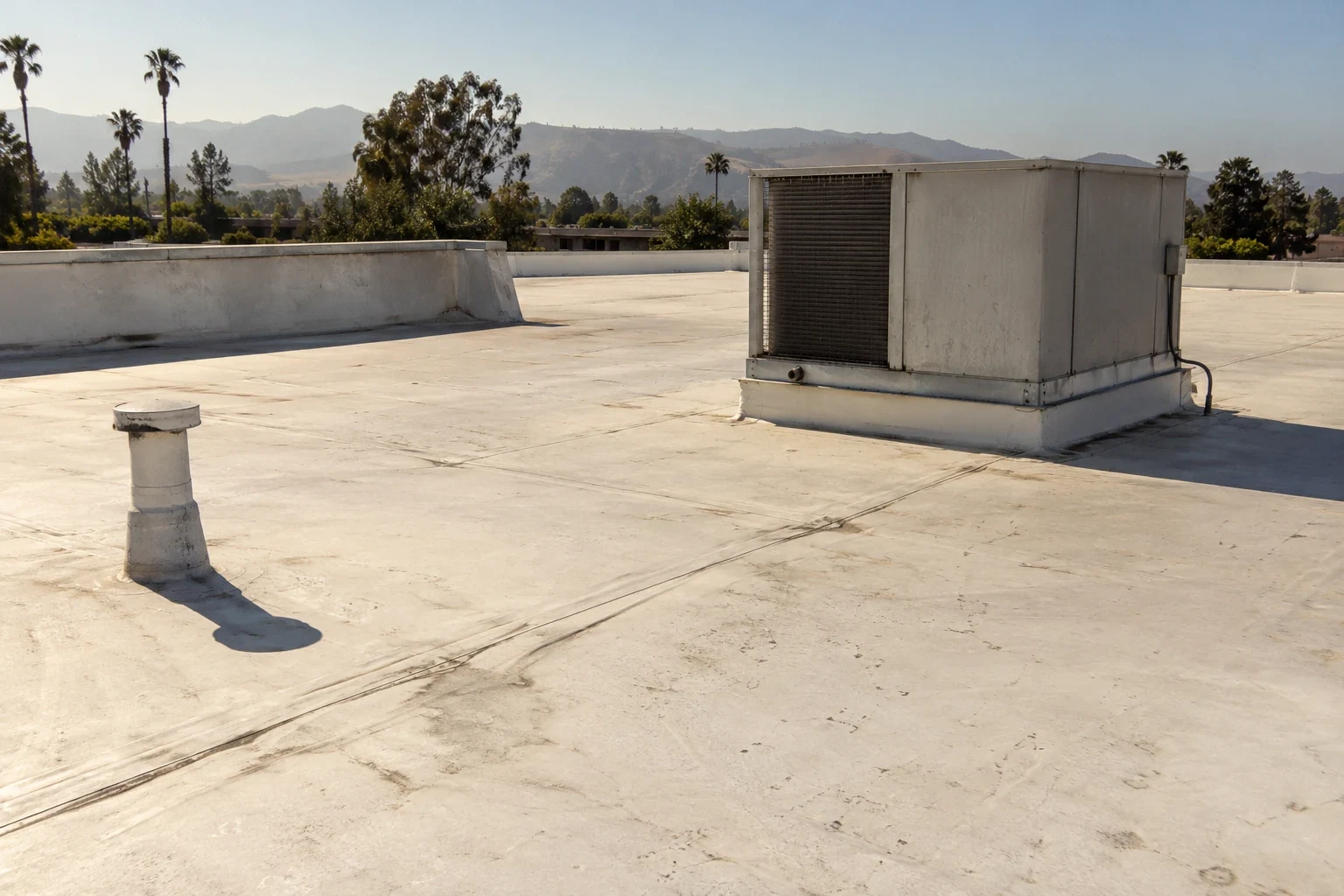
Commercial PVC Roofing in Murrieta, CA
Read the full description and the questions owners ask about it.
Learn More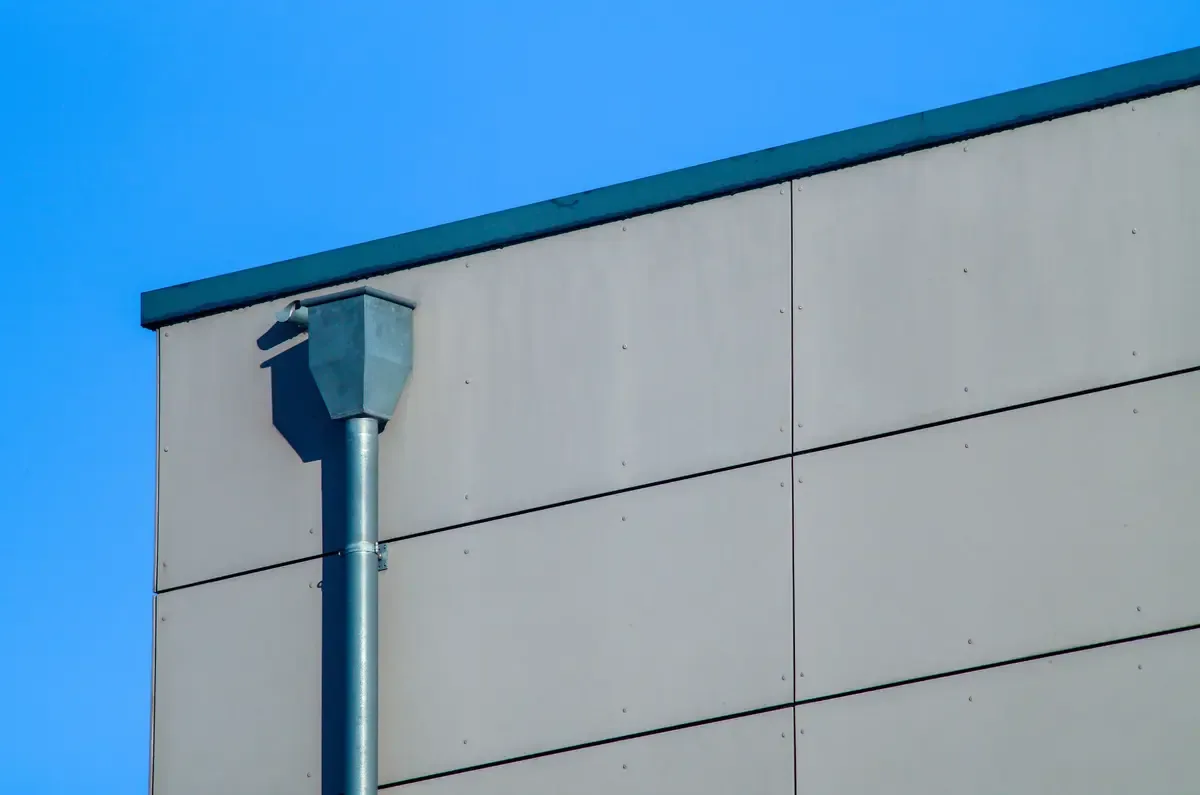
Commercial Roof Drains and Scuppers in Murrieta, CA
See how this work fits the roof, the building and the schedule.
Learn More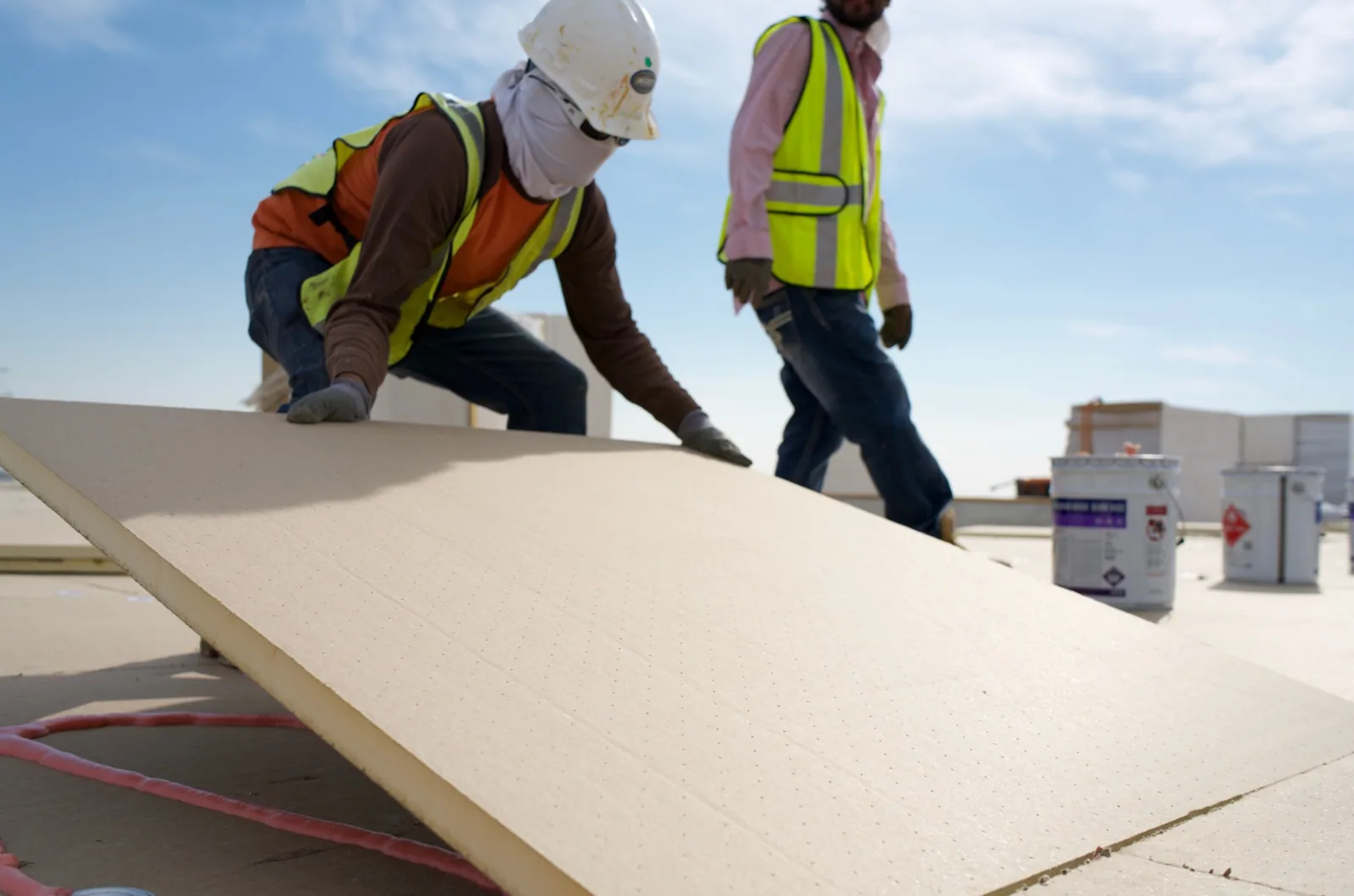
Commercial Roof Insulation and Cover Board in Murrieta, CA
Related scope, access notes and questions to ask before work starts.
Learn More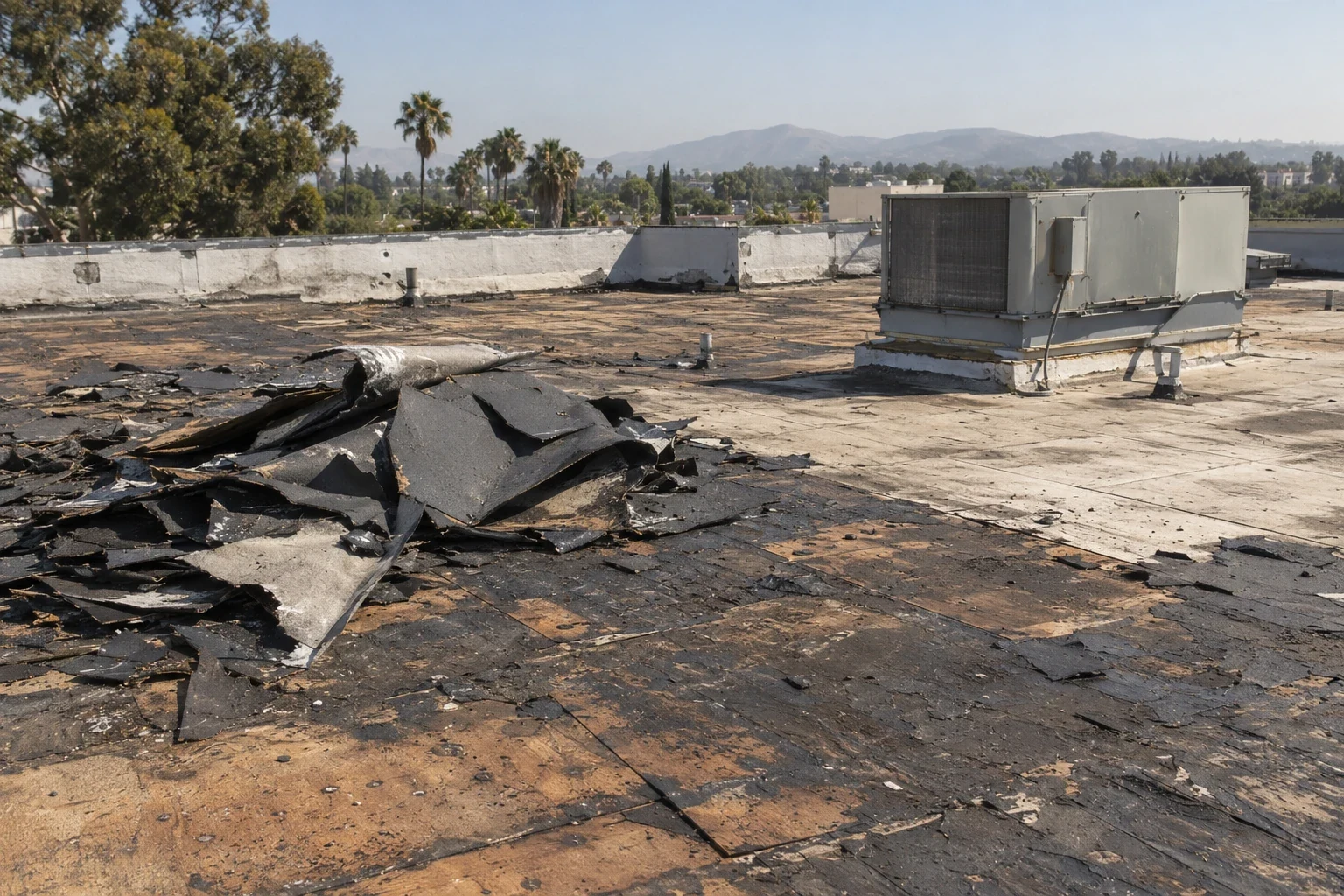
Commercial Roof Replacement in Murrieta, CA
Read the full description and the questions owners ask about it.
Learn MoreAssess an EPDM Roof in Murrieta
Arrange an inspection to document seam condition, drainage and attachment before choosing repair, recover or replacement.