
Commercial Built-Up Roofing in Murrieta, CA
Assess built-up roofing in Murrieta, CA, with attention to ply condition, surfacing, drainage, deck capacity, repair limits, hot-work sequence and upkeep.
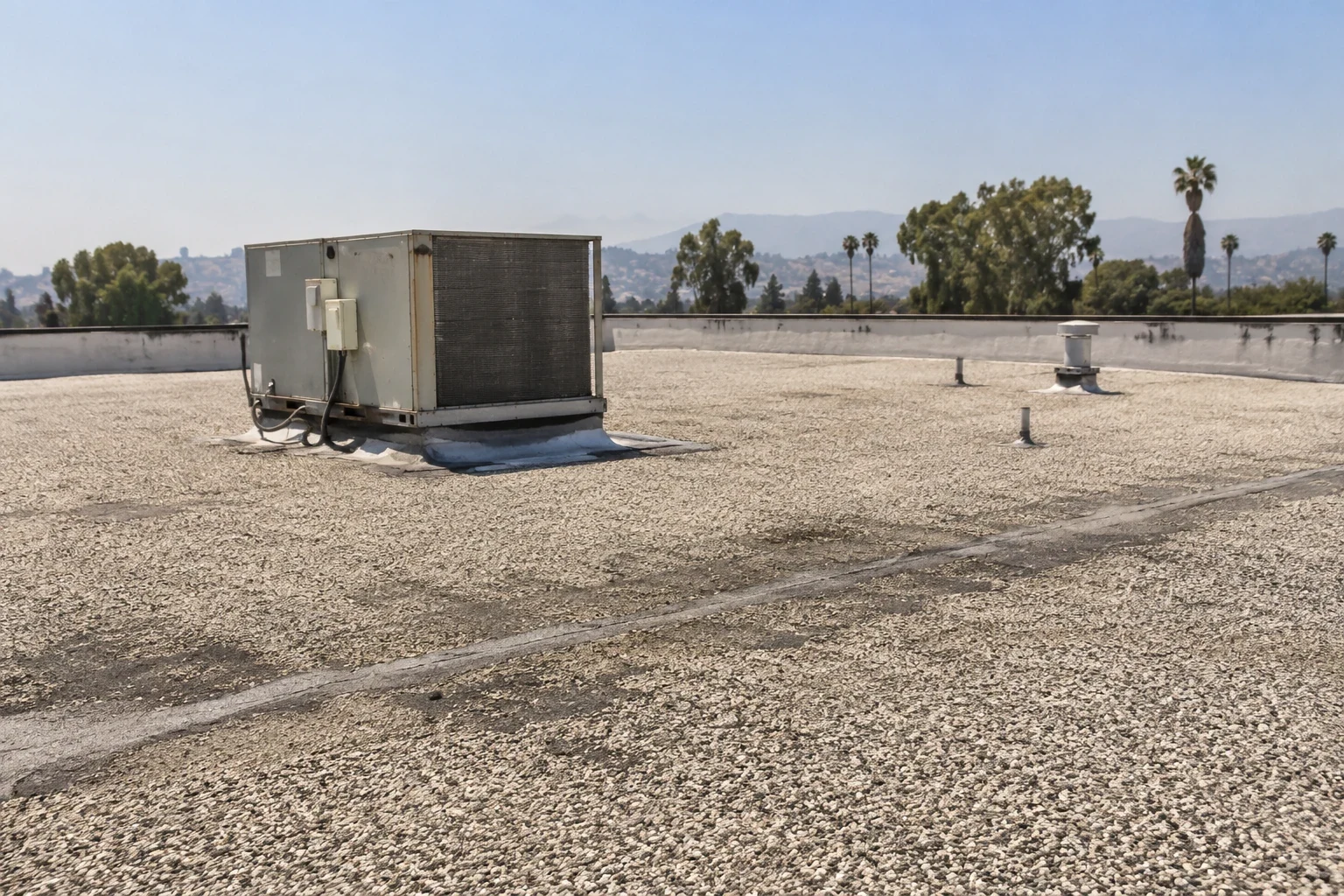
Layered asphalt roofing depends on more than the surface gravel. A built-up roof uses reinforcing plies and bitumen to form an assembly, and a repair needs to account for how those layers bond and drain. Depending on emissions, the 2099 Murrieta projection is 5.1 to 10.4 degrees warmer than the 1950 to 2005 annual high-temperature average. The long-range estimate is not a roof-temperature reading; it is a reason to inspect surfacing, seams and service traffic as part of condition review. We identify the current plies, wet areas and edge transitions before comparing repair with a new system. A condition inspection records what remains sound.
Ply Condition: Identify Where the Layers Still Hold
Built-up roofing, or BUR, is assembled from alternating reinforcing sheets and bitumen, with surfacing such as aggregate or a cap sheet. The exact build-up varies. We inspect for blisters, ridges, exposed asphalt, alligatoring, open flashings and areas where gravel has displaced. A test cut can show the number of plies, attachment and insulation condition, while moisture scanning may help locate a broader wet area. The findings determine whether a local repair can bond to a stable surface or whether removal is needed. A new layer over wet insulation can trap moisture, add weight and leave the original failure in place. A moisture survey or core sample can resolve uncertainty before the scope is priced. We compare the assembly with modified bitumen, which uses factory-made sheets and different seam details. The roof walk and testing establish the appropriate boundary, not the age or appearance alone. Compare TPO single-ply roofing when a lighter membrane assembly is part of the evaluation.
Aggregate surfacing can be a useful shield, but it should not be treated as a structural layer. We note whether stone is loose, displaced or embedded in asphalt and whether the underlying ply is exposed. A new coating or cap sheet needs an acceptable surface; it may require removal of excess gravel or a different preparation sequence. The weight of retained material also matters when the owner considers a recover. Before recommending that path, we record the assembly and identify where a test opening is needed. If water has entered, insulation samples can show whether the condition is isolated or spread beyond the visible stain. A small repaired area should tie into sound plies with an appropriate overlap, and the repaired spot should remain visible in the roof file so maintenance staff can check it later. We also inspect the transition to adjacent membranes rather than assuming two asphalt systems bond automatically.
Surfacing: Protect the Bitumen and Read the Repair
Aggregate helps protect some BUR assemblies from sunlight and foot traffic, but loose gravel can also hide a split or move into a drain. We note areas where surfacing has thinned, where bitumen is exposed and whether a previous patch adheres to the roof. A repair may require clearing gravel, preparing the existing asphalt and restoring the cap layer. At flashing, the material has to turn up the vertical surface and terminate in a way that sheds water. We inspect corners, drains, pipe penetrations, curbs and roof edges because each changes the ply sequence. Lake Elsinore’s planning department reviews commercial site plans and zoning applications for consistency with its General Plan and regulations. That local review context does not tell us what is on a roof, so we document the existing layers at each property. A drain and scupper check can address gravel blockage, while a perimeter review examines the roof edge and terminations.
Drainage and Weight: Check the Structure Before Recover
BUR can be heavier than a single-ply assembly, particularly when existing layers and aggregate remain in place. Before a recover, we verify what the deck and structure can support and whether the added height changes drains, curbs or door transitions. We trace water to outlets, check overflow paths and mark ponding that persists after rainfall. A roof that holds water may need slope correction, drain work or a deck evaluation rather than another ply. Lake Elsinore’s adopted General Plan includes 16 geographic district plans, reflecting different planning areas across the city. For commercial roofing, the property’s own roof layout is still the relevant map. We document the high points and drains so a tapered package can be designed around measured elevations. Insulation and cover board may change slope and surface protection, while a recover review can determine whether the existing layers should remain. We do not assume aggregate weight or drainage capacity without inspection.
Hot Work: Coordinate Protection and Daily Dry-In
Some BUR work uses hot asphalt, while other repairs use cold-applied materials or compatible membranes. The selected product determines preparation, temperature and safety controls. For hot work, we review combustible construction, penetrations, concealed spaces, air intakes and interior conditions before setup. The crew needs a fire-protection plan, controlled material staging and a clear shift boundary. Cold-applied products also require cure time and manufacturer conditions; a change in method should not be made casually on site. On an occupied building, deliveries and noisy work may need to avoid receiving hours or sensitive areas. Temecula describes Old Town as a compact commercial district about one mile from north to south, a setting where staging and pedestrian routes can influence a work plan. That geography does not establish the roof layout, so we confirm delivery and access at the property before moving material. A phased roof plan can set section limits and keep access clear. If removal exposes soft deck or wet insulation, photographs and marked locations allow the owner to review added work while the opening remains protected. We close the roof at the planned end of each shift and note the temporary tie-in for the next crew.
Repair Limit: Keep the Next Roof Walk Useful
A local BUR repair can work when the surrounding plies are dry, bonded and compatible with the repair material. Widespread blisters, saturated insulation, failing flashings or repeated patches can make a broader replacement more practical. We mark the affected area, state what remains outside the scope and identify any follow-up testing. Cost depends on tear-off, deck work, insulation, hot-work protection, surfacing, access and the number of penetrations. The bid should make those drivers visible. After the project, retain the roof map, material names, photographs and repair locations so a maintenance visit can compare the same details over time. A replacement evaluation can compare complete removal with a recover where the structure and assembly allow it. A Lake Elsinore roof review should capture its own drainage paths and access points. We schedule maintenance around observed wear, not an assumed service life, and return to any repair that needs a follow-up check.
Commercial Roofing Questions
How can we tell how many plies are in a BUR roof?
A test cut shows the visible layers and can help identify attachment, surfacing and insulation. We choose the location with the owner, protect the opening and document how it is closed after sampling.
Can new aggregate be placed over a built-up roof?
Only after checking the existing surfacing, adhesion, weight and drainage. Loose material or a wet assembly can make another layer unsuitable, so we inspect representative sections first.
Does a BUR repair need hot asphalt?
Not always. The repair method depends on the existing plies, compatible materials, site conditions and product instructions. We set fire and access controls when hot work is specified.
What causes blisters in built-up roofing?
Moisture, trapped air, poor adhesion or movement can contribute. We inspect the blister and surrounding field before cutting it open, then decide whether the repair should address a local bond or a larger assembly condition.
When should a BUR roof be replaced instead of patched?
Broad moisture, repeated seam or flashing failures, unstable plies and deck deterioration can point beyond a local correction. We map those findings and compare a repair boundary with the cost drivers in a replacement scope.
Related Roofing Work
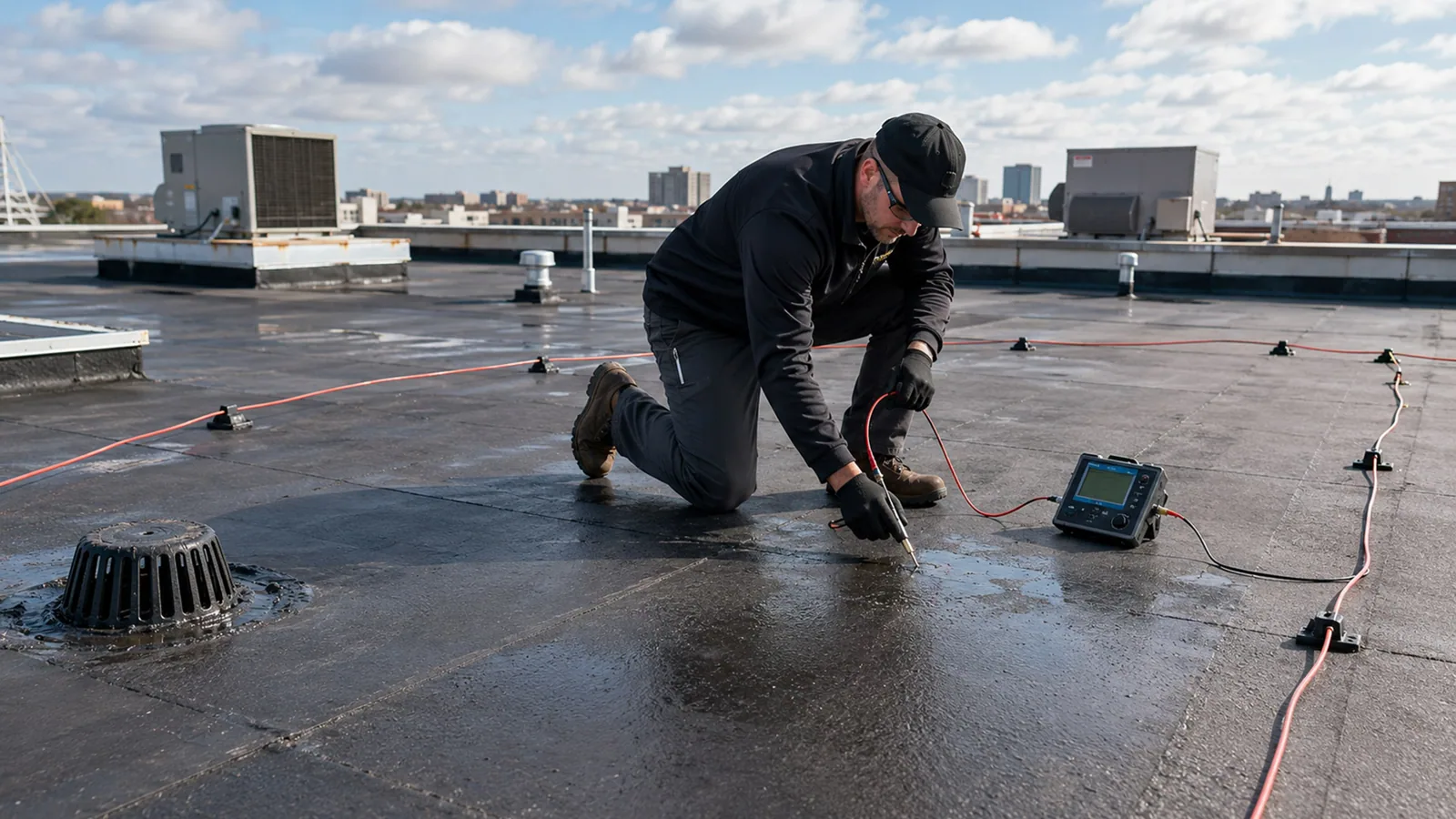
Commercial Roof Inspection in Murrieta, CA
See how this work fits the roof, the building and the schedule.
Learn More
Infrared Roof Moisture Survey in Murrieta, CA
Related scope, access notes and questions to ask before work starts.
Learn More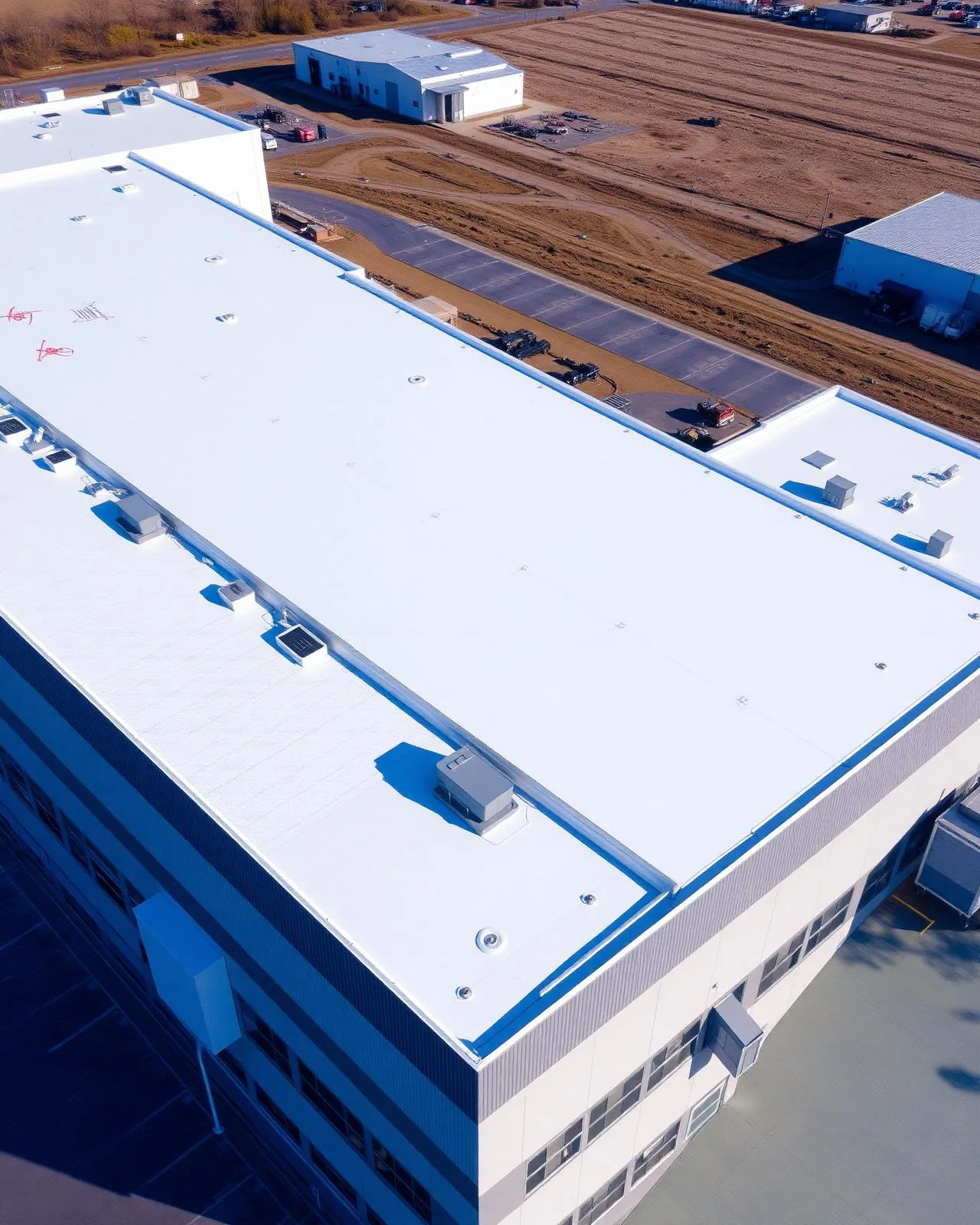
Commercial Modified Bitumen Roofing in Murrieta, CA
Read the full description and the questions owners ask about it.
Learn More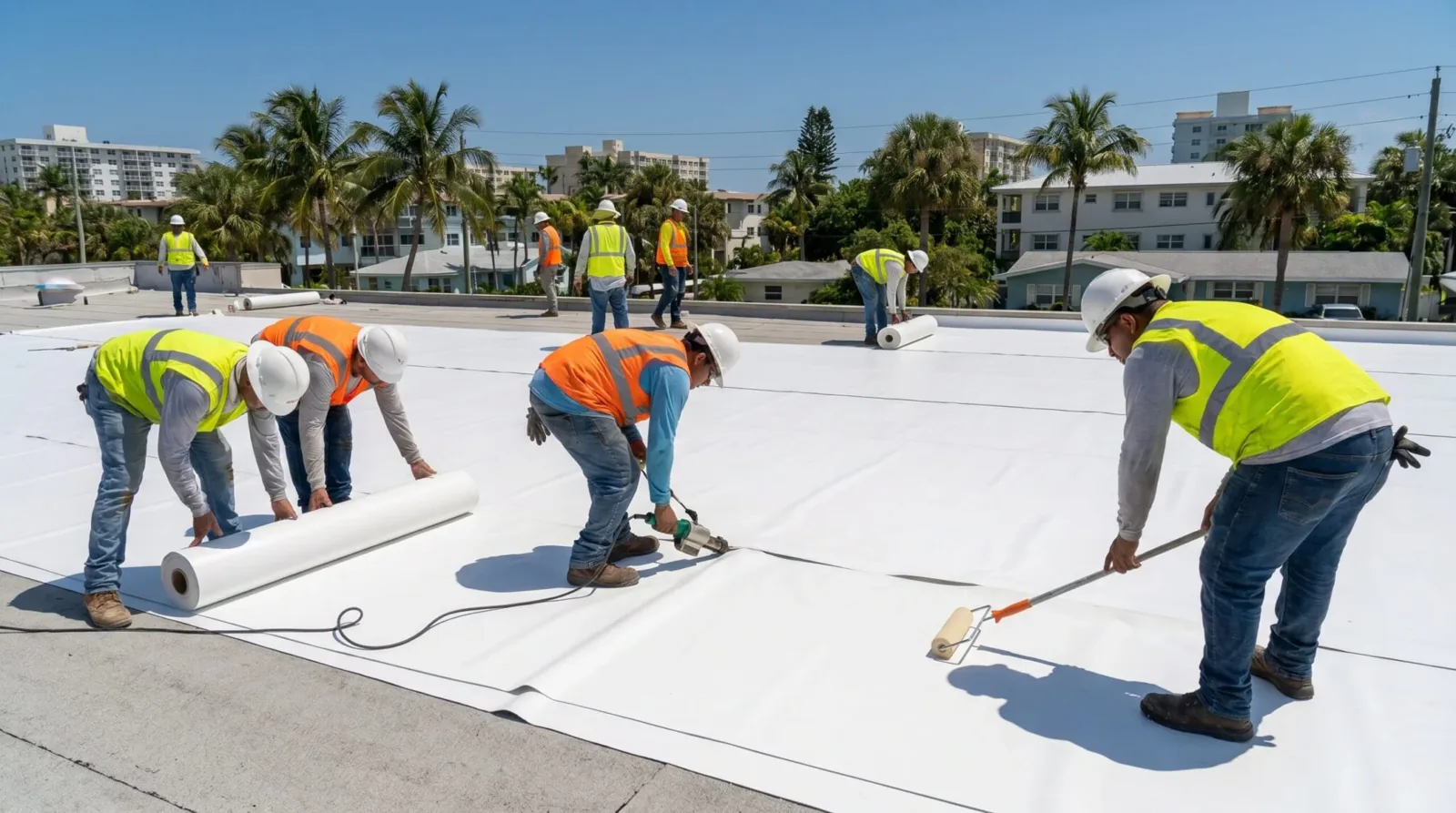
Commercial TPO Roofing in Murrieta, CA
See how this work fits the roof, the building and the schedule.
Learn More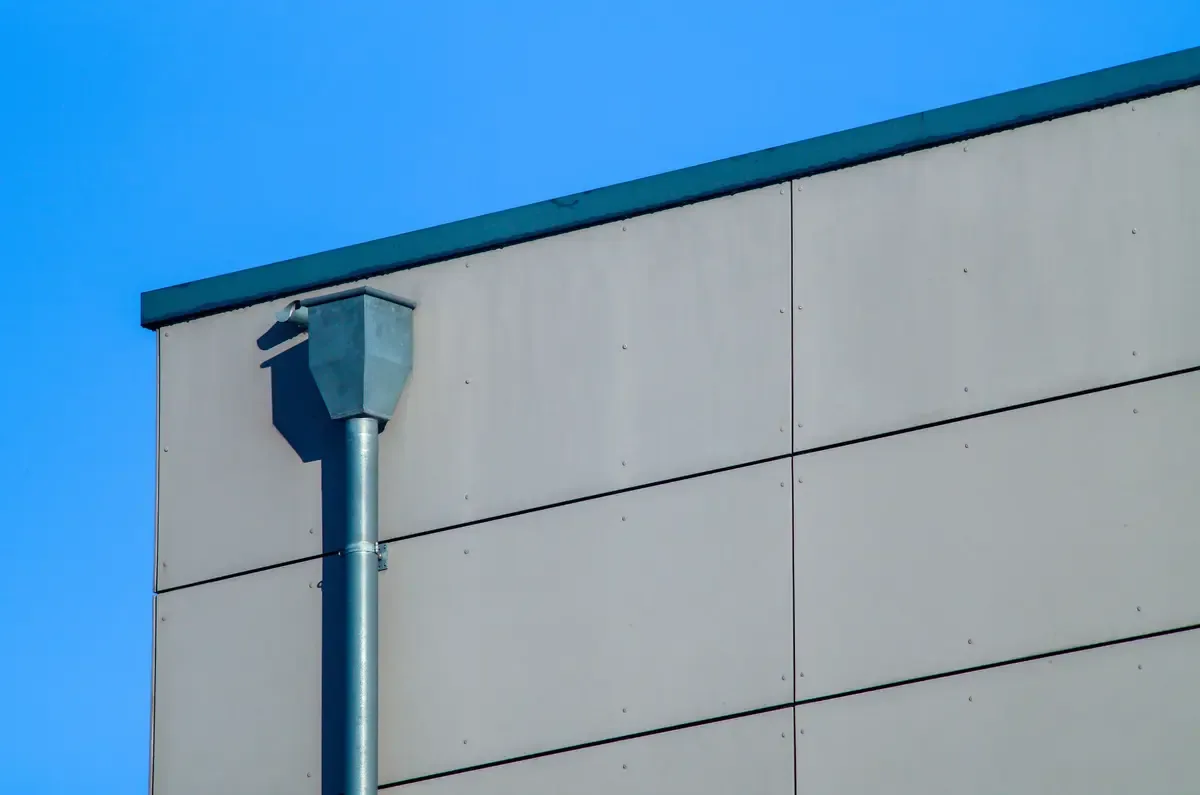
Commercial Roof Drains and Scuppers in Murrieta, CA
Related scope, access notes and questions to ask before work starts.
Learn More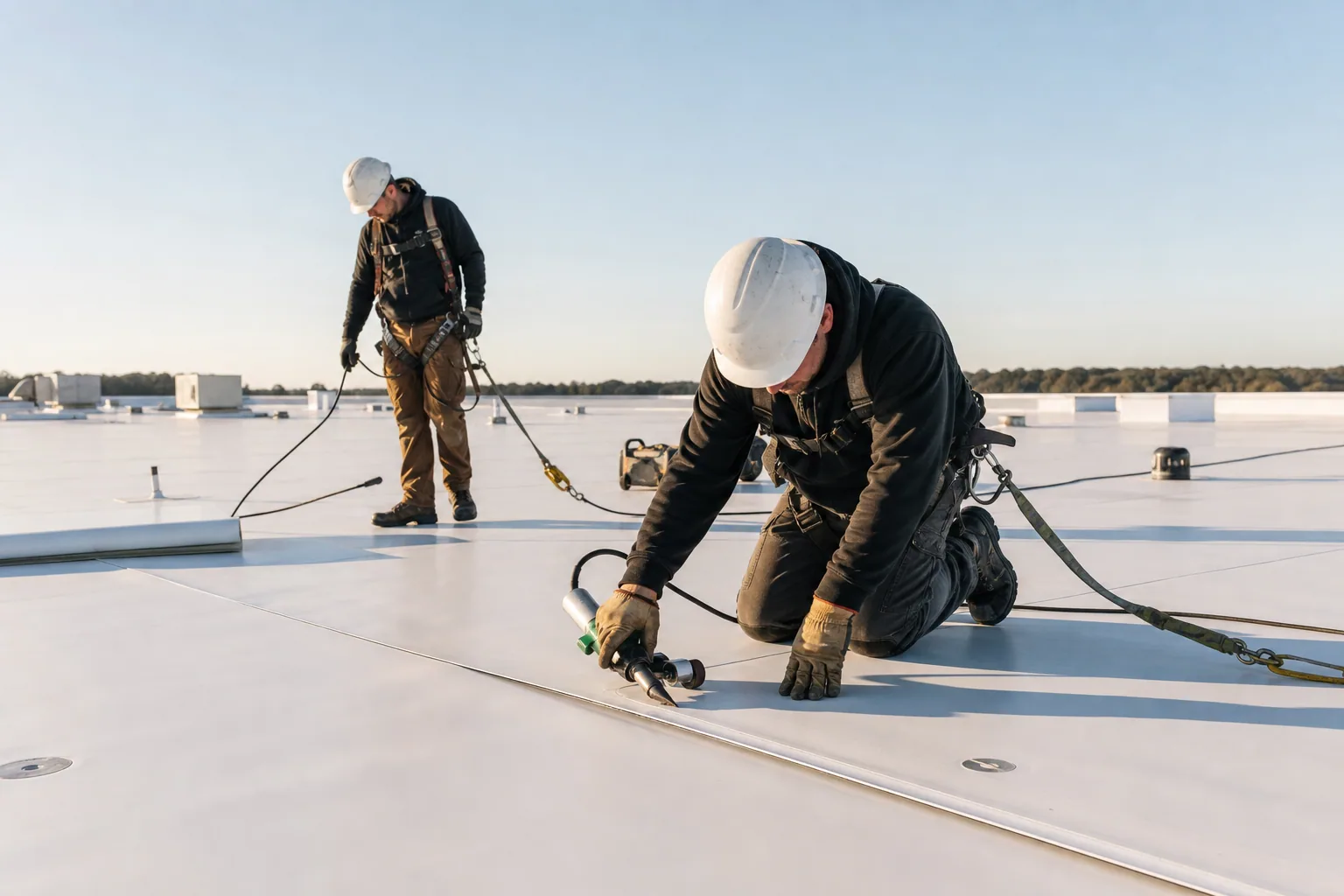
Commercial Roof Recover in Murrieta, CA
Read the full description and the questions owners ask about it.
Learn MoreInspect Built-Up Roofing in Murrieta
Arrange an inspection to document the plies, surfacing and drainage before choosing a built-up roof repair or replacement.