
Commercial Roofing in Wildomar, CA
Plan commercial roof repair in Wildomar around I-15 access, drainage, and roof-to-trade handoffs. Compare inspection findings before setting a work boundary.
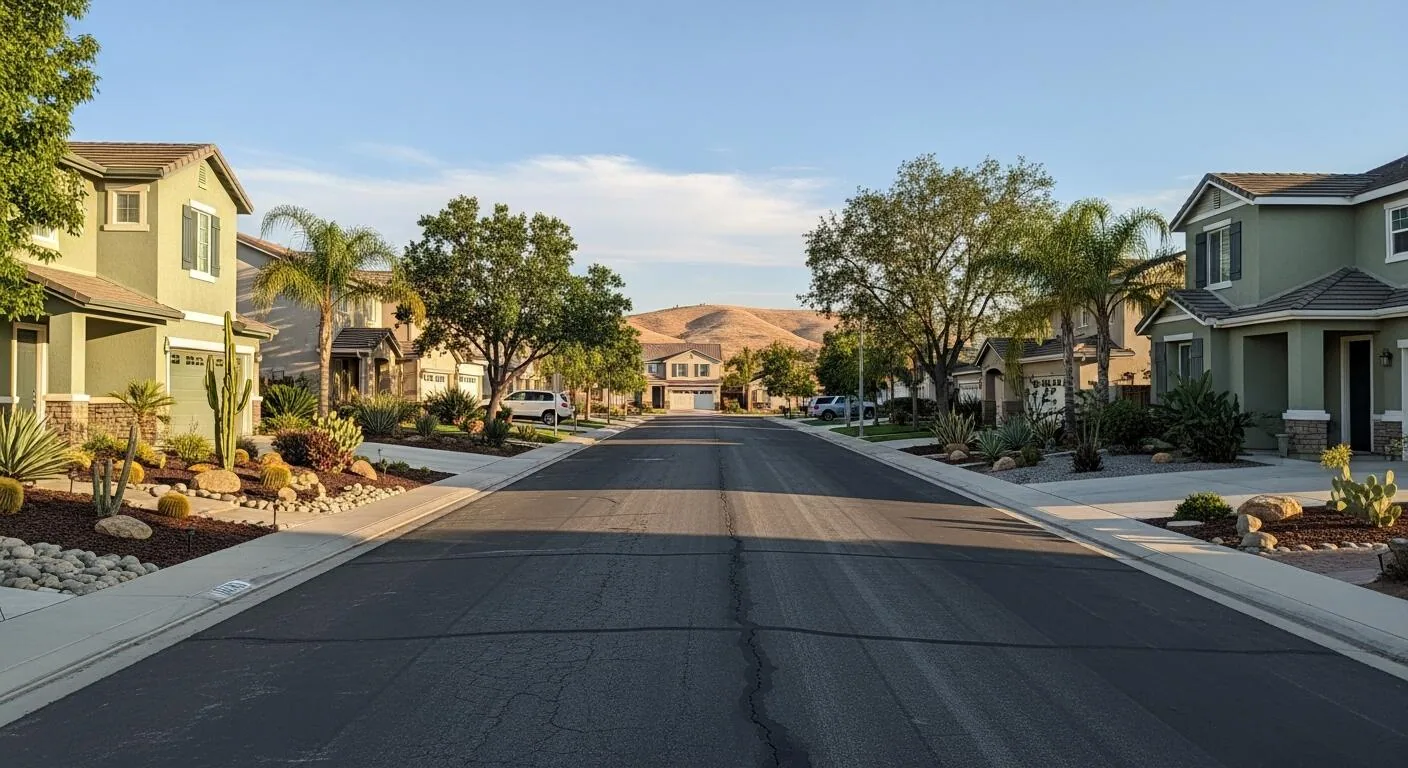
Commercial roof work in Wildomar can meet an active access route before it reaches the leak itself. Interstate 15 bisects Wildomar, with retail and office activity near the corridor. We still start on the roof: seams, drains, curbs, edge metal, and prior repairs show where water can travel and where a crew can work. A ceiling mark gives us a starting point, not a repair limit.
A commercial, light-industrial, mixed-use, and business node sits near Clinton Keith Road. That land-use context helps frame questions about deliveries or occupied space, but it does not establish a building's use or roof assembly. We confirm those conditions with the property contact and a field walk. A Temecula roof review or Menifee service visit gets its own access map, photos, and assumptions.
City pattern: separate corridor context from roof scope
Interstate 15 and Clinton Keith Road appear in the City's mobility planning as parts of Wildomar's land-use pattern. The development code also separates commercial, office, manufacturing and industrial, and mixed-use zones. Those categories describe planning permissions, not the current tenant, structure, or roof on a parcel. We use the city context to ask about staging and operations, then verify the property documents and surface before setting quantities.
At a retail or office building, the roof plan may have to preserve an entrance, delivery path, or mechanical service lane. We ask who controls those routes and when materials can move. The Jefferson-Madison Corridor scope is a separate planning-district review in Murrieta; it should not be used as a substitute for a Wildomar site walk. Each address needs a roof map, an access owner, and a work boundary tied to that building.
Roof walk: trace the water before pricing the fix
We compare the reported interior location with seams, wall transitions, penetrations, drains, and prior patches above it. Water may follow a deck or wet insulation before it reaches a ceiling, so the visible symptom can sit away from the entry point. The inspection records what we can see, where the suspected path continues, and whether a test cut or moisture survey would change the recommendation. A commercial roof inspection ties photos to a roof zone and a next action.
Drainage gets its own check. We look at the bowl or scupper, overflow path, surrounding flashing, and low areas after the outlet clears. A blocked drain calls for different work than a seam pulled from its lap or a curb with a split transition. We mark each condition, then separate repairable details from concealed layers that need confirmation. The owner can compare options against those observations rather than selecting from a generic roof label.
Roof system: make every transition part of the assembly
A membrane field can look sound while the edge, drain, or equipment curb leaves a path for water. We inspect attachment, lap direction, flashing height, termination bars, and how water leaves each section. If the roof crosses from one slope or material to another, the tie-in needs a detail that can be installed and later checked. A TPO assembly review includes insulation, perimeter metal, penetrations, and drainage, not just the sheet material.
At an occupied building, a small opening still needs a dry-in limit and an owner who can approve the next step. We note the roof section, material, and condition before removal. If another trade owns a curb or conduit, we identify the point where the roofer stops and who restores the flashing. The service record should keep the repaired zone, photographs, and product information together so a later walk can distinguish completed work from a new condition.
Access plan: coordinate deliveries and open roof areas
With I-15 through the city and activity near Clinton Keith Road, delivery planning begins at the property line. The site contact confirms the approved entrance, lift location, material path, gate limits, and hours that protect ongoing operations. We map the area that can be opened during a shift and set the point where the crew restores dry-in. For phased work, an occupied-building reroof plan assigns those boundaries to each day instead of leaving them as an informal handoff.
Estimate labor and duration from the roof area released per shift, layers to remove, deck restoration, perimeter rebuilding, curb coordination, and the hours the operator can make available. We price known work separately from concealed-condition allowances. When insulation condition remains in question, we price a sample opening and note which quantity depends on that result. The owner sees which finding would change the schedule, what approval is needed, and how access affects the sequence.
Repair decision: compare the cost drivers, not a promise
A localized repair fits when we can identify the source and restore a stable perimeter. A recover places a new membrane over the current assembly, so we verify fasteners, saturated board, outlet depth, and parapet clearance. Failures in distant roof sections or widespread wet insulation may justify pricing a tear-off after testing confirms how far the damage extends. We document the inspection finding behind each option and identify any area that remains unverified.
For a leak, the scope can list patch limits, flashing work, drain correction, and any test area separately. For replacement, the estimate should show removal, insulation, membrane, edge details, staging, and dry-in. A commercial roof repair scope may be the immediate step while a broader capital decision waits for more evidence. We keep those decisions distinct so a temporary repair is not mistaken for a full renewal.
Project record: keep evidence beside the approval
We label the zone, note access constraints, record quantities, and call out the concealed condition that could alter price. If the proposal includes an allowance, it explains what discovery triggers that amount and who reviews the change. The photo condition report gives the team a common record for approval and closeout.
Wildomar's commercial and mixed-use planning categories do not tell us whether a particular roof is occupied or how equipment is arranged. The property contact verifies those facts. We can compare a Wildomar building with a Murrieta business-park project only after both have their own maps, inspection dates, and repair histories. This keeps a portfolio review useful without carrying one property's assumptions into another city's scope.
Closeout: leave a clear path for the next inspection
We finish by marking each repair on the roof drawing, capturing the completed transitions, recording installed materials and accepted changes, and noting any follow-up visit the file still needs. A drain and scupper review can track a water-path correction separately from unrelated membrane work.
Wildomar's city documents give context for the street and zoning pattern; the roof record governs the next decision. We identify whether the owner should monitor a repaired detail, arrange a follow-up walk, or compare a larger replacement scope. Share the roof history, leak location, and access window to set an inspection.
Commercial Roofing Questions
Does I-15 access determine how a roof crew enters?
No. The site contact confirms the approved entrance, staging space, and delivery limits. We record that route with the roof access plan before assigning material movement or lift placement.
What should a first Wildomar roof walk establish?
We map the reported leak, inspect nearby seams and transitions, and note drainage and prior repairs. The findings define a repair boundary or identify what still needs testing.
When is a recover worth pricing?
Check moisture, deck capacity, attachment, layer count, edge height, and drain details first. We compare another layer only when the existing assembly can support it.
Can roof and equipment work share one opening?
Yes, when both trades agree on the opening, curb responsibility, temporary dry-in, and the point the roofer restores. We put those boundaries into the daily sequence.
What belongs in the repair closeout?
Pair the marked roof drawing with images of the restored flashing, the accepted change log, and the date the owner approved turnover. Label any untested condition for the next walk.
Related Roofing Work
Commercial Roofing in Temecula, CA
See how this work fits the roof, the building and the schedule.
Learn More
Commercial Roofing in Menifee, CA
Related scope, access notes and questions to ask before work starts.
Learn More
Commercial Roofing in Jefferson-Madison Corridor, Murrieta, CA
Read the full description and the questions owners ask about it.
Learn More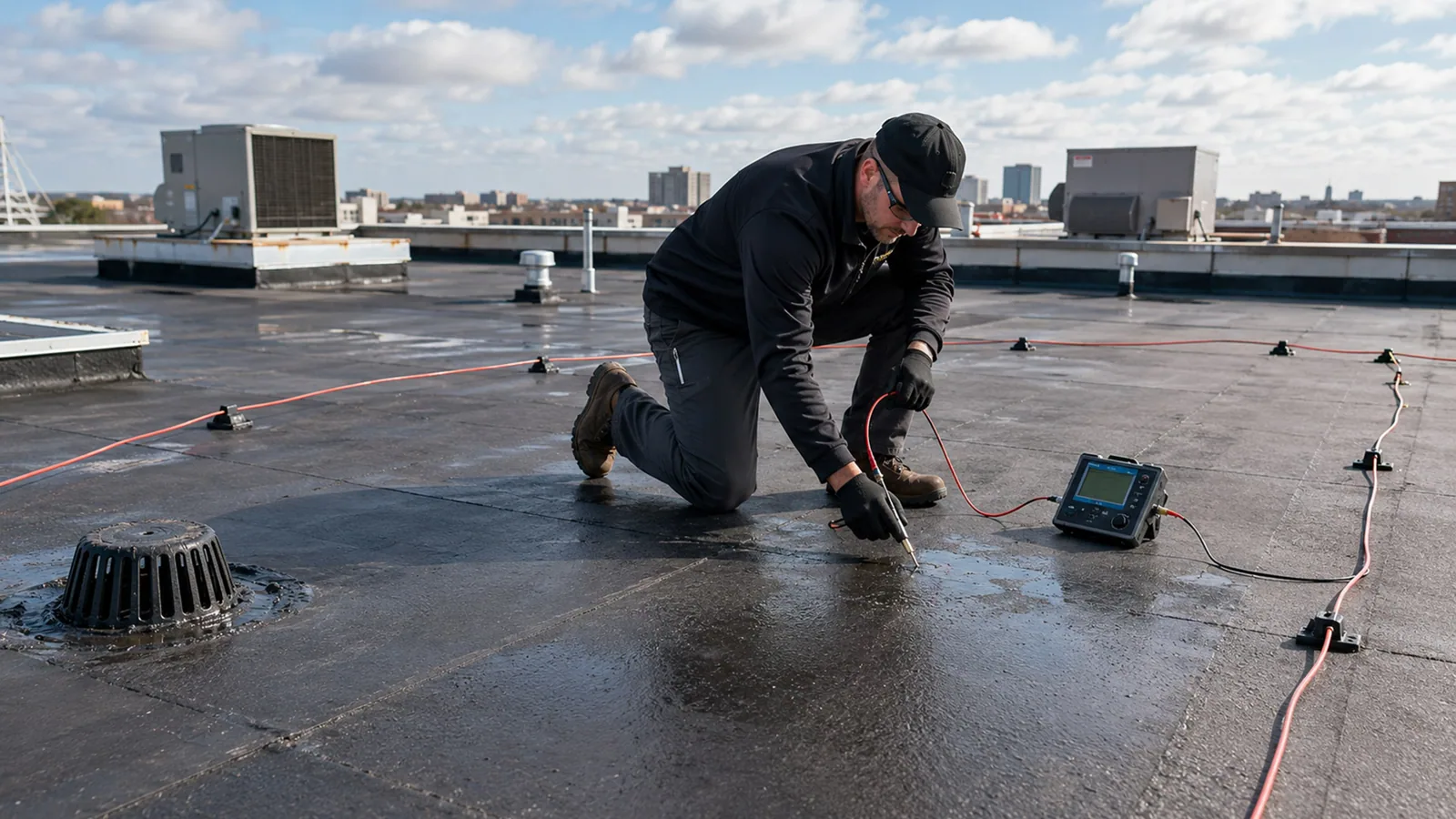
Commercial Roof Inspection in Murrieta, CA
See how this work fits the roof, the building and the schedule.
Learn More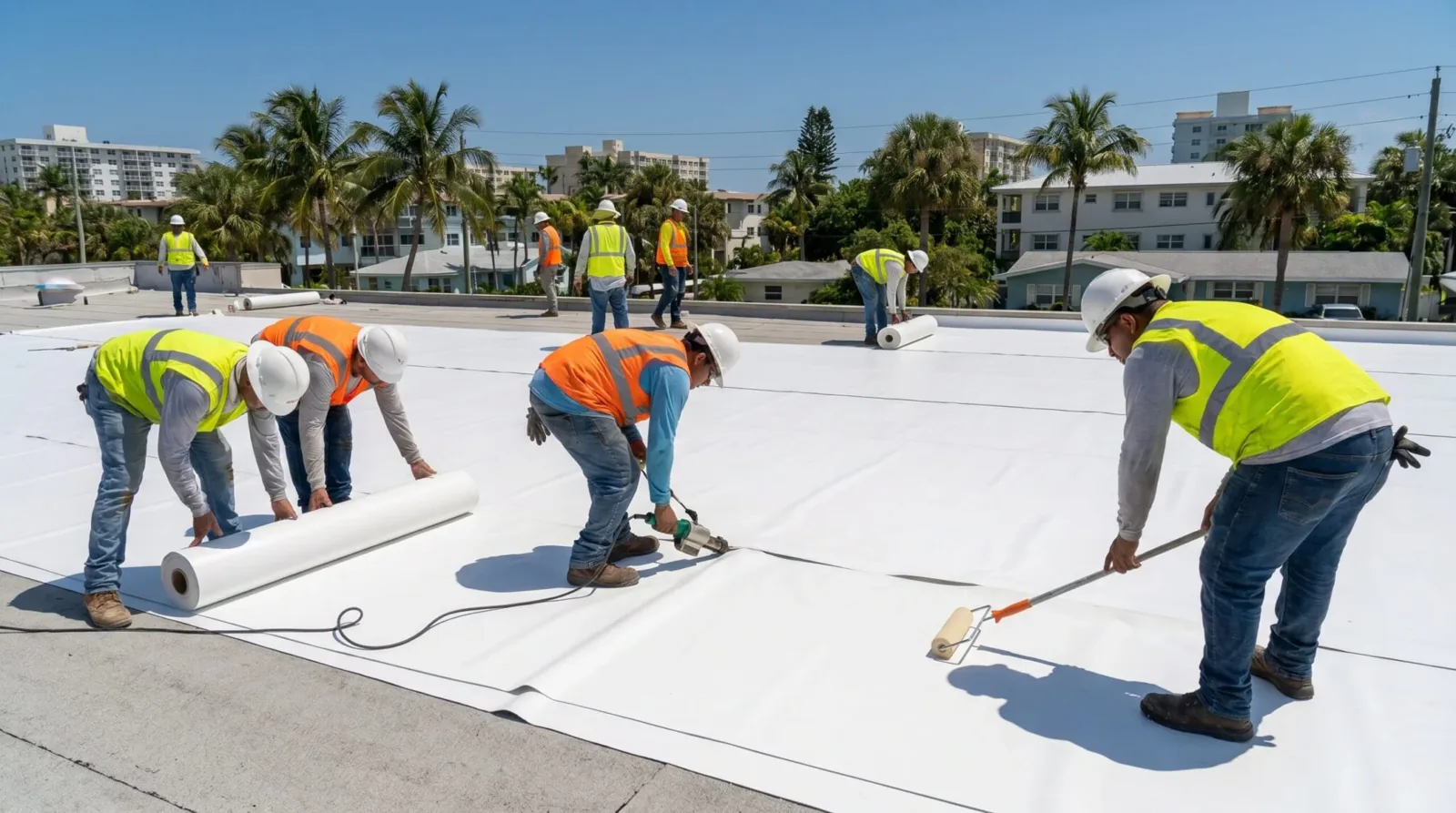
Commercial TPO Roofing in Murrieta, CA
Related scope, access notes and questions to ask before work starts.
Learn More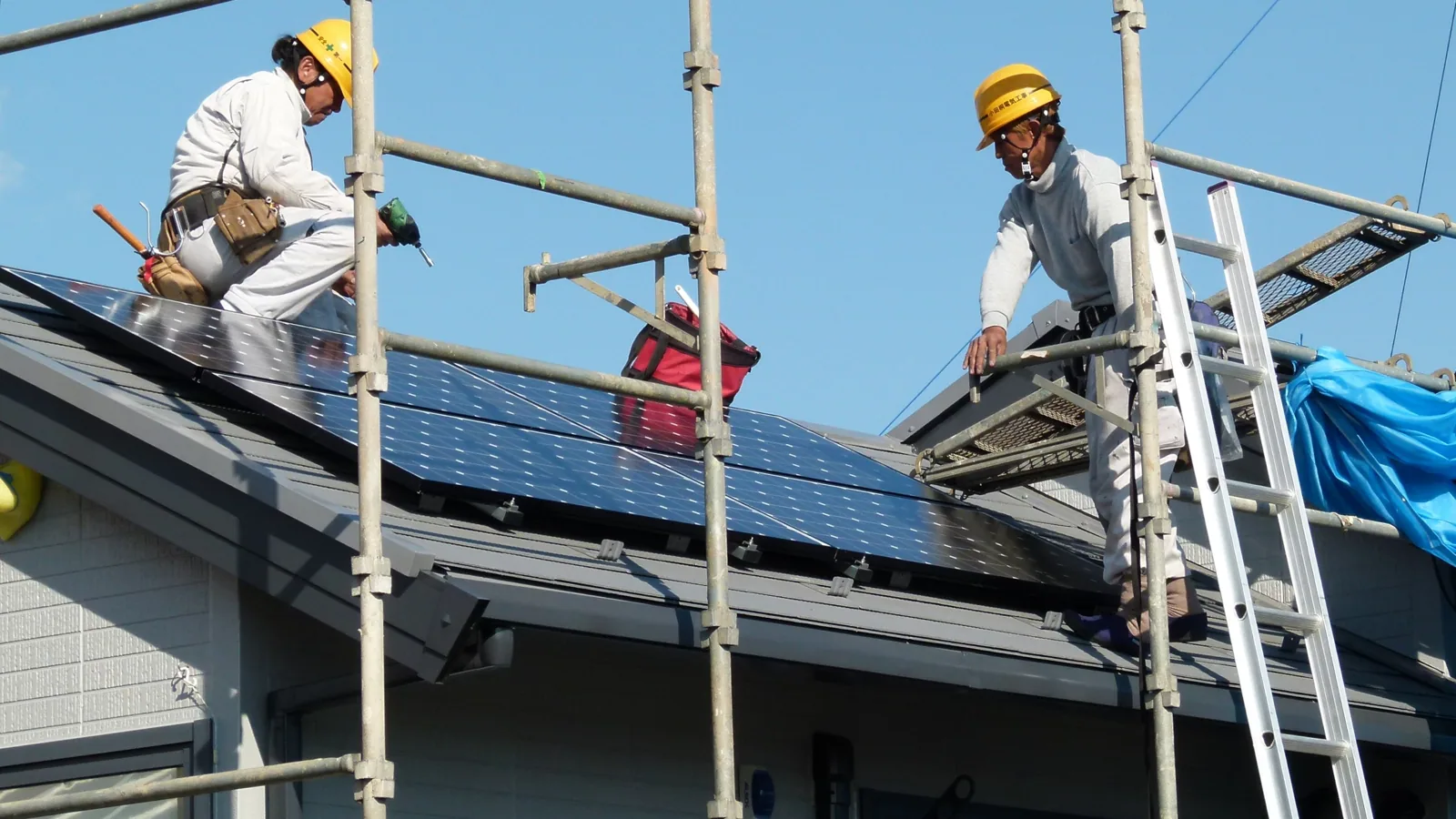
Occupied-Building Commercial Reroofing in Murrieta, CA
Read the full description and the questions owners ask about it.
Learn MoreArrange a Wildomar commercial roof inspection
Share the property use, roof history, reported condition, and available access window. We will map the affected section and return a documented repair or replacement scope for review.