
Commercial KEE Roofing in Murrieta, CA
Assess KEE roofing in Murrieta, CA, with a review of membrane chemistry, seams, substrate, rooftop details, repair compatibility and maintenance planning.
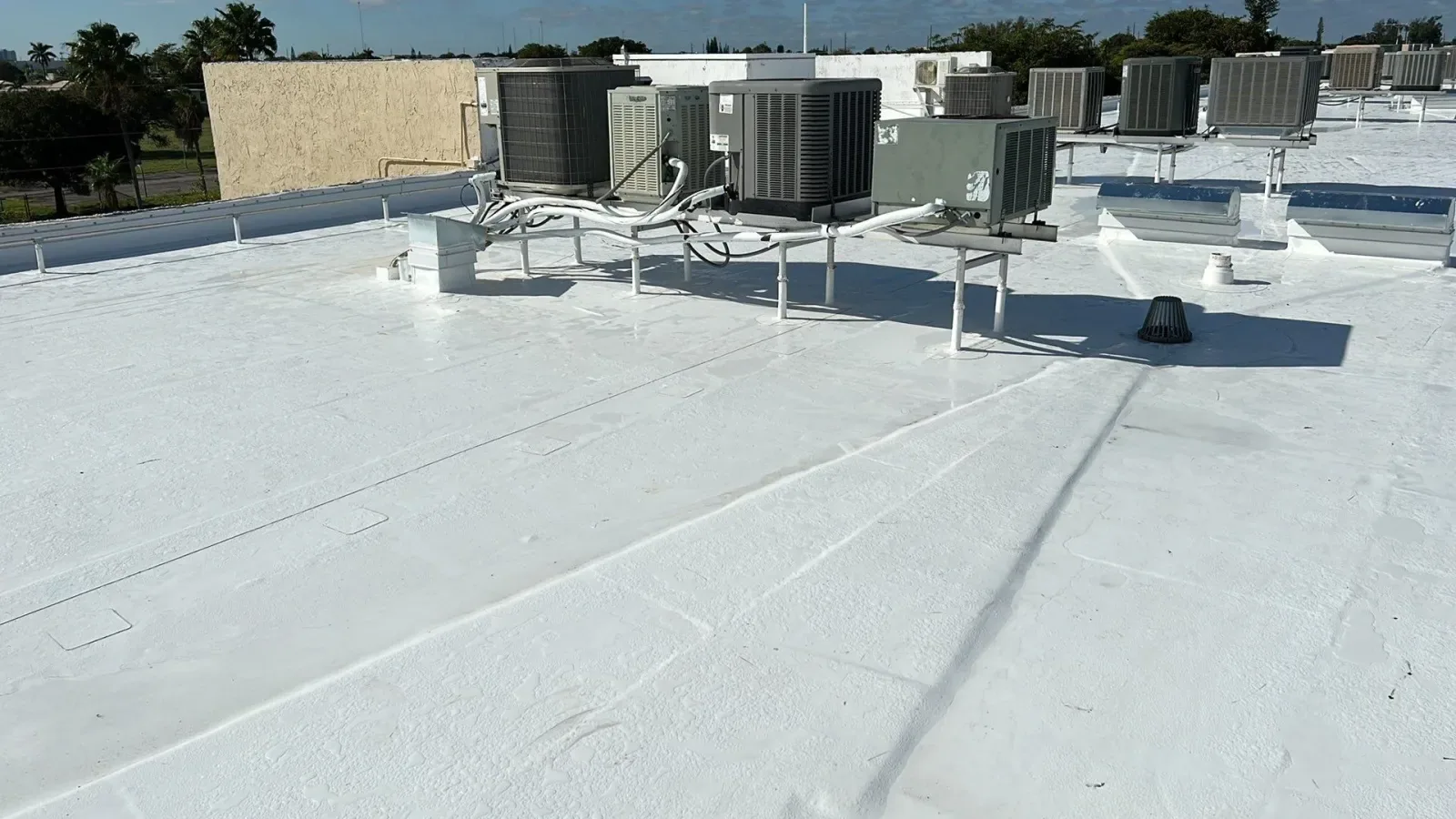
KEE membrane is a modified PVC system, but that label does not settle a roof specification. The product formulation, thickness, reinforcement, attachment and exposure all affect the choice. In Murrieta, the roof review also needs to account for access and the building’s actual operating use. Interstate 15 and Interstate 215 frame regional access for Murrieta business districts. The property’s loading route, staging area, and roof condition still need confirmation before deliveries are scheduled. We inspect the existing assembly and compare KEE with other membrane systems before setting a scope. A condition review gives the owner a record of seams, edges and penetrations.
Material Fit: Confirm the Product, Not Just the Acronym
In some PVC roofing membranes, the KEE name comes from ketone ethylene ester resin. Product formulations differ, so the specification should identify the exact membrane, reinforcement, thickness and accessory materials. We review the manufacturer’s data for the building’s exposure, expected movement and repair method instead of treating all KEE products as interchangeable. If a roof has grease, oils, cleaning agents or process discharge, we document where contact occurs and compare that exposure with the selected product information. Chemical resistance is not a blanket promise for every substance or concentration. A test area or manufacturer review may be appropriate where the material history is unclear. Owners can compare a PVC membrane and TPO assembly when chemical exposure, seam method or future maintenance changes the priorities. The inspection also checks whether the current substrate can accept a new system without hiding moisture or weak attachment.
Seams and Flashings: Detail the Changes in Plane
KEE seams are heat-welded like other thermoplastic membranes. Clean laps and controlled machine settings matter, especially where a roof layout changes direction or transitions into a wall, curb or drain bowl. The crew should check sample settings, inspect weld width and probe cooled seams as work progresses. A patch needs compatible material and sufficient prepared surface; a smear of sealant at an open lap is not a durable substitute for rebuilding the weld. We look at field seams, T-joints, corners, terminations and mechanical attachments as connected parts of the roof. If KEE is being considered over an older PVC membrane, we check whether the existing surface can be prepared for a compatible tie-in and whether the attachment remains sound. Cover board and insulation can change the surface that holds the membrane and the height available at penetrations. Product data, edge details and the work drawings should agree before installation begins.
Roof Exposure: Protect the Assembly From Service Wear
A specification should address foot traffic, equipment service, water flow and the conditions that can damage a membrane. We mark walk paths to rooftop units, check for exposed fasteners or sharp edges and confirm that pipe supports do not bear directly on an unprotected sheet. Drains and scuppers must remain reachable and open after insulation or cover board changes. Menifee’s land-use map places commercial retail and offices in separate categories from business parks and heavy industry. Those categories do not identify the equipment or discharge at a specific property, so we ask the building contact about use and then verify what is present on the roof. A drainage inspection can locate ponding and blocked outlets, while a curb and support check records the transitions around mechanical units. We note whether cleaning, access pads or a curb rebuild belongs in the scope before a new membrane covers the area.
Service routes deserve attention before a new sheet is installed. We note where a technician steps off the hatch, how equipment is reached and whether a narrow path passes between penetrations. That information helps place access protection without covering drains or forcing a sharp turn across a flashing corner. If a unit needs replacement during the roofing project, the mechanical trade should identify its lift points and confirm which curb will remain. We can then coordinate the roofing detail around the planned movement rather than repair a new cut after the work is complete. At closeout, a marked plan can distinguish protected routes from areas that should not receive routine foot traffic. The building team can use it to coordinate later service calls and avoid dragging tools across newly welded seams. This is a practical part of KEE maintenance because the product selection does not prevent damage from later work above the membrane. We attach that note to the owner’s roof file.
Installation Sequence: Set the Dry-In Boundary
KEE installation requires an orderly sequence from tear-off or preparation through insulation, membrane attachment, welding and flashing. We plan a daily limit that the crew can close before leaving the roof, with temporary tie-ins placed where the next shift can reopen them without damaging finished work. Heat, wind, dust and dew can affect welding, so the team follows the product instructions and actual conditions. On an occupied building, rooftop-unit shutdowns, lift locations and deliveries need a contact and time window. I-215 bisects Menifee and serves as the city’s primary transportation corridor. For a roofing delivery, we still confirm the final entrance and staging point with the property team. A phased work plan can separate active areas, and replacement planning can account for deck repairs discovered after removal. Each shift’s record should show the installed section, temporary edge and any approved change.
Repair Record: Keep Compatibility in View
KEE maintenance includes seam probing where appropriate, observation of flashing, checks for cuts or punctures, and review of drains and edge restraint. Repairs should use materials that the selected manufacturer approves for that membrane and substrate. Keep product labels, photographs, seam repairs and any approved maintenance instructions with the roof plan. When another contractor installs a curb or conduit, the record should show who restored the membrane and what detail was used. Project cost depends on removal, substrate correction, attachment, insulation, flashing, access and the amount of equipment work, not just the membrane type. A photo condition report can track the starting state, while a Menifee roof assessment must document its own assembly and service routes. If a future leak appears at a repaired weld, we inspect the surrounding sheet and attachment instead of assuming the same patch will solve a changed condition.
Commercial Roofing Questions
How is KEE different from standard PVC roofing?
KEE is a resin used in some PVC-based membranes, but formulation and product performance vary. We review the actual product data, reinforcement, thickness, accessories and exposure rather than choose by acronym alone.
Can KEE handle grease or chemical exposure?
Some products are designed for particular exposures, but resistance depends on the substance, concentration, temperature and contact time. We document what reaches the roof and confirm compatibility with the selected manufacturer information.
Are KEE seams welded or glued?
The field seams are generally heat-welded, with attachment and flashing details specified for the assembly. We verify the product and substrate, set weld parameters under the product instructions, and probe the cooled joint.
Can a KEE patch go over an older PVC roof?
It may be possible if the existing membrane is clean, weldable and securely attached. We test the surface and verify compatible materials before a repair; aged or contaminated sheet may require a different boundary or system plan.
What records should come with a KEE installation?
Keep the product identification, attachment layout, seam and flashing photographs, repair log and maintenance instructions. The record helps a later service team choose compatible materials and find equipment transitions without guessing.
Related Roofing Work
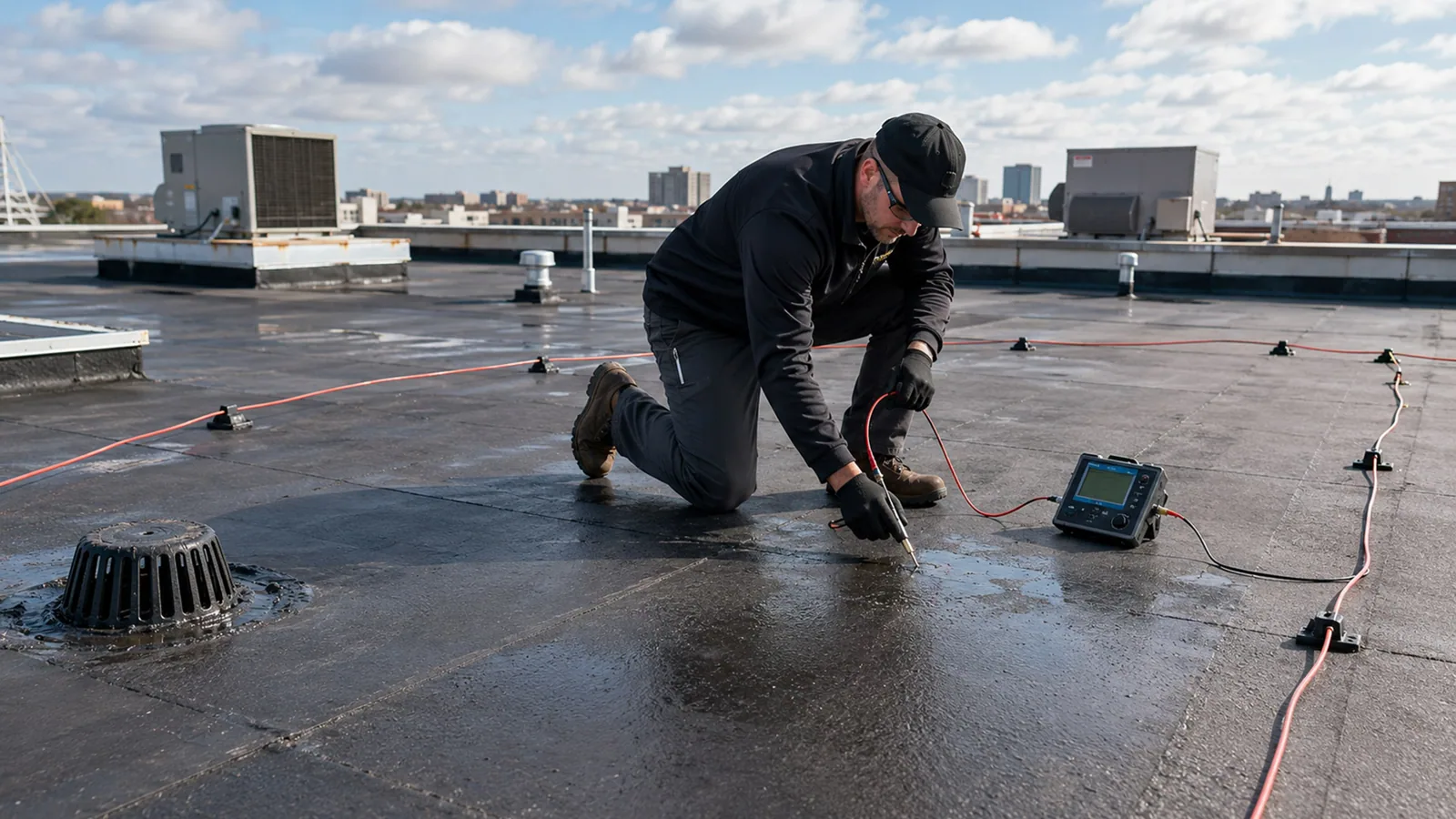
Commercial Roof Inspection in Murrieta, CA
See how this work fits the roof, the building and the schedule.
Learn More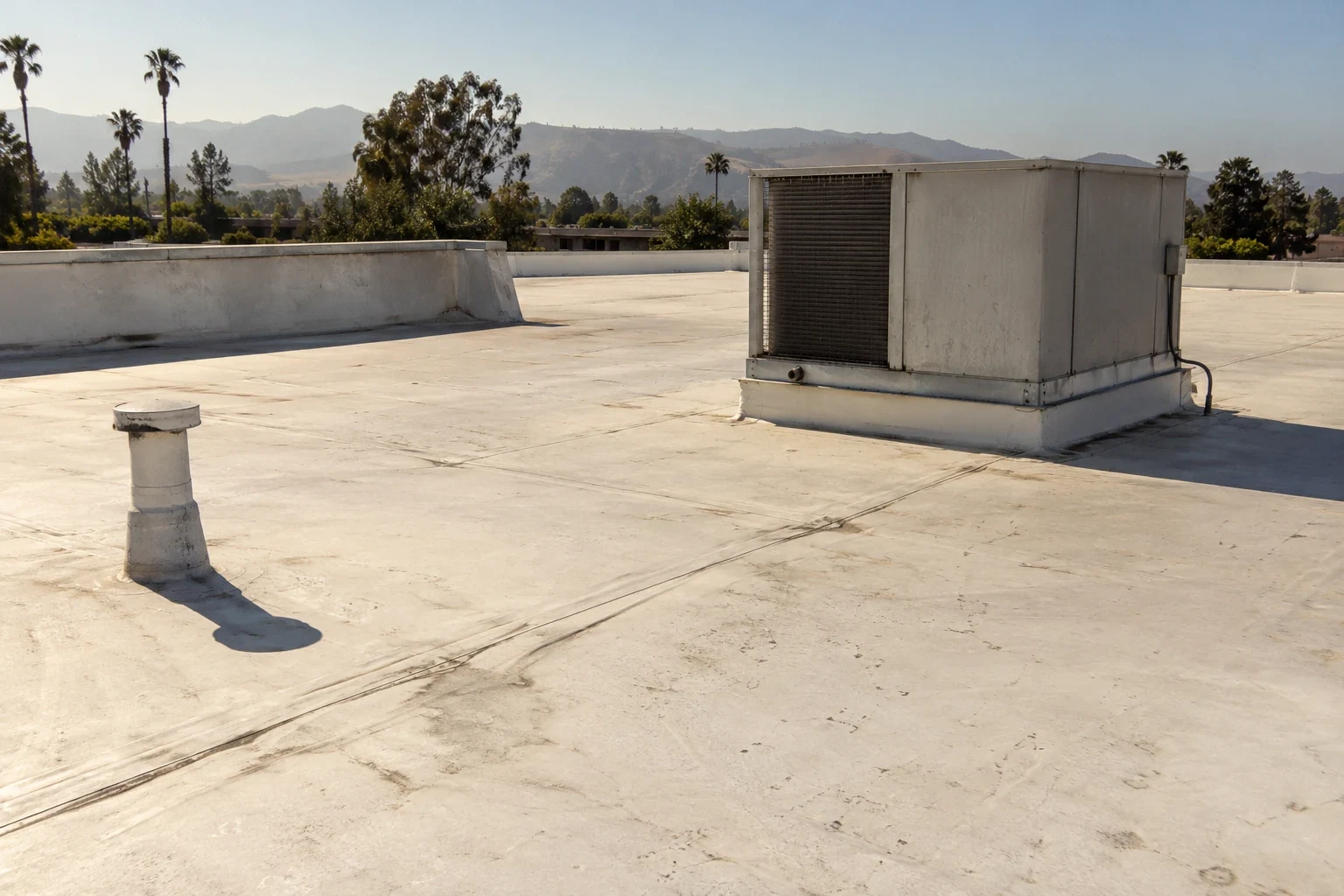
Commercial PVC Roofing in Murrieta, CA
Related scope, access notes and questions to ask before work starts.
Learn More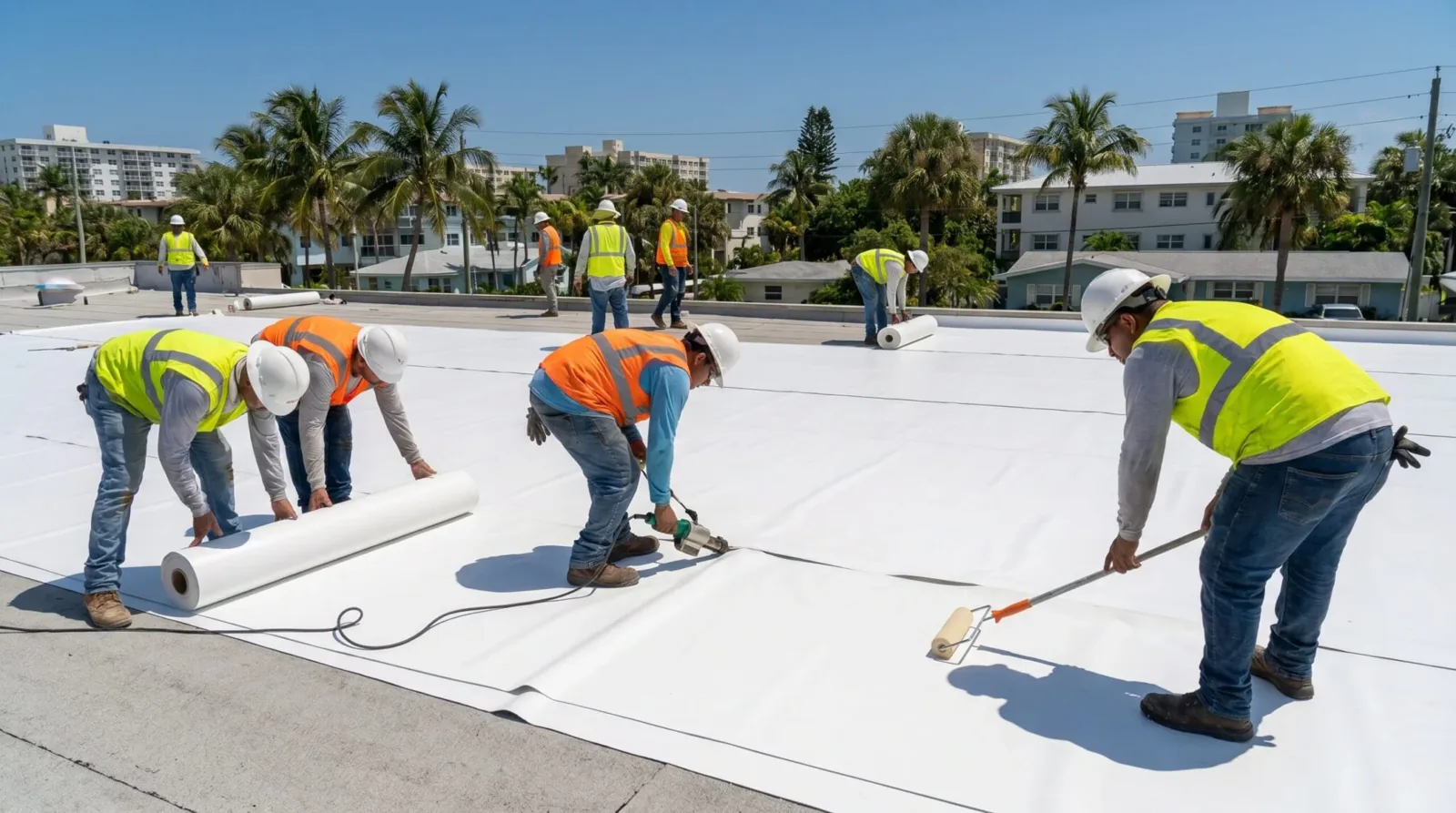
Commercial TPO Roofing in Murrieta, CA
Read the full description and the questions owners ask about it.
Learn More
Commercial Roof Drains and Scuppers in Murrieta, CA
See how this work fits the roof, the building and the schedule.
Learn More
Rooftop Equipment Curbs and Supports in Murrieta, CA
Related scope, access notes and questions to ask before work starts.
Learn More
Occupied-Building Commercial Reroofing in Murrieta, CA
Read the full description and the questions owners ask about it.
Learn MoreReview KEE Roofing in Murrieta
Arrange a roof inspection to document the existing membrane, exposure and seam details before comparing KEE products.