
Commercial TPO Roofing in Murrieta, CA
Review TPO roofing for commercial buildings in Murrieta, CA, from substrate and seam checks to drainage, rooftop details, installation phasing and upkeep.
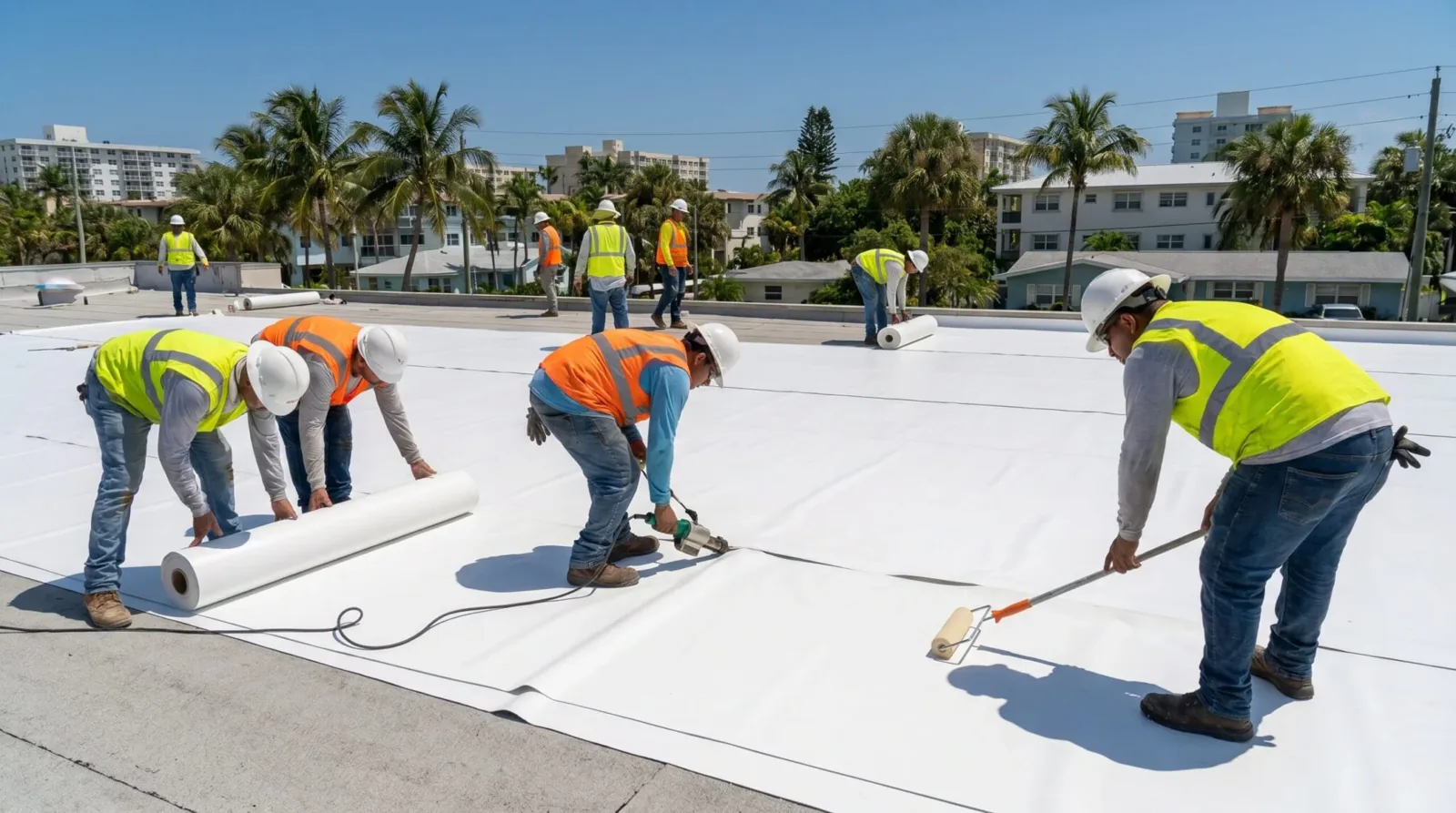
A broad roof can look uniform from the parking lot while its drains, curbs and seams have very different histories. In Murrieta, a TPO proposal starts with the existing assembly and how the building uses it, not with a roll color. Murrieta averaged five days at or above 105.1 degrees annually from 1950 to 2005; 2050 scenarios place that count at 26 to 36 days, depending on emissions. Those hot periods make seam attachment, membrane movement and maintenance access useful inspection points. We map the roof and compare repair, recover and replacement paths. A condition inspection records the details before the new membrane is specified.
Existing Assembly: Know What TPO Will Sit On
TPO is a thermoplastic single-ply membrane. Its long field seams are usually joined with hot air, while edges and penetrations need compatible flashing details. Before selecting the assembly, we identify what is on the roof now, whether insulation is dry, and whether the deck and attachment can support the proposed work. A test cut or moisture survey can help when stains, soft areas or prior patches leave the insulation condition unclear. If the existing roof is sound and compatible, a recover may reduce tear-off, but the added layers still need secure perimeter and drain details. If moisture or attachment failure is widespread, covering it can preserve the problem. We document which sections need removal and which can remain. A recover evaluation helps compare the lower-disruption option with a full replacement scope, including concealed-condition allowances and how the building stays dry during work.
Seams and Attachments: Match the Detail to Wind and Movement
Heat-welded seams need clean, dry surfaces and consistent temperature, speed and pressure. The installer checks the weld as work advances and probes completed joints after they cool. A weak seam can result from contamination, poor settings or a change in substrate, so repairs should address the cause before a patch closes the area. Attachment may be mechanical, adhered or part of a tested assembly; the choice affects deck preparation, fasteners and how the perimeter resists uplift. We also review parapets, edge metal and transitions where the membrane terminates. TPO is not a single generic specification: thickness, reinforcement, insulation, cover board and fastening pattern all affect the finished roof. Owners can compare PVC membranes and KEE formulations when chemical exposure, flexibility or maintenance needs change the tradeoff. Product data and project details should agree before material is ordered.
Field welds are only part of the quality check. At corners, the membrane changes plane and must fit the curb, wall or pipe without a fishmouth that can collect water. Prefabricated accessories can reduce field cuts at some penetrations, while irregular shapes may require measured flashing and careful weld work. We inspect those transitions before covering adjacent details, then probe cooled seams and note any repair by roof section. The specification should also identify how the edge is secured and where dissimilar materials meet. A membrane can perform as intended only when the details, insulation and attachment are treated as one assembly. That is why we compare drawings with the roof walk before accepting material quantities or a proposed installation sequence. The final inspection record notes which seams were tested and where future access should avoid dragging equipment across exposed flashing.
Drainage: Keep the Water Path Open
A new membrane does not correct a low roof section or an undersized outlet. We trace how water reaches each drain and scupper, check whether existing crickets direct flow, and note ponding that remains after ordinary drainage time. Tapered insulation can change elevations, but it also changes curb height, door thresholds and perimeter transitions. Rooftop units, conduit, skylights and pipe supports need flashing compatible with the membrane and accessible for later service. Perris’s adopted planning documents include a Downtown Promenade with planned retail, restaurant, service and entertainment uses; that plan describes a future land-use mix, not roof conditions. For an active commercial property, the practical lesson is to keep drainage and service routes legible in the roof plan. We check how the work meets each outlet and make sure debris control does not block it. A drain and scupper review can address persistent ponding and help us coordinate roof-level outlets.
Installation Window: Protect the Building Between Shifts
TPO work proceeds in a sequence: prepare the substrate, install insulation and cover board where specified, secure the membrane, weld seams, finish flashings and close the day’s edge. Weather and manufacturer limits affect whether each step can proceed, so we plan the dry-in boundary around the actual forecast and roof layout. On an occupied building, deliveries, rooftop-unit access and work below the active section need notice. The Old Town district in Temecula spans about one mile from north to south. That compact commercial setting is a reminder that access and staging can vary even between nearby projects; the inspected property determines where materials can be placed and how a crew reaches the roof. We identify lift locations, roof access points, temporary protection and the contact who can approve a concealed repair. Where business continues below, a phased reroof plan can divide the assembly into manageable sections. We record open seams and temporary tie-ins at each day’s closeout.
Long-Term Care: Budget for the Whole Assembly
TPO cost is influenced by tear-off, deck repairs, insulation depth, cover board, attachment, flashing quantity, access and the amount of rooftop equipment. The bid should show these scope items rather than treat the membrane square footage as the whole project. Menifee identifies Interstate 215 as its primary transportation corridor, but regional access alone does not determine delivery time or site staging; we confirm the actual route and receiving area with the property team. After installation, inspections should look for seam separation, punctures, loose edge details, blocked drains and damage from service traffic. Keep the roof plan and closeout photographs with the maintenance record so a future technician can locate repaired sections and avoid unnecessary cuts. scheduled maintenance helps track conditions without assuming that a new surface will never need attention. We give the owner a list of observations and the next useful check.
Commercial Roofing Questions
What makes a TPO seam fail after installation?
Contamination, poor weld settings, movement or an incompatible repair can weaken a seam. We test representative joints, check the substrate and use membrane-compatible repairs so the correction deals with the source rather than only the visible opening.
Can we install TPO over the roof we already have?
A recover is possible only when the existing assembly is dry enough, stable and compatible with the selected system. We document moisture, attachment, drainage and edge height first, then compare recover with removal where concealed conditions could change the outcome.
Does the TPO color determine energy savings?
Color and reflectance are only part of building energy performance. Insulation, air leakage, HVAC operation, equipment loads and occupancy also matter. We describe the membrane data and avoid projecting a utility reduction from color alone.
How do rooftop units affect a TPO reroof?
Curbs, service paths and penetrations need room for flashing and later mechanical access. We coordinate shutdowns or temporary movement with the responsible trade, then leave each unit transition complete before the roof section is closed.
What should our maintenance team keep after the project?
Retain the roof map, membrane and insulation specifications, seam and penetration photographs, approved repairs and any manufacturer documents that apply. Those records make it easier to inspect the same locations and plan later work by section.
Related Roofing Work
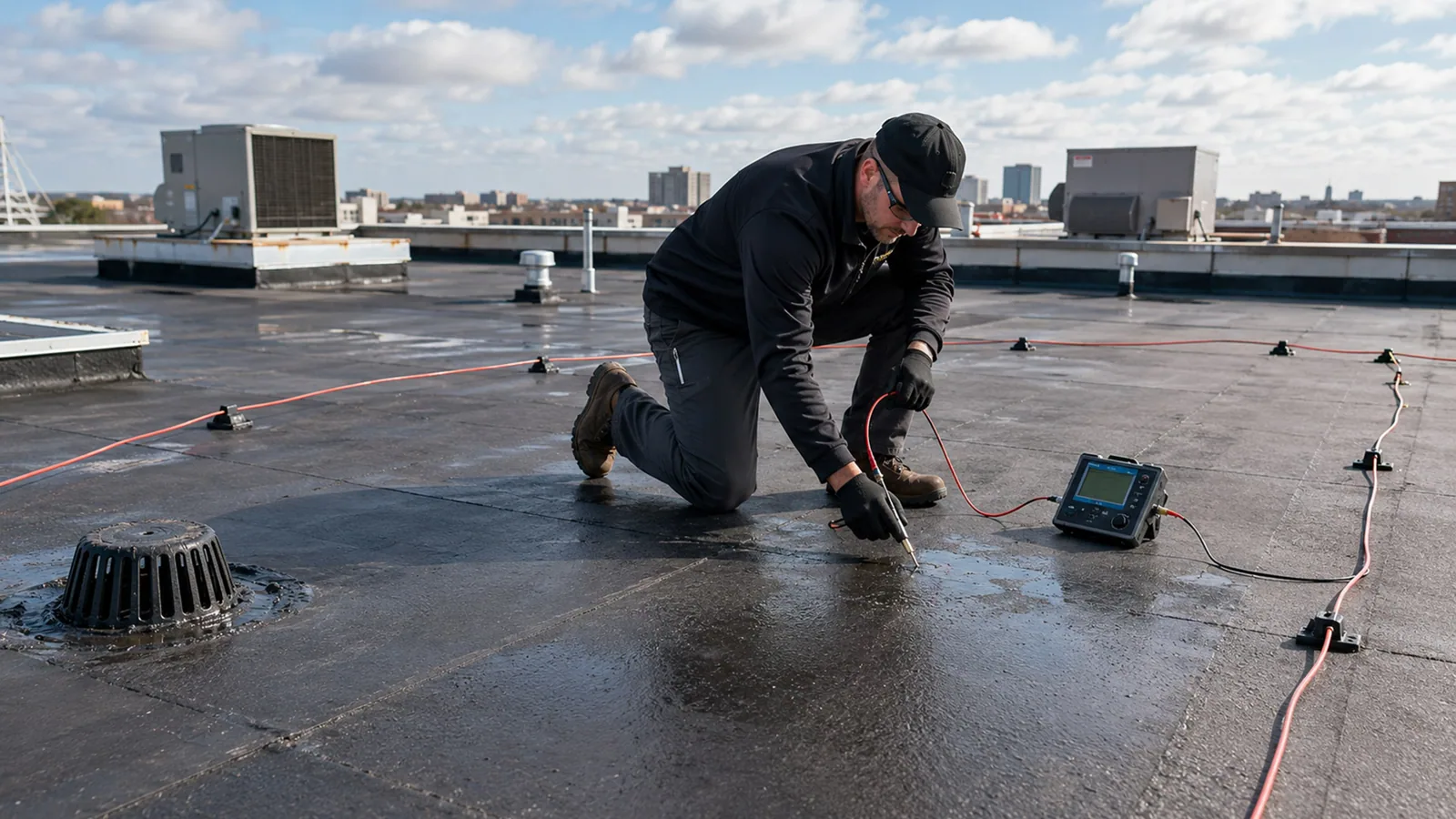
Commercial Roof Inspection in Murrieta, CA
See how this work fits the roof, the building and the schedule.
Learn More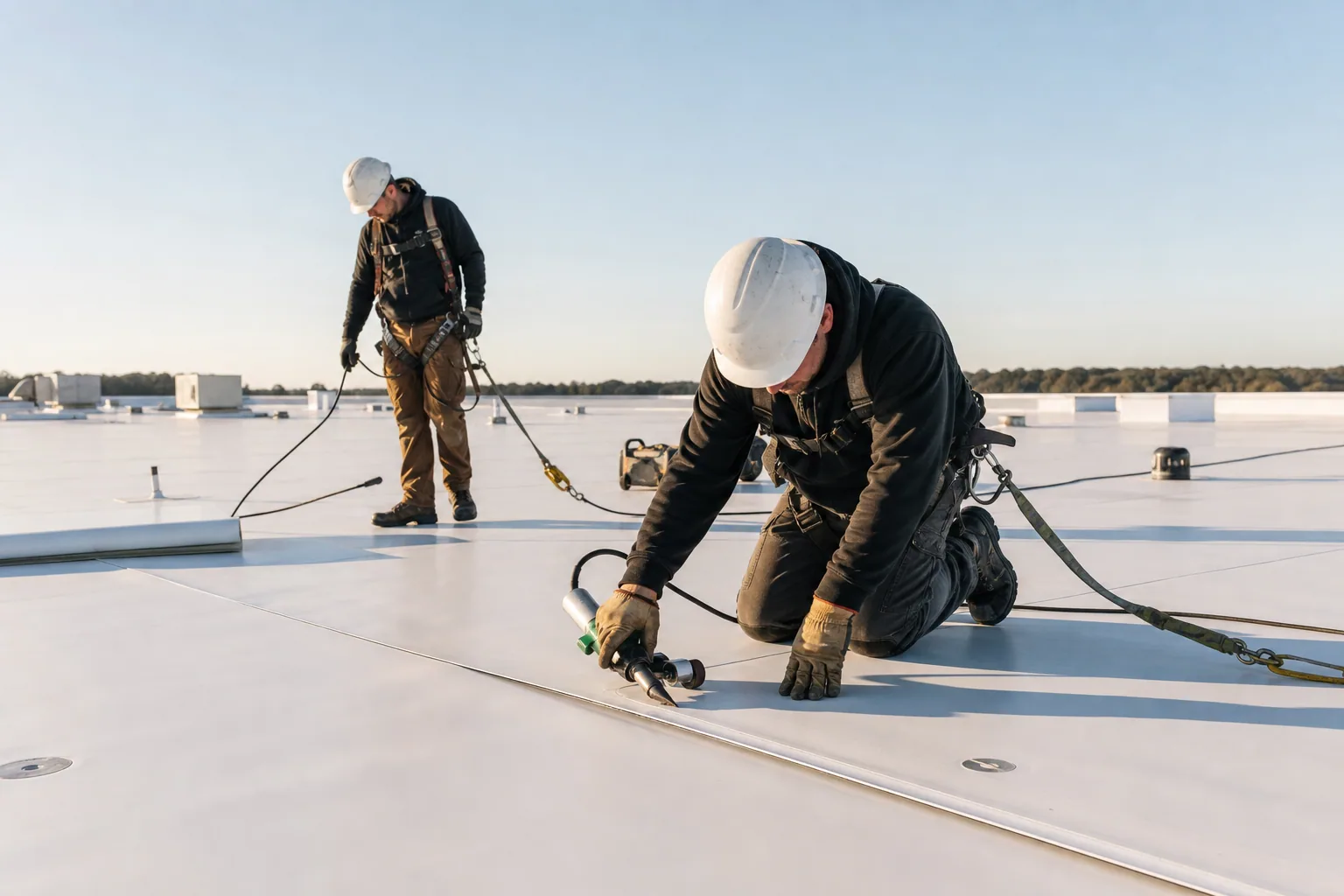
Commercial Roof Recover in Murrieta, CA
Related scope, access notes and questions to ask before work starts.
Learn More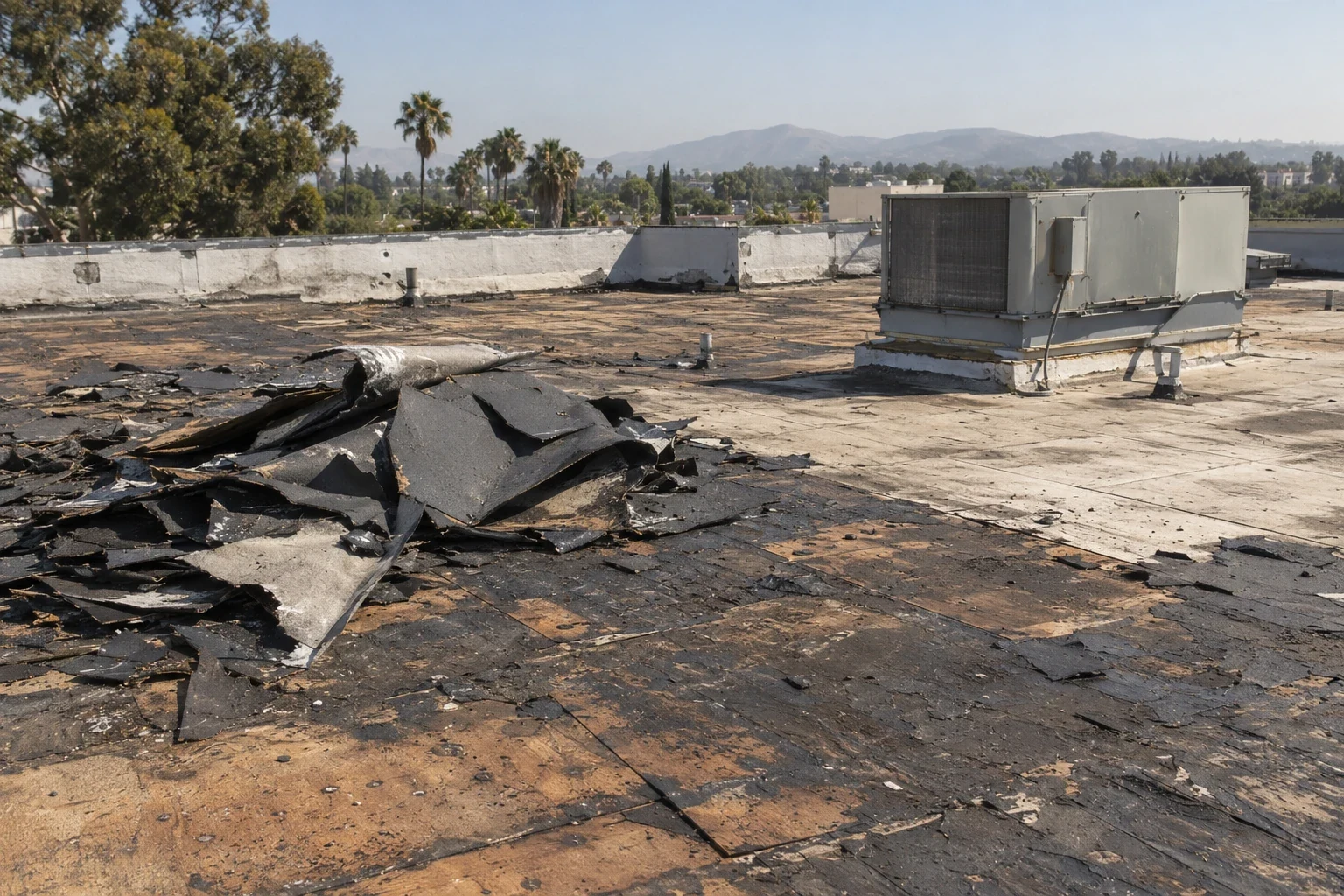
Commercial Roof Replacement in Murrieta, CA
Read the full description and the questions owners ask about it.
Learn More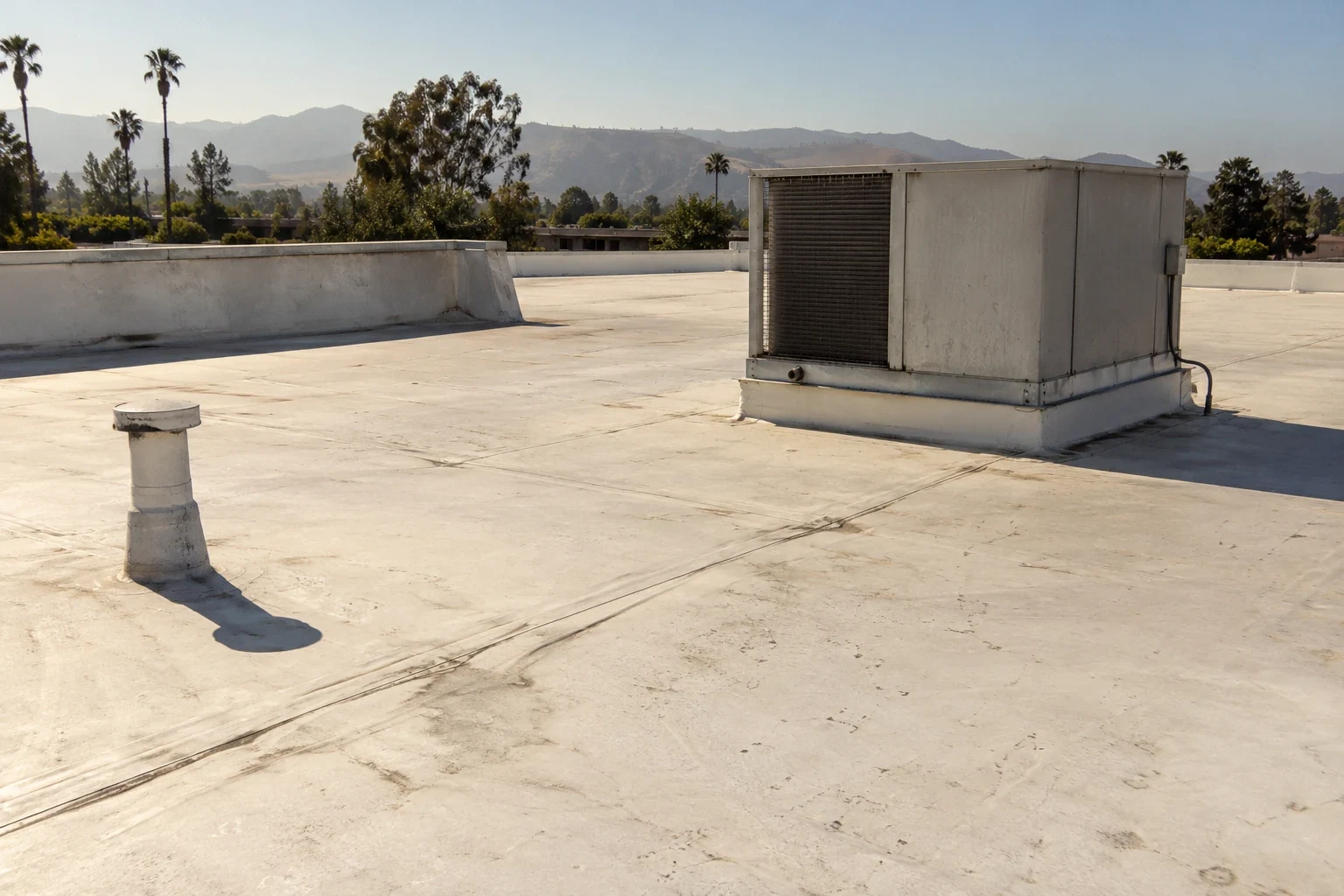
Commercial PVC Roofing in Murrieta, CA
See how this work fits the roof, the building and the schedule.
Learn More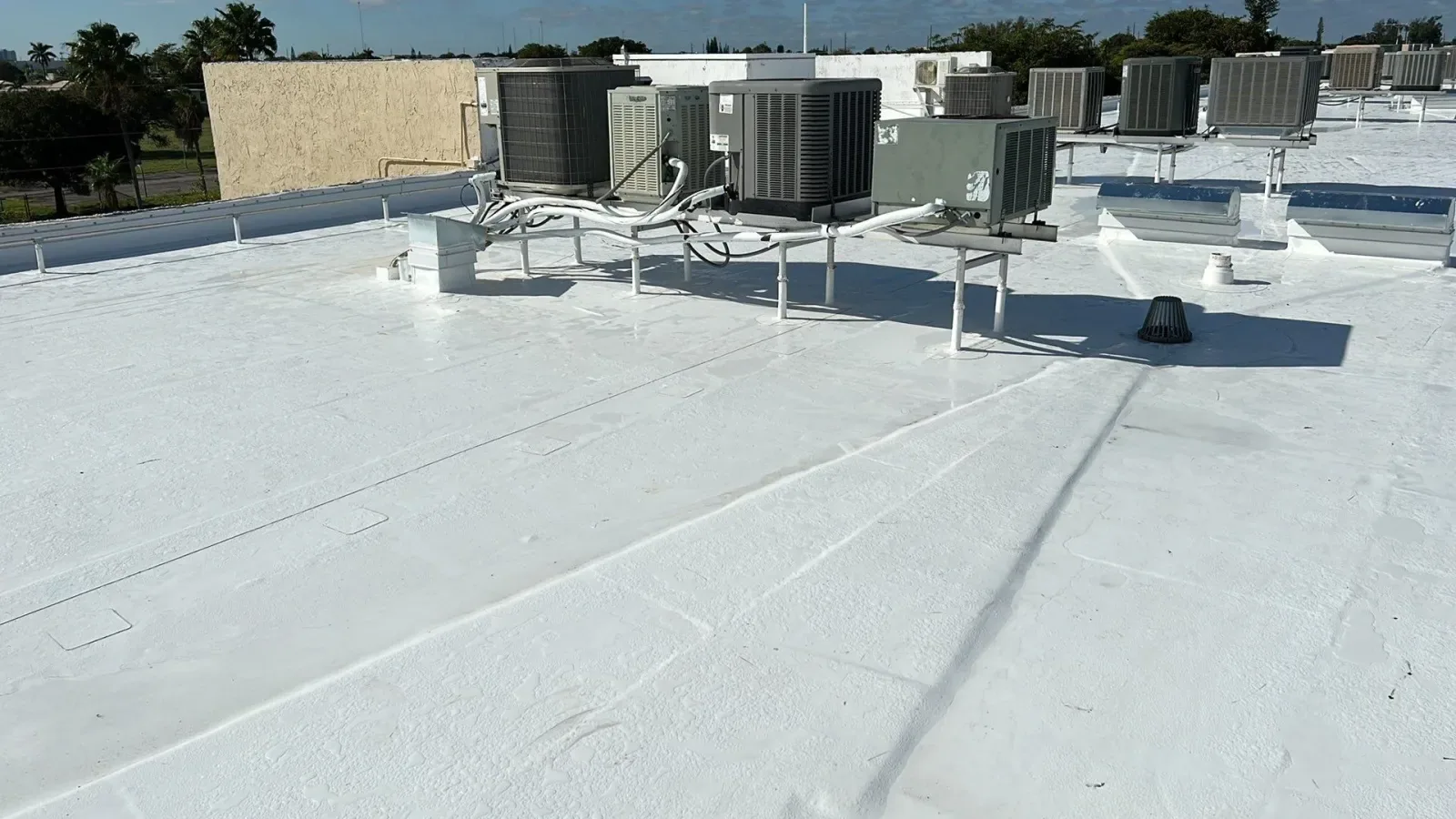
Commercial KEE Roofing in Murrieta, CA
Related scope, access notes and questions to ask before work starts.
Learn More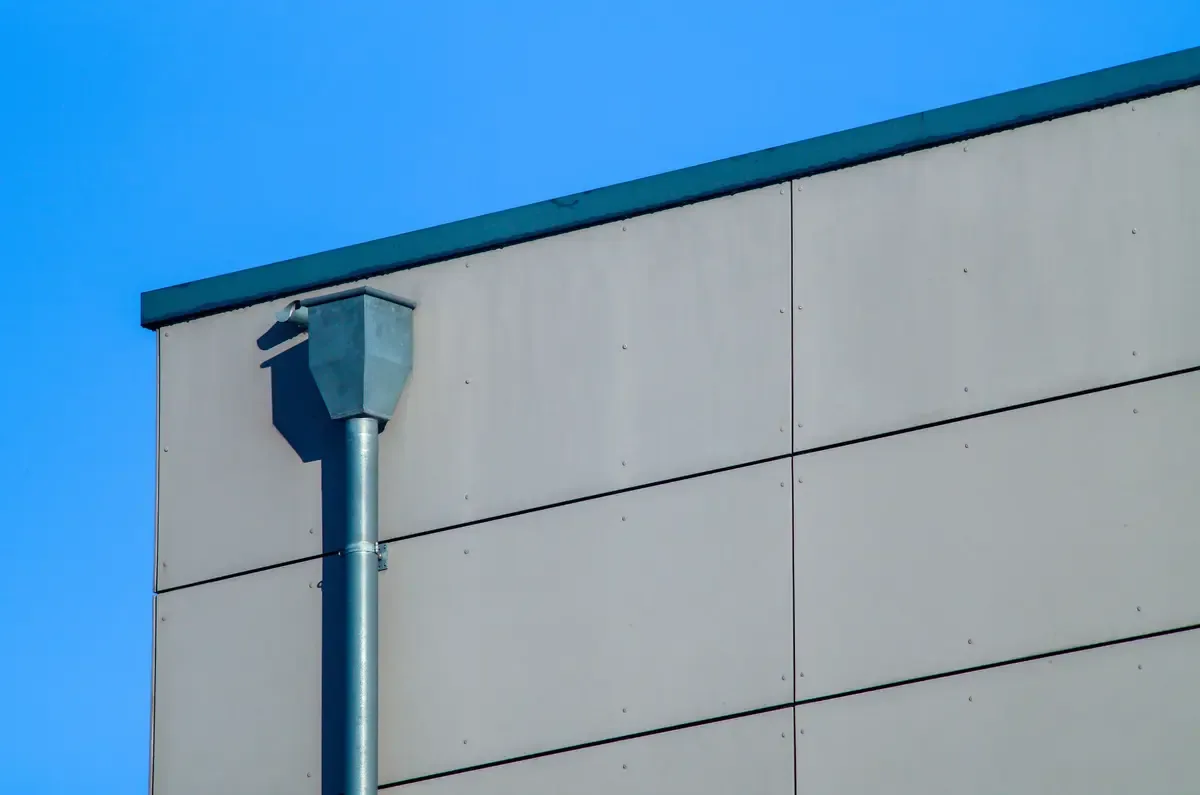
Commercial Roof Drains and Scuppers in Murrieta, CA
Read the full description and the questions owners ask about it.
Learn MoreReview a TPO Roof in Murrieta
Arrange an inspection to compare the existing assembly, seam condition and drainage before setting the TPO scope.