
Healthcare System Roofing in Murrieta, CA
Plan Murrieta clinic and healthcare roof work with documented leaks, access controls, patient-area protection, clear repair scopes, and closeout records.
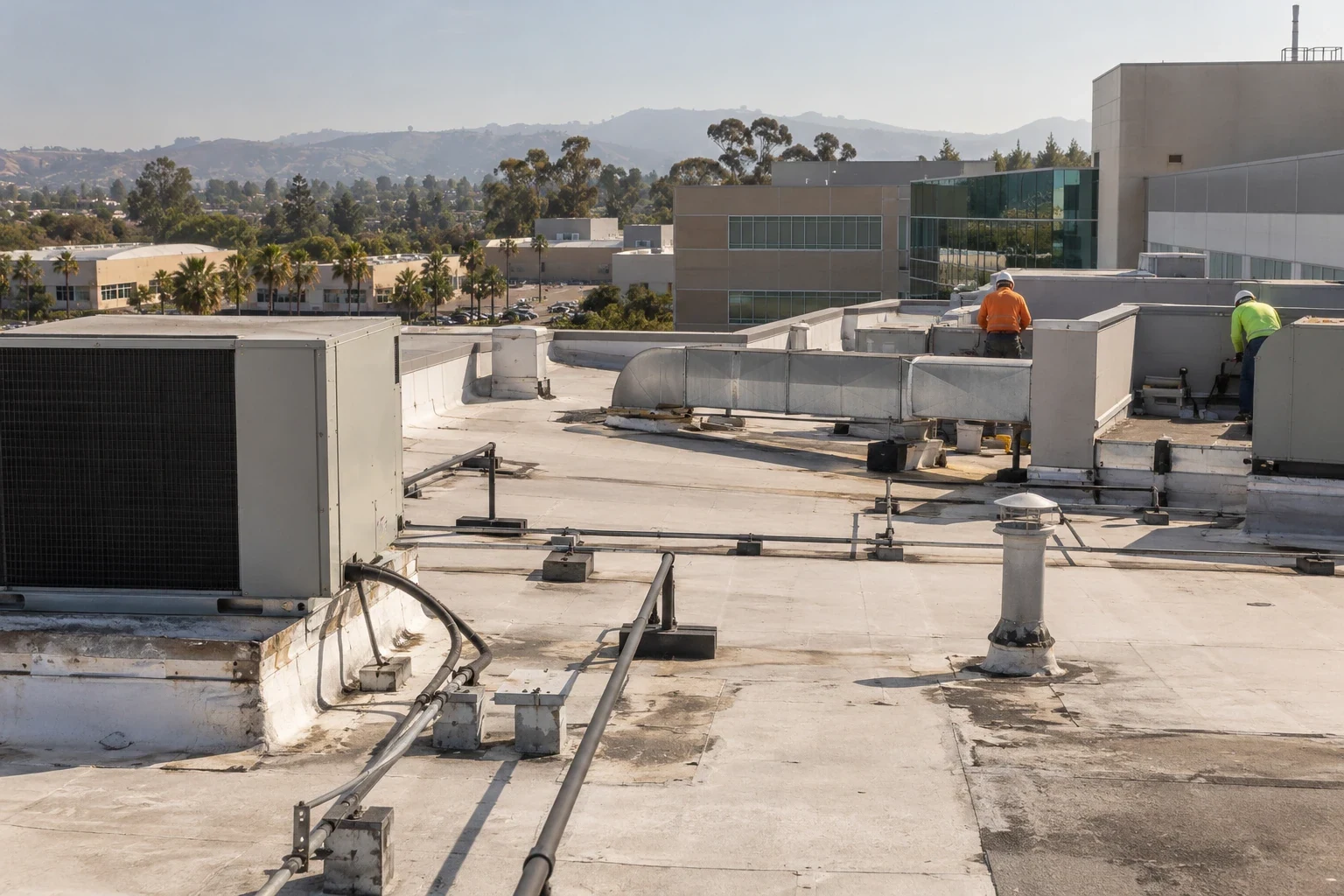
A clinic can keep its appointment schedule while a small roof leak threatens a room with sensitive equipment. In Murrieta, medical services and scientific research are part of the city’s stated economic strengths, and planning materials describe a future medical and technology corridor near Keller Road and I-215. A planned corridor does not confirm that proposed facilities are complete. For an operating health property, we start with its actual roof, patient areas, service routes, and access rules. We record where water enters, what the inspection can confirm, and which spaces need protection. A commercial roof inspection can give facilities staff a map for the next decision.
Care Areas: Mark What Must Stay Protected
Water near an examination room, pharmacy, records area, lab, or electrical space can create different response needs. We ask facilities staff to identify affected rooms, equipment, hours, and access restrictions before setting a roof work boundary. The inspection compares those reports with the roof plane, drains, curbs, seams, and exterior wall transitions. We do not assume an interior stain marks the entry point. The record connects the room to the roof area inspected and notes whether an opening or additional moisture check is needed.
Murrieta’s economic strategy includes medical services and scientific research among its existing strengths. Murrieta plans future medical and technology development near Keller Road; that proposal does not prove completed health buildings. Those planning details are useful context for the region, while an active clinic needs a decision based on its own rooms and assembly. A medical-office roof scope can separate occupied care areas from roof work without treating every healthcare property as identical.
Leak Record: Trace the Path Above the Room
We mark the room, ceiling condition, equipment below, and time the leak was observed. Above it, the inspection checks seams, flashing, curbs, drain bowls, overflow routes, and earlier patches. Water can move through insulation or along a deck before it becomes visible, so we document likely paths and the limits of a visual review. When the assembly may hold moisture, we identify targeted testing and what result would change the repair. The owner receives a specific repair boundary rather than a general statement that the roof needs attention.
A flashing failure review can focus on a curb or wall connection; a confirmed surface break needs compatible repair material and preparation. If several roof sections have different materials, we keep their findings separate. Murrieta’s business districts have access to Interstate 15 and Interstate 215, yet a facility’s delivery route, hatch, and lift rules still control roof access. The citywide highway context cannot substitute for a site plan.
Nearby Temecula identifies medical-device manufacturing within its advanced manufacturing focus. That is an industry context, not a claim about a specific supplier or healthcare building. If a care network has several properties, property managers coordinating multiple buildings can keep each roof record tied to its actual use. For any laboratory or production space in a network, a manufacturing roof record should keep those operating needs distinct from patient areas.
Scope Control: Separate Water Response from Permanent Work
An active leak may call for immediate protection before the permanent repair can be completed. We state which temporary measures control water, what must be dry or accessible before permanent work, and how the final repair connects to the existing assembly. The proposal names materials, preparation, seam or flashing work, drainage details, and exclusions. If insulation or deck damage is concealed, the approval path and change condition should be clear before removal starts. That helps the facilities lead route the decision without implying that temporary dry-in has renewed the roof.
For a campus or network, each building receives its own map even when one contract covers several sites. A shared schedule can coordinate mobilization, but it does not erase differences in membrane, access, infection-control requirements, tenant notice, or critical equipment. A multi-property roof plan can keep common records while preserving site-specific approvals. We tag each roof area so a follow-up visit returns to the same condition instead of relying on a broad campus label.
Work Window: Coordinate Patients, Staff, and Trades
Facilities staff can tell us which entrances cannot be blocked, when deliveries arrive, and which contractors already have roof access. We use that information to place lifts and material, protect the path below, and decide how much roof can be opened in a shift. If a mechanical vendor must disconnect equipment, its sequence belongs in the schedule before flashing is removed. The daily dry-in boundary and any temporary restriction should be written down so reception, security, and the care team can give consistent notice.
Murrieta’s projected medical corridor remains a future planning item; work at an existing clinic follows the site’s actual operating calendar. The roughly 220-acre Madison Corridor is a separate employment-planning area, not evidence that any proposed health facility is complete. We can phase sections around quiet periods or restricted hours when the building approves that approach. A phased reroof scope identifies the active area and close-of-day protection. When roof equipment affects a curb or support, we coordinate the roofing detail with the mechanical trade’s work.
Capital Choice: Keep Clinical Risk Visible
Facilities and ownership can compare repair, recover, and replacement when the options refer to the same roof sections. We identify assembly condition, wet insulation questions, attachment, drain height, edges, penetrations, and any deck review. A recover may be unsuitable if moisture is trapped or details cannot be raised cleanly. Replacement may involve more disruption, so the scope should state removal areas, protection, temporary access, and daily dry-in. The current roof record keeps the urgent water response apart from work that can enter a longer-term budget request.
Closeout includes photographs, completed repair locations, materials, approvals, and open observations. Facilities can file those notes with room impact and the date a condition was reported. If the next inspection finds a change, the record shows whether it is new or a return at an earlier detail. Arrange a review when water threatens an active care area, drains remain difficult to clear, or repair calls no longer line up with the scope. We map the roof and state what decision the findings support.
Commercial Roofing Questions
Can roof repairs take place while a clinic is open?
The affected room, route, noise, and roof section decide the workable window. We coordinate restrictions with facilities staff, mark the area below the work, and state the daily dry-in point. If a service route or clinical room must be cleared, that limit goes into the sequence before mobilization.
How do you handle a leak near sensitive equipment?
We document the room and equipment impact first, then inspect the roof above the reported area. The plan separates immediate water control from the permanent repair and identifies any testing needed before opening the assembly. Facilities staff can route each step to the right decision-maker.
Does a future medical corridor establish the condition of a current clinic?
No. Planning for future development does not identify a completed facility or its roof system. We keep that context separate from an existing property inspection, which records the actual assembly, water path, access limits, and repair options.
What should a health network keep after roof work?
Keep a building-level map, photographs, materials, approval records, completed boundaries, and unresolved observations. We can provide notes that identify which rooms or routes required protection without implying an entire network shares one roof condition.
When is moisture testing useful?
Testing helps when an inspection cannot confirm whether insulation is wet or when that answer changes repair versus replacement. We identify likely areas, the method needed, and the decision tied to the result. A thermal pattern alone does not establish the concealed condition.
Related Roofing Work
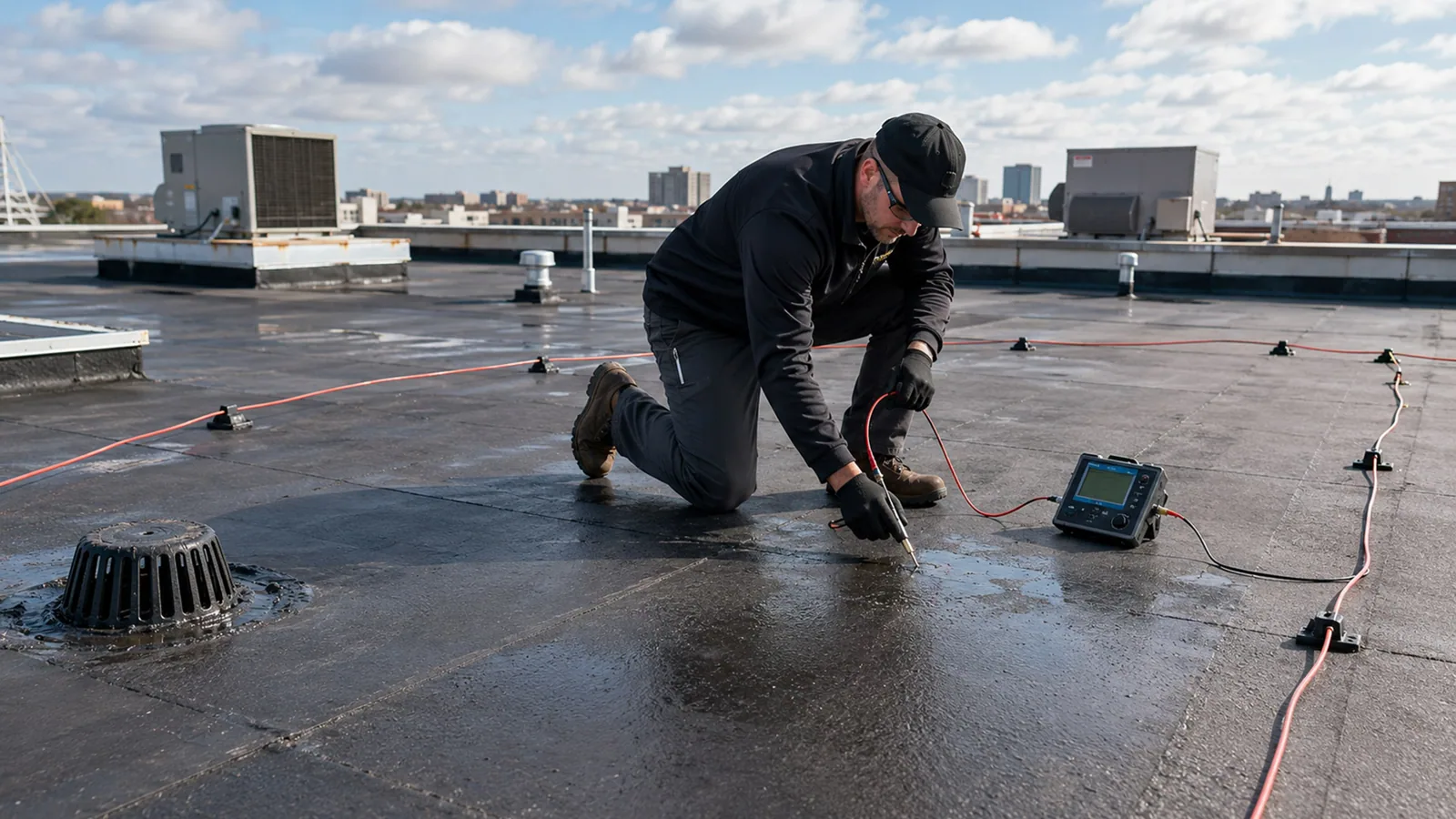
Commercial Roof Inspection in Murrieta, CA
See how this work fits the roof, the building and the schedule.
Learn More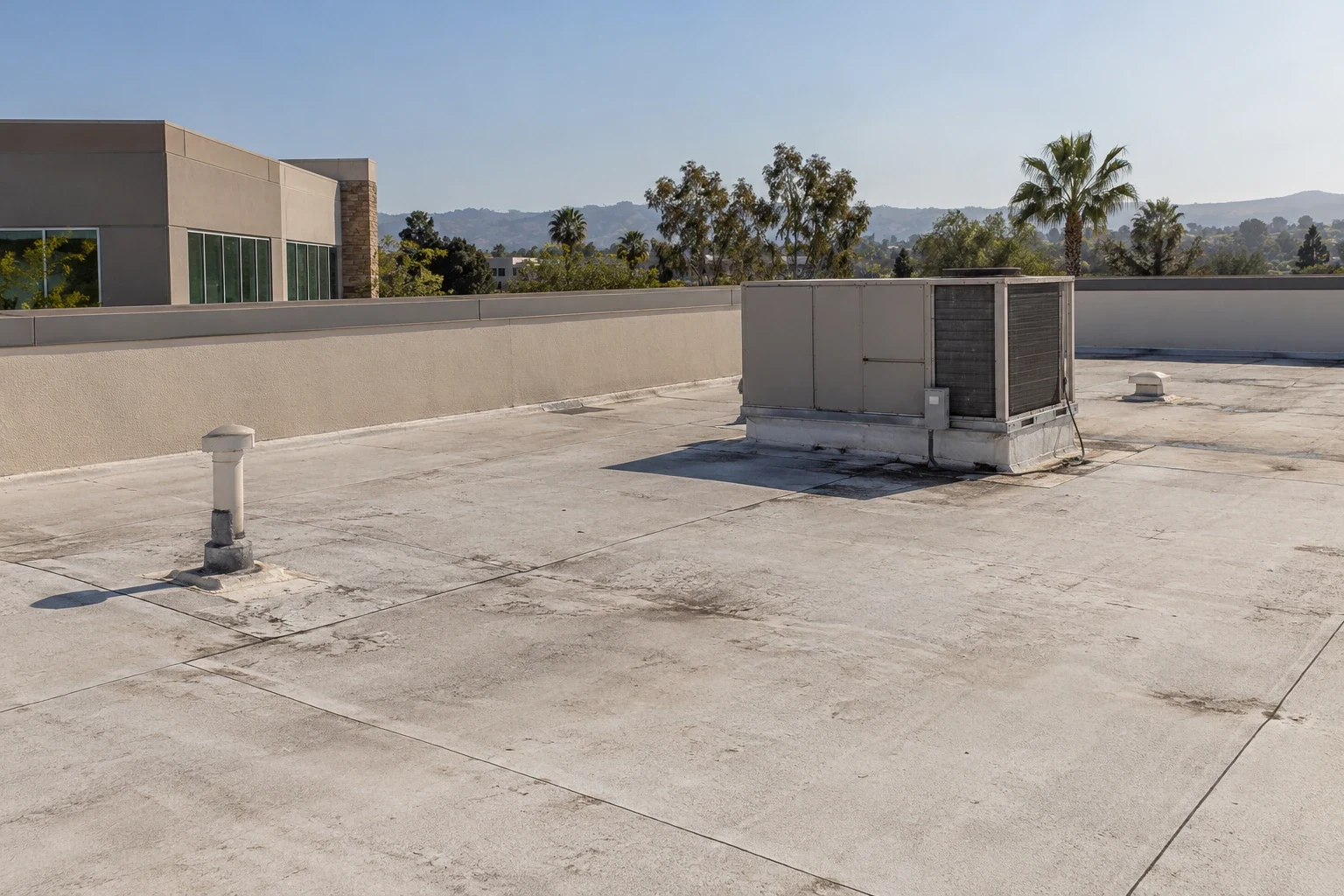
Medical Office Roofing in Murrieta, CA
Related scope, access notes and questions to ask before work starts.
Learn More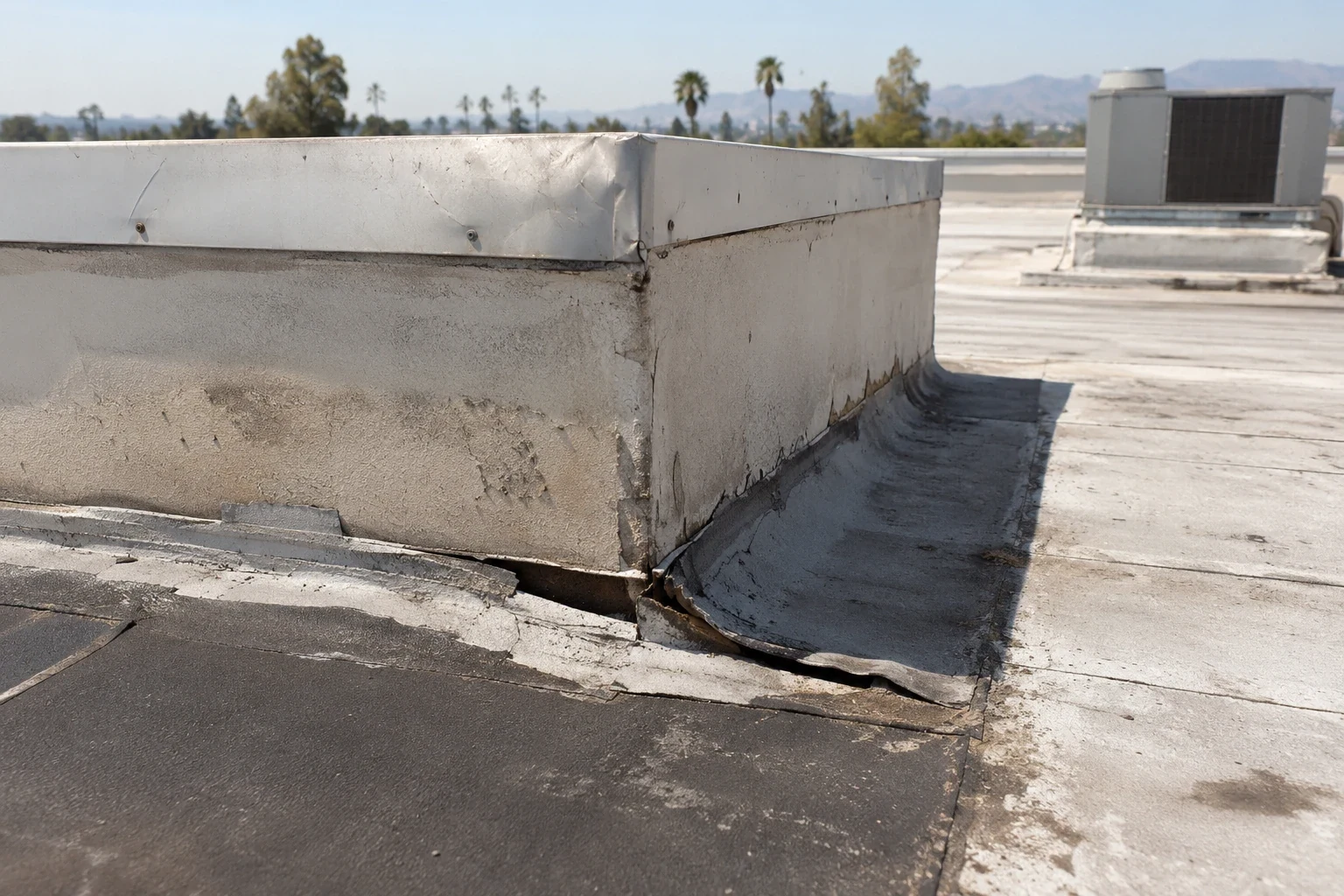
Commercial Flashing Failure Repair in Murrieta, CA
Read the full description and the questions owners ask about it.
Learn More
Commercial Roofing for Property Managers in Murrieta, CA
See how this work fits the roof, the building and the schedule.
Learn More
Manufacturing Facility Roofing in Murrieta, CA
Related scope, access notes and questions to ask before work starts.
Learn More
Multi-Site Commercial Roof Programs in Murrieta, CA
Read the full description and the questions owners ask about it.
Learn MoreProtect the Care Area Below the Roof
Arrange an inspection to map the water path, identify affected spaces, and set a repair sequence facilities can coordinate.