Commercial Roof Edge Metal, Coping and Gutters in Murrieta, CA
Repair commercial roof edges, coping and gutters in Murrieta with a review of attachment, water discharge, transitions and compatible flashing.
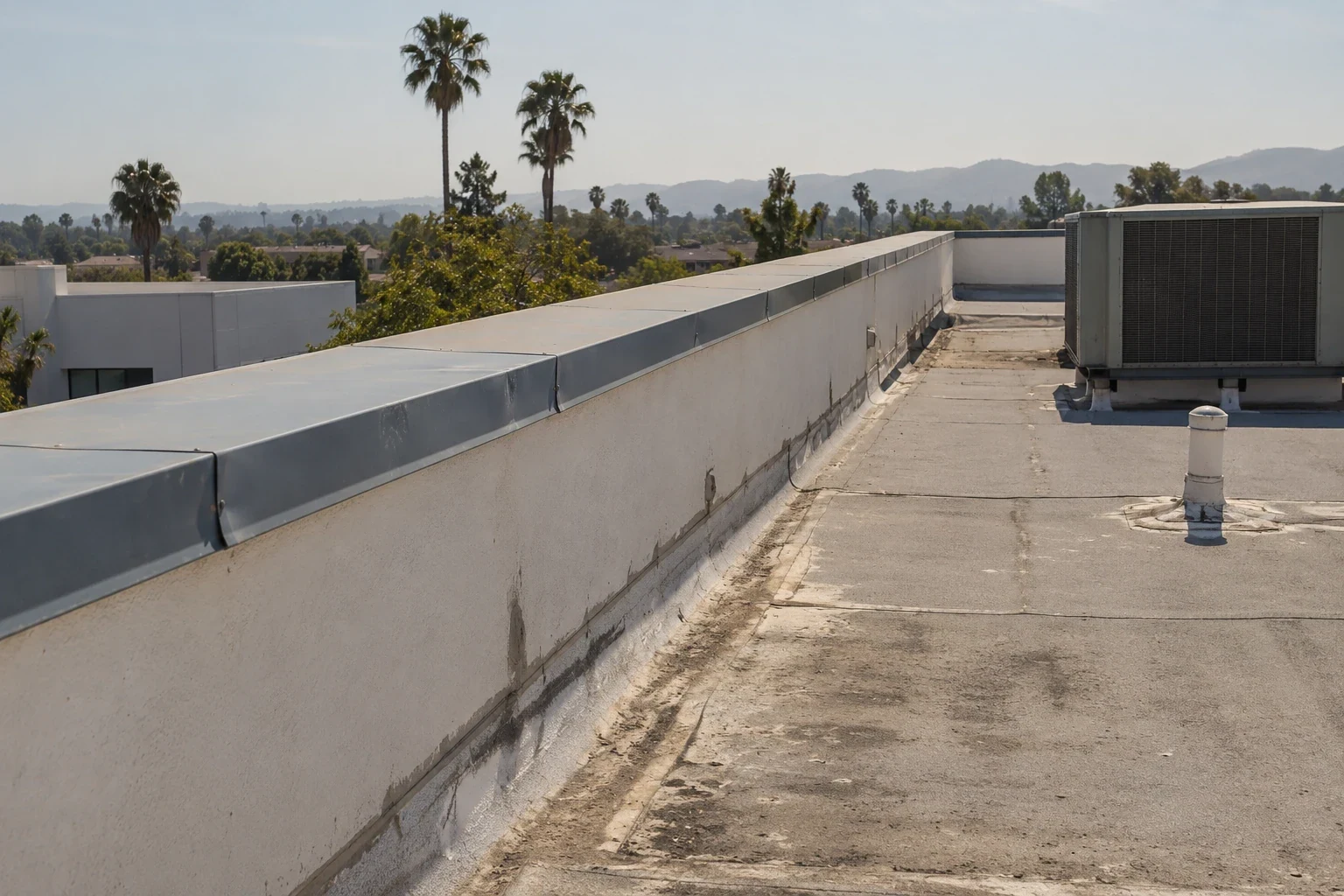
A loose coping cap or open gutter joint can send water behind the roof edge, where it may travel before showing inside. On a commercial building in Murrieta, we inspect the full perimeter: membrane termination, metal attachment, joints, corners, downspouts and the path water follows after leaving the roof. Jefferson-Madison is planned for business-park and innovation uses; that land-use setting does not tell us what any completed building has at its edge. The actual assembly sets the repair. We photograph exposed fasteners, lifted metal, failed sealant and staining, then decide whether the detail needs repair or rebuilding. A roof inspection can connect an edge leak with the field membrane and drainage system.
Perimeter Check: Find the Entry Point and the Movement
At the roof edge, wind pressure, thermal movement and water flow meet several materials. We check whether the membrane is secured at the perimeter, whether a termination bar remains tight, and whether coping joints are open or distorted. Gutters can pull away when hangers loosen or water and debris add load. Downspouts need clear outlets and secure connections; a leak at a joint may wet the wall rather than the roof deck. We follow staining below the metal and compare it with the roof-side transition. Existing sealant can hide a gap while making the condition harder to see, so we note what is removed during inspection. If the edge movement follows a membrane failure, we may also need to assess wind-related damage or a flashing transition before setting a repair boundary.
Metal Work: Secure the Termination Without Trapping Water
Edge metal is part of the roof assembly, not decorative trim. Its profile, cleat, fastener spacing and connection to the membrane affect how the perimeter resists movement and sheds water. We identify the existing detail and select a compatible replacement where repair is needed. At corners, changes in height and parapet intersections, the pieces must connect without leaving a path behind the metal. Coping joints need room for movement and a seal method suited to the material. Gutters require slope toward their outlets and support at a suitable interval. A repair that seals only the visible top can leave a wet substrate behind it. The scope may include new cleats, replacement sections, membrane termination and flashing, or a wider perimeter rebuild. Owners comparing details can review standing-seam metal components alongside drain and scupper corrections when the water path continues beyond the edge.
Property Operations: Keep the Perimeter Accessible
Perimeter repairs can affect entrances, sidewalks, loading zones and exterior work below the roof. Before setting staging, we identify pedestrian routes, deliveries, mechanical access and any area that needs a protected drop zone. Temecula’s official business information describes Old Town as about one mile from north to south, while Perris’s Downtown plan identifies a planned commercial frontage along its 4th Street Corridor. These facts describe distinct local settings, not a building’s construction. They are reminders to consider how active street and business access intersects with work at the edge. We coordinate the repair area and material handling with the property team, then establish how the crew will reach the perimeter and keep runoff away from occupied areas. If a repair crosses several roof sections, a phased access plan can keep the work boundary clear while the building remains active.
Repair or Replace: Match the Scope to the Metal Condition
A short open joint may need a focused repair, while widespread corrosion, loose cleats or repeated movement can support replacing a longer run. We inspect the substrate and membrane termination before recommending either option. If gutter capacity or slope is part of the problem, the scope should address water discharge instead of simply sealing a seam. Where a parapet cap has several intersections, we document corners and end conditions so replacement pieces fit the actual geometry. The proposal should identify metal type, removal limits, substrate repairs, membrane tie-in, gutter work and any temporary protection. It should also describe what hidden damage will trigger an owner review. A photo condition report can show the full perimeter and preserve an inspection baseline. If interior signs suggest the leak extends into the field, leak tracing should be included rather than treating every ceiling stain as an edge-only problem.
Closeout: Keep the Edge and Water Path in View
After repairs, we check that metal is secured, seams are finished and water can move toward a gutter, scupper or downspout without being redirected behind the fascia. Photos should show the repaired corner, joint or termination and a wider perimeter view for context. The owner should also know which areas remain on a watch list and when debris clearing is due. Murrieta’s climate assessment includes changing precipitation scenarios through 2099, but the projections do not predict a specific storm or gutter loading event. A practical service record focuses on the property’s roof edge, observed flow and inspection date. We can mark the repaired edge on a roof plan and note whether the gutter or downspout was included. If a future inspection finds staining below the same area, that record helps separate a returning edge leak from a blocked outlet or a new opening in the field membrane. The owner can also plan debris removal without disturbing freshly installed metal. This gives the maintenance team a clear boundary for repeat checks. It should also note any locations that could not be inspected because of access or stored materials. That boundary gives a future inspection a clear starting point instead of treating an unobserved area as sound. For a portfolio review, capital planning can help compare isolated metal repairs with longer-term perimeter replacement. A maintenance inspection can then check joints, hangers and outlets before small separations develop into interior leaks.
Commercial Roofing Questions
What causes coping or edge metal to loosen?
Movement, failed attachment, corrosion, poor joints or water working beneath a termination can all contribute. We inspect cleats, fasteners, corners and the membrane connection before deciding whether a short repair will hold or a run needs replacement. The report should show which detail failed and what supports the replacement scope.
Can you repair a leaking gutter without replacing the roof edge?
Often the gutter can be addressed as its own assembly, but we check how it connects to the fascia and roof edge first. A loose hanger or open joint differs from a membrane termination failure behind the gutter. We note each condition separately so the repair does not hide a second water path.
How do you stop water from getting behind the coping?
The repair needs to restore attachment, joints and transitions as a system. We inspect the cap, cleat, corners and wall-side flashing, then rebuild the affected connection with compatible materials. Surface sealant alone is not a substitute for a secure mechanical detail when the metal can move or the substrate is damaged.
Will replacing the downspout fix ponding on the roof?
A downspout carries water after it reaches the gutter; it does not correct a low spot in the roof field. We trace the path from the roof to the outlet and check drains, scuppers and slope. If the standing water begins before it reaches the gutter, a separate drainage correction may be needed.
What should we include in an edge metal repair scope?
Identify the run, corners and transitions, then state what metal and membrane work are included. The scope should cover attachment, substrate repair, water discharge, access and hidden conditions. Photos before and after help confirm the repaired boundary and give the property team a useful record for later inspections.
Related Roofing Work
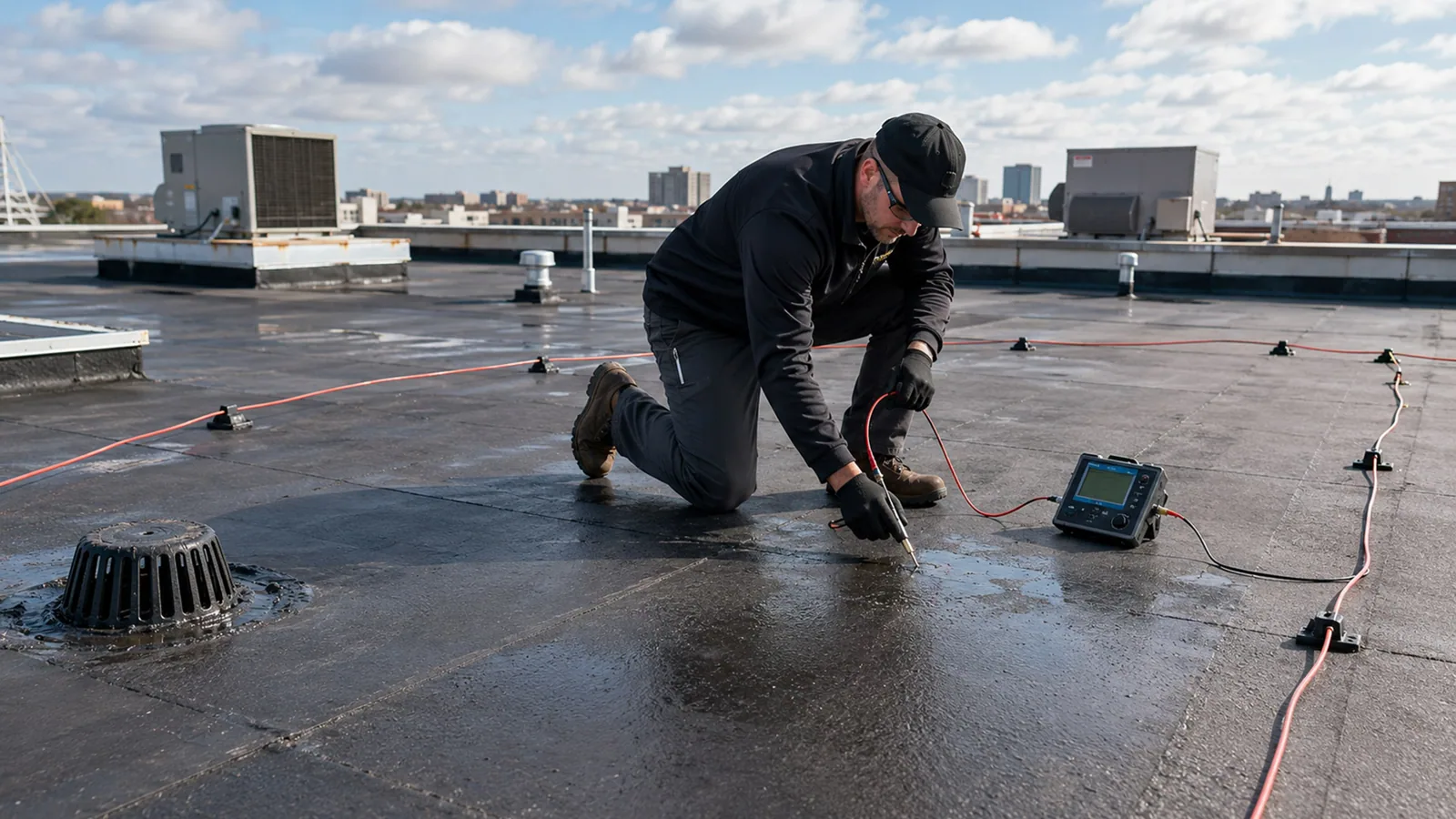
Commercial Roof Inspection in Murrieta, CA
See how this work fits the roof, the building and the schedule.
Learn More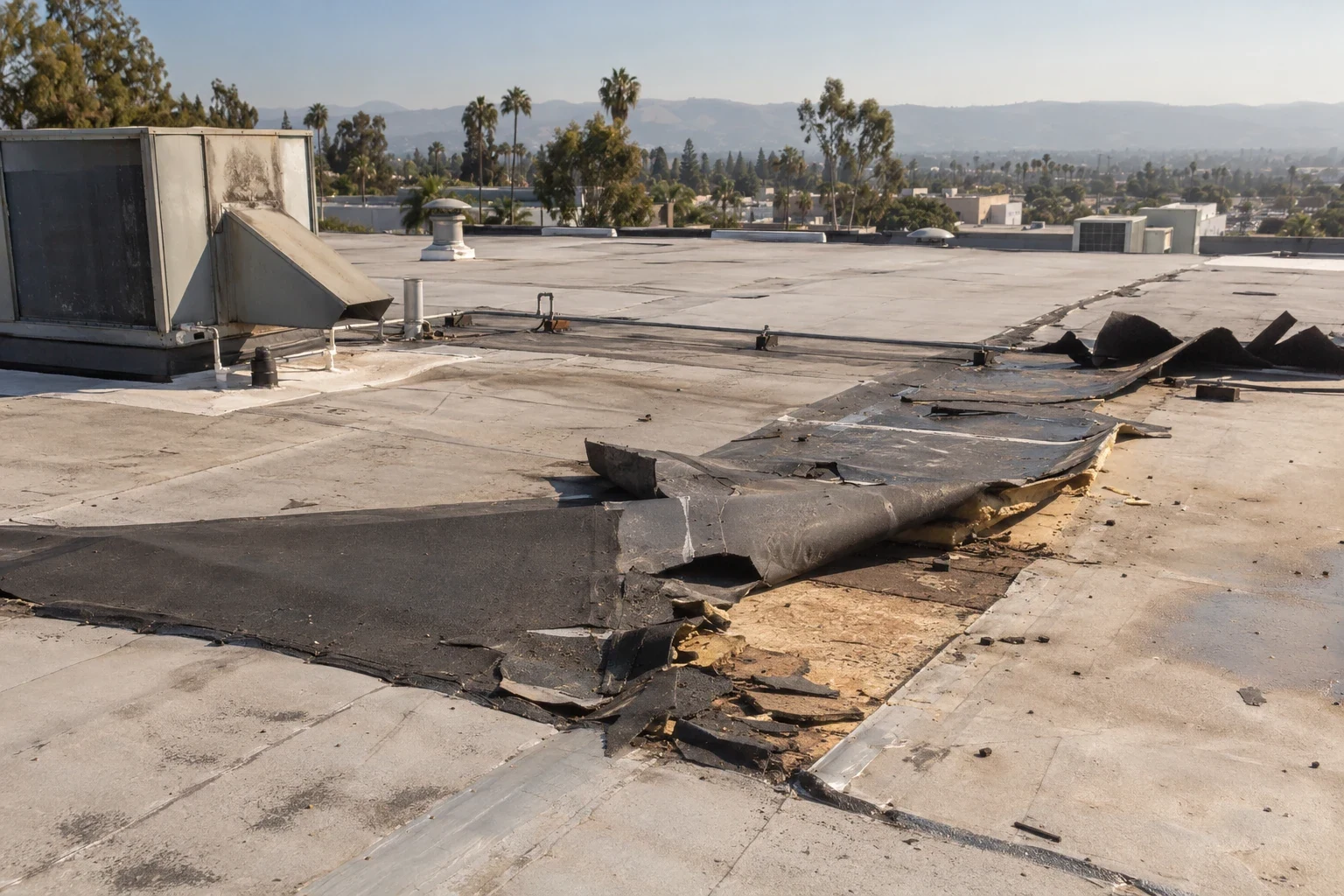
Commercial Wind Damage Roof Repair in Murrieta, CA
Related scope, access notes and questions to ask before work starts.
Learn More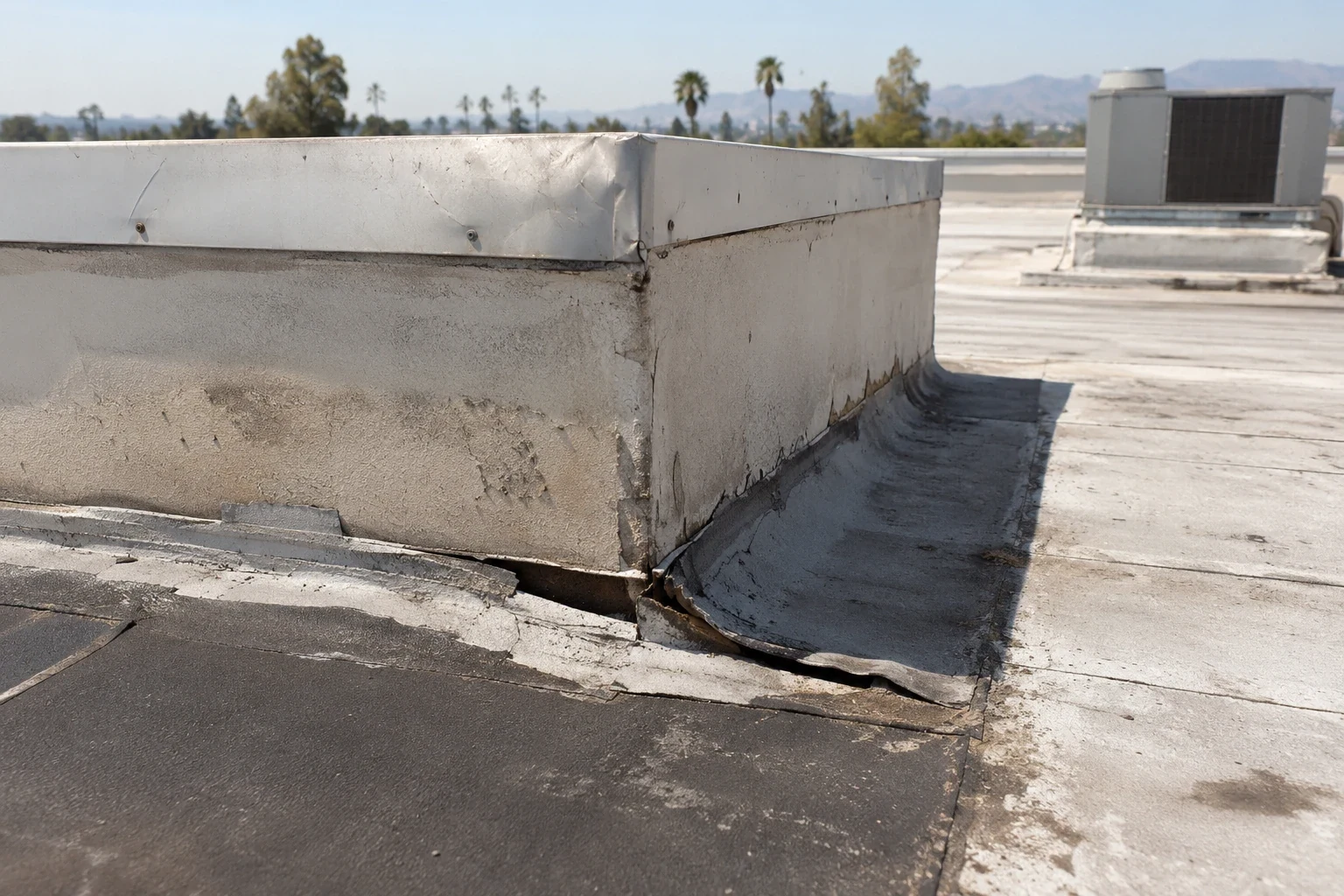
Commercial Flashing Failure Repair in Murrieta, CA
Read the full description and the questions owners ask about it.
Learn More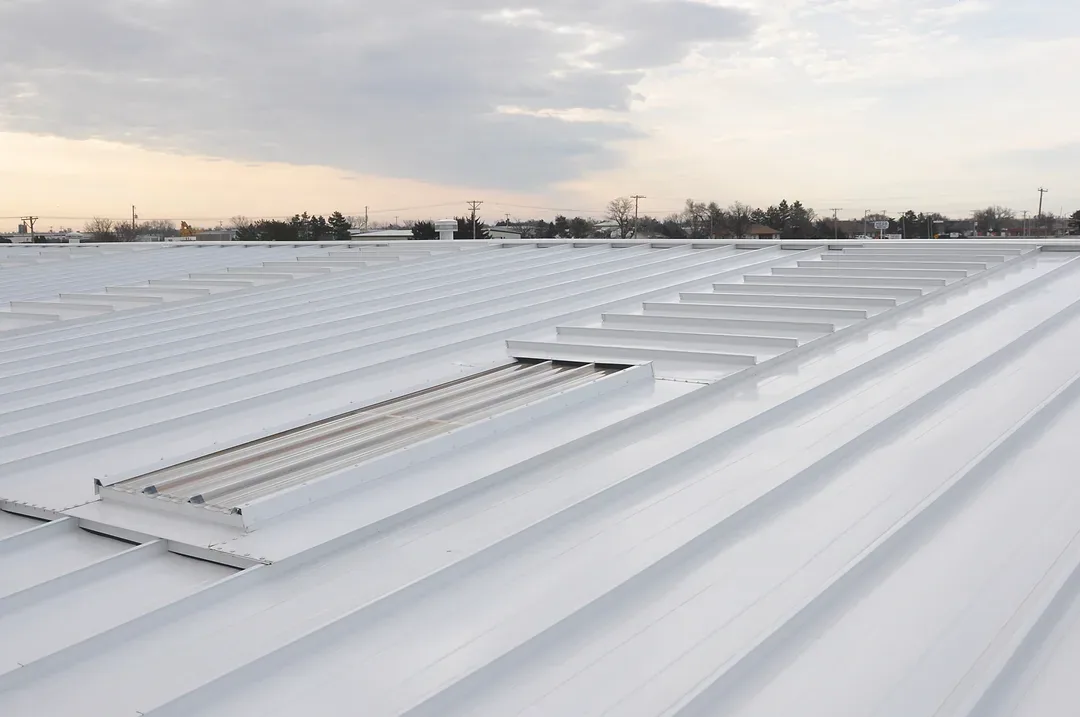
Commercial Standing Seam Metal Roofing in Murrieta, CA
See how this work fits the roof, the building and the schedule.
Learn More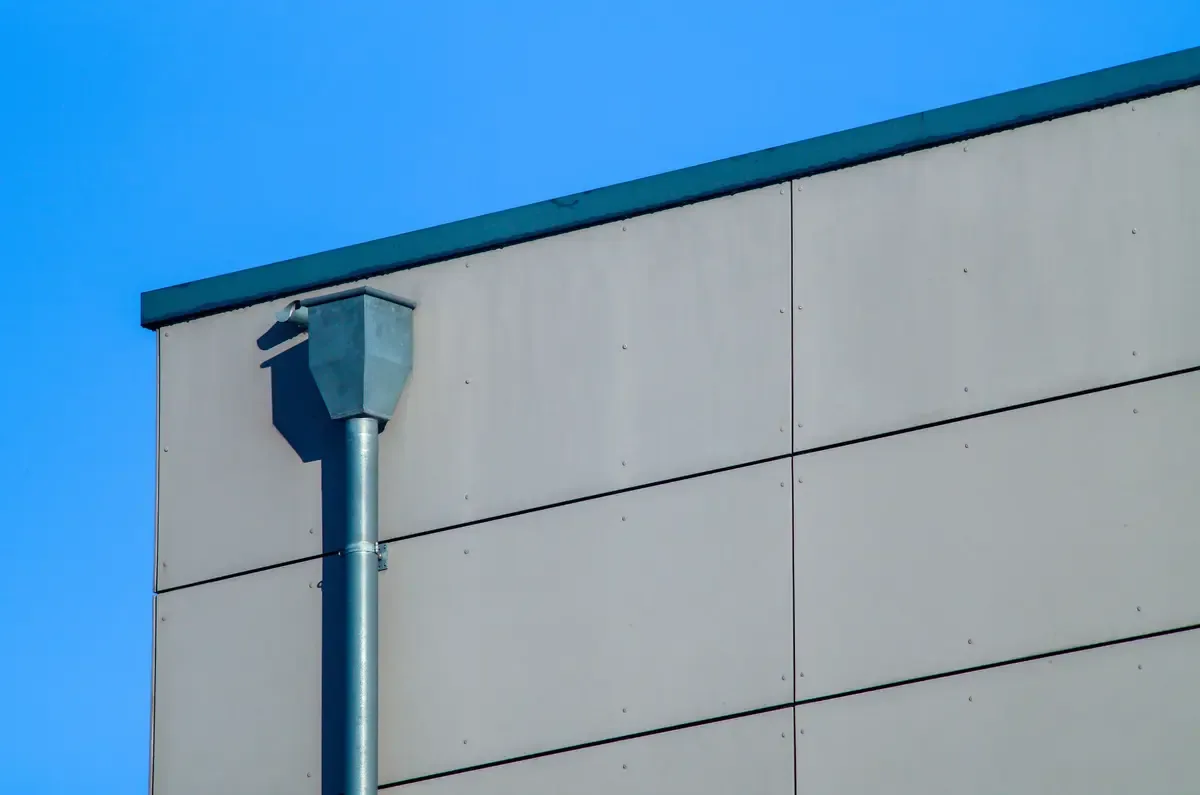
Commercial Roof Drains and Scuppers in Murrieta, CA
Related scope, access notes and questions to ask before work starts.
Learn More
Commercial Roofing in Perris, CA
Read the full description and the questions owners ask about it.
Learn MoreRepair Commercial Roof Edges and Gutters
Arrange a Murrieta inspection to trace edge leaks, review coping and gutter attachment, and define the repair around the full water path.