Commercial Standing Seam Metal Roofing in Murrieta, CA
Review standing seam metal roofing in Murrieta, CA, from panel type and clips to slope, movement, penetrations, drainage and repair planning.
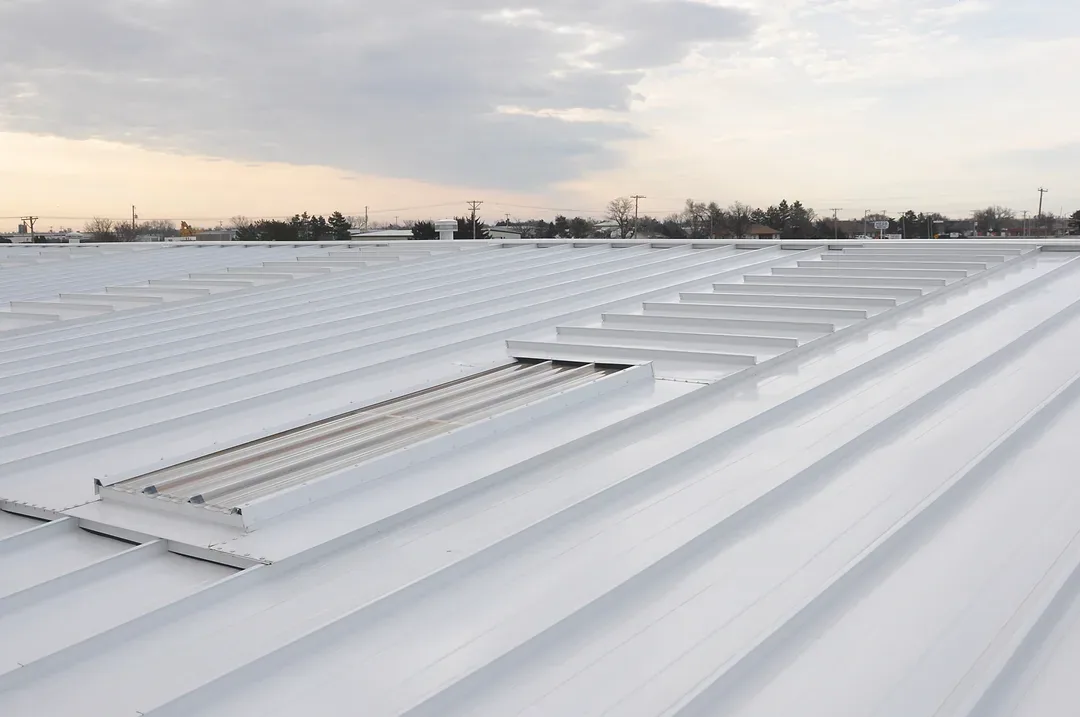
A raised seam gives a metal roof a distinct profile, but it does not show how panels move or how the edges are secured. Standing seam systems use concealed clips or fasteners, with panel joints that may snap together or be mechanically seamed. In Murrieta, we identify the existing panel and substrate before recommending a repair or replacement. The City’s 2025 code adoption took effect January 1, 2026, so new permit submittals from that date follow the adopted California codes. We check current documents, panel slope and attachments as part of the project review. A roof inspection can identify the details that control the next step.
Panel Type: Match the Seam to the Roof Pitch
Standing seam panels may use snap-lock joints or mechanically closed seams, and the permitted slope depends on the panel profile and manufacturer instructions. We measure the roof plane and identify the seam type before diagnosing water entry. A low-slope application may need a different profile or seam treatment than a steeper roof. Clips connect panels to the substrate and must allow for thermal movement where the system is designed to slide. If clips bind, fasteners loosen or panels are cut too short, movement can stress the seam or flashing. We inspect panel ends, eaves, ridges, valleys and transitions where water changes direction. A metal retrofit system may be relevant when an exposed-fastener roof has a different repair need; it is not interchangeable with standing seam. Edge and coping details also need to match the panel height and termination rather than rely on a surface bead alone.
Panel width and length affect how the roof is handled during both installation and later repairs. We record the manufacturer and profile when available, then check whether replacement panels can be obtained in the same geometry and finish. If an older profile is no longer available, a repair may need a designed transition instead of a panel cut that leaves an exposed end. Underlayment condition also matters because it is the water-shedding layer below the metal. At eaves and valleys, we look for corrosion, staining or evidence that water has moved beneath a panel. A panel surface can remain visually sound while the underlayment or deck needs attention. That is why we inspect from above and review accessible interior evidence before deciding whether a few panels or the full plane should be opened. We photograph each affected seam and label the panel run for follow-up. We note which side of the roof receives the most service traffic.
Movement: Give Panels Room to Expand and Contract
Metal panels change length as temperature changes. The clip arrangement, panel length, fixed points and end laps determine how that movement is managed. We look for oil-canning, buckling, fastener pull-out, distorted seams and noise or movement complaints, then check whether the condition is cosmetic or affects watertightness. Not every waviness indicates a leak, but a distorted panel can change how water reaches a seam or edge. The repair has to preserve the intended movement; locking a sliding detail with a rigid fastener can create a new stress point. The scope should identify whether panel removal is needed to inspect the underlayment or substrate. A single-ply roof comparison can help owners evaluate a different assembly where the slope, deck or maintenance history makes metal replacement less suitable. We record the panel profile and repair boundary so later service work can use compatible components.
Water Path: Detail Every Opening and Transition
Water moves along the panel ribs, then meets eaves, valleys, curbs, pipes and wall transitions. Each opening needs flashing designed for the panel profile and expected movement. We inspect sealant joints for separation, but do not treat sealant as the entire detail. A roof hatch or equipment curb may require a curb-mounted flashing assembly; solar attachments should land on a designed support without blocking the drainage path. Wildomar’s mobility plan identifies commercial retail and office activity around I-15 and a commercial, light-industrial and mixed-use node near Clinton Keith Road. That describes local land-use patterns, not any individual building, so we verify the roof use and equipment during the walk. A drainage review checks how runoff leaves the plane, while curb and support inspection covers penetrations. We mark any detail that needs a separate mechanical or electrical trade before panels are opened.
Installation Plan: Coordinate Panels, Access and Permit Scope
Panel length, staging space, lift access and the sequence of removing existing material shape a standing seam project. Long panels need a route from delivery to the roof without bending the seam or crossing active circulation. We confirm how the crew will protect finished panels during access and where temporary dry-in ends each shift. Temecula’s city process calls for Development Plan review on new commercial, industrial and office proposals. If a standing-seam replacement sits within a larger project, we coordinate roof details with its approved scope instead of assuming the planning rule applies to a standalone repair. We coordinate the roofing documents with the owner’s project team and keep the selected panel details consistent with the approved scope. A phased reroof plan can separate noisy removal from business hours, while warehouse operations may require a separate staging and interior-access plan. Each day’s record should state the completed panel runs and any exposed transition awaiting closure.
Service Record: Plan Repairs Before a Panel Is Cut
Standing seam maintenance includes checking clips and fasteners where accessible, seam engagement, flashing, sealant joints, gutters and debris at valleys. A repair should use matching material and detail geometry; a flat patch over a rib can trap water or obstruct movement. We document the panel profile, finish, attachment and any repair so a future crew can source a compatible component. If corrosion, repeated leakage or substrate failure is widespread, panel replacement or a different system may be more practical than scattered patches. The cost depends on panel profile, length, access, underlayment, edge metal and concealed deck work. A replacement estimate should show those items. Wildomar’s plan describes how commercial uses relate to the city’s I-15 and Clinton Keith areas, but an individual site still needs its own access plan. We preserve that plan in the roof file and schedule a follow-up Wildomar inspection based on the installed condition.
Commercial Roofing Questions
Can standing seam metal be installed on any roof slope?
No. The panel profile and seam method have minimum slope requirements, and drainage details can change the design. We measure the roof and confirm the selected manufacturer’s criteria before recommending a system.
Why do standing seam panels move or make noise?
Temperature changes can move panels through their clip system. We inspect fixed points, clips, panel length and seams to see whether movement is expected or whether a restrained detail is stressing the assembly.
Can you seal a leaking standing seam joint?
A surface seal may not correct a loose seam, failed flashing or drainage issue. We trace the water path, identify the panel profile and select a repair that preserves the intended movement.
What should be checked before replacing a metal roof?
Review panel type, slope, attachment, underlayment, deck, edge details, penetrations and access. The owner should also decide whether to retain metal or compare another assembly based on observed condition.
How do solar panels affect a standing seam roof?
The attachment must suit the panel profile and array design while preserving movement and keeping drains clear. We coordinate support locations with the solar team and document any new roof penetrations or clamps.
Related Roofing Work
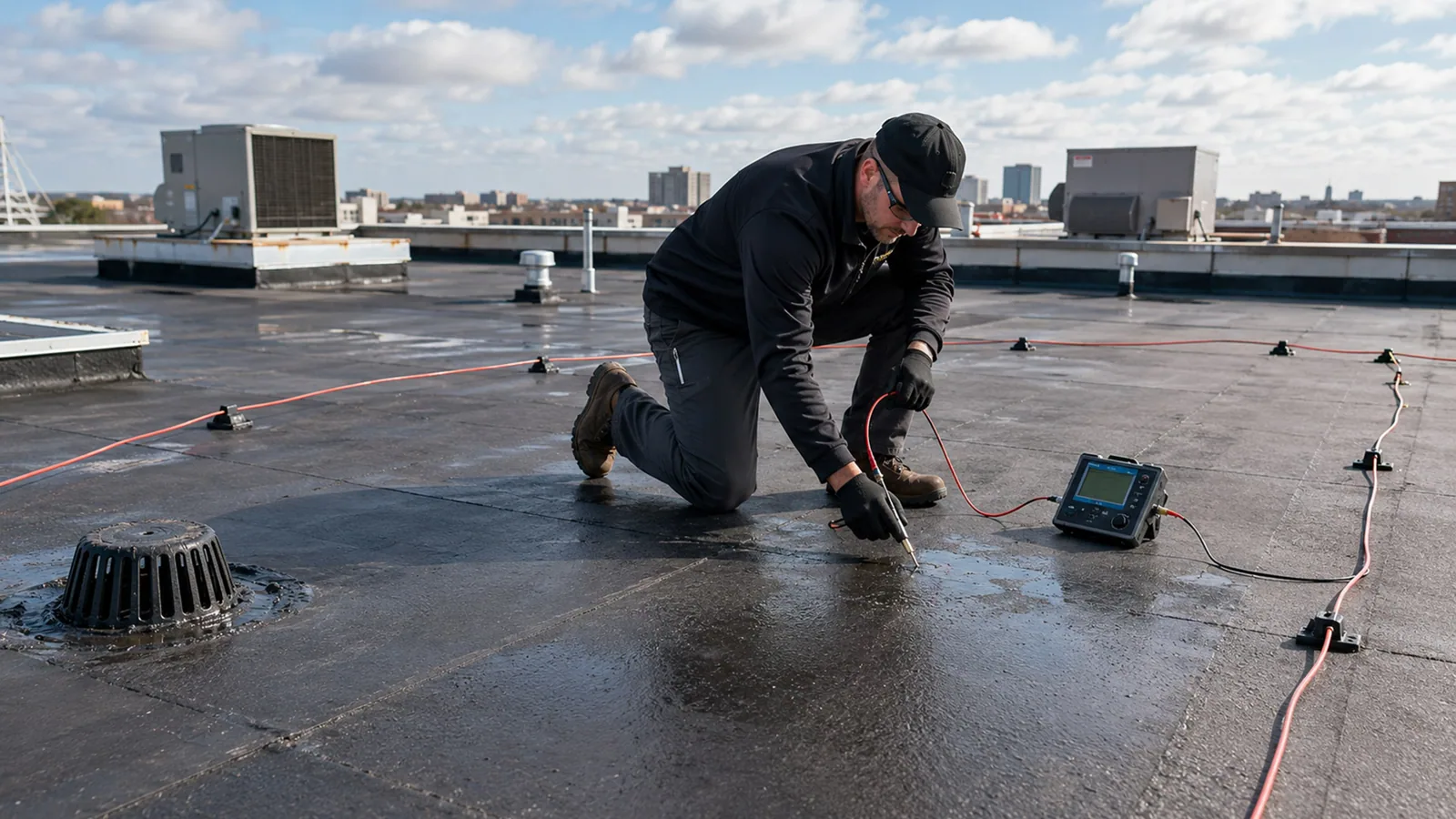
Commercial Roof Inspection in Murrieta, CA
See how this work fits the roof, the building and the schedule.
Learn More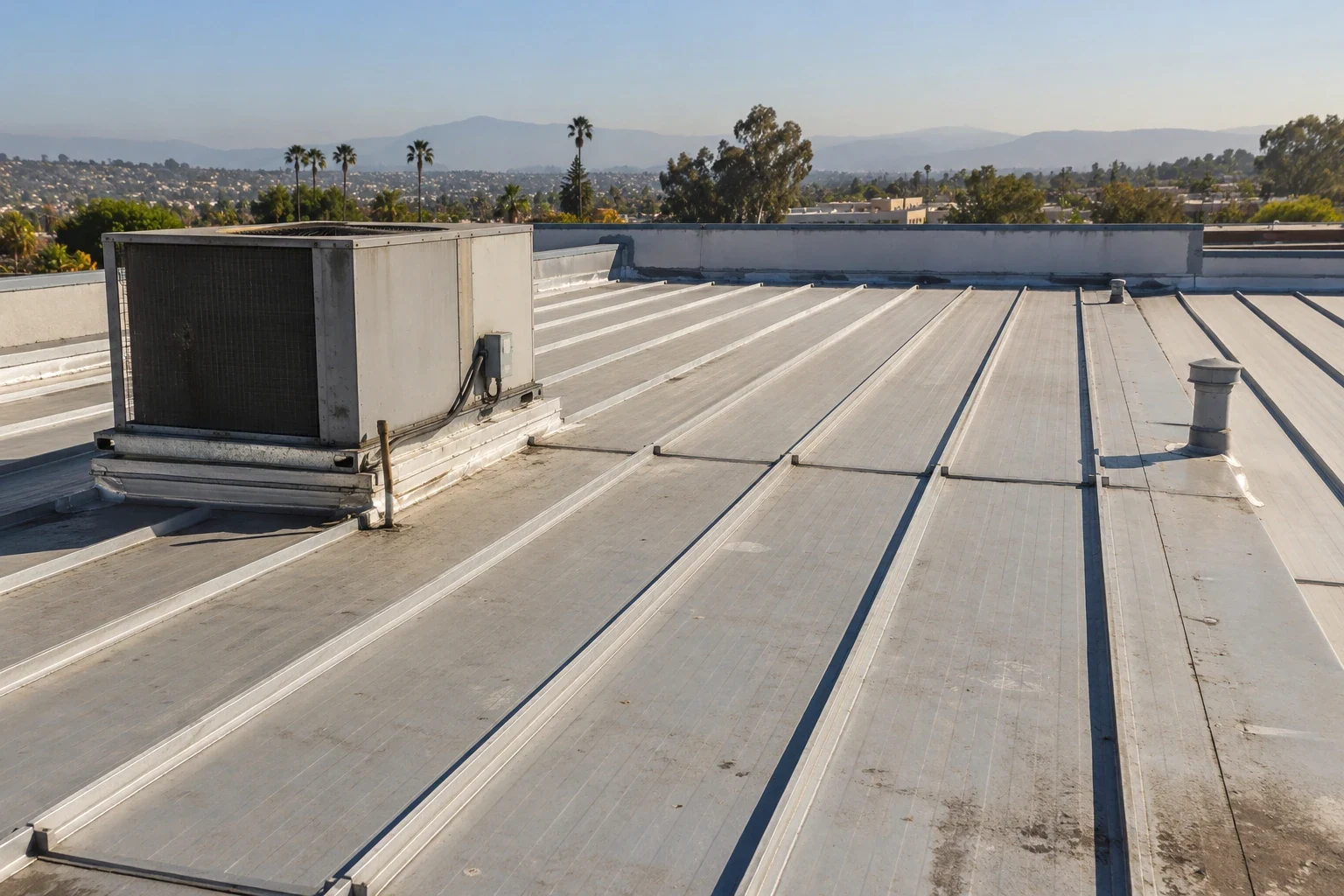
Commercial Metal Roof Retrofit in Murrieta, CA
Related scope, access notes and questions to ask before work starts.
Learn More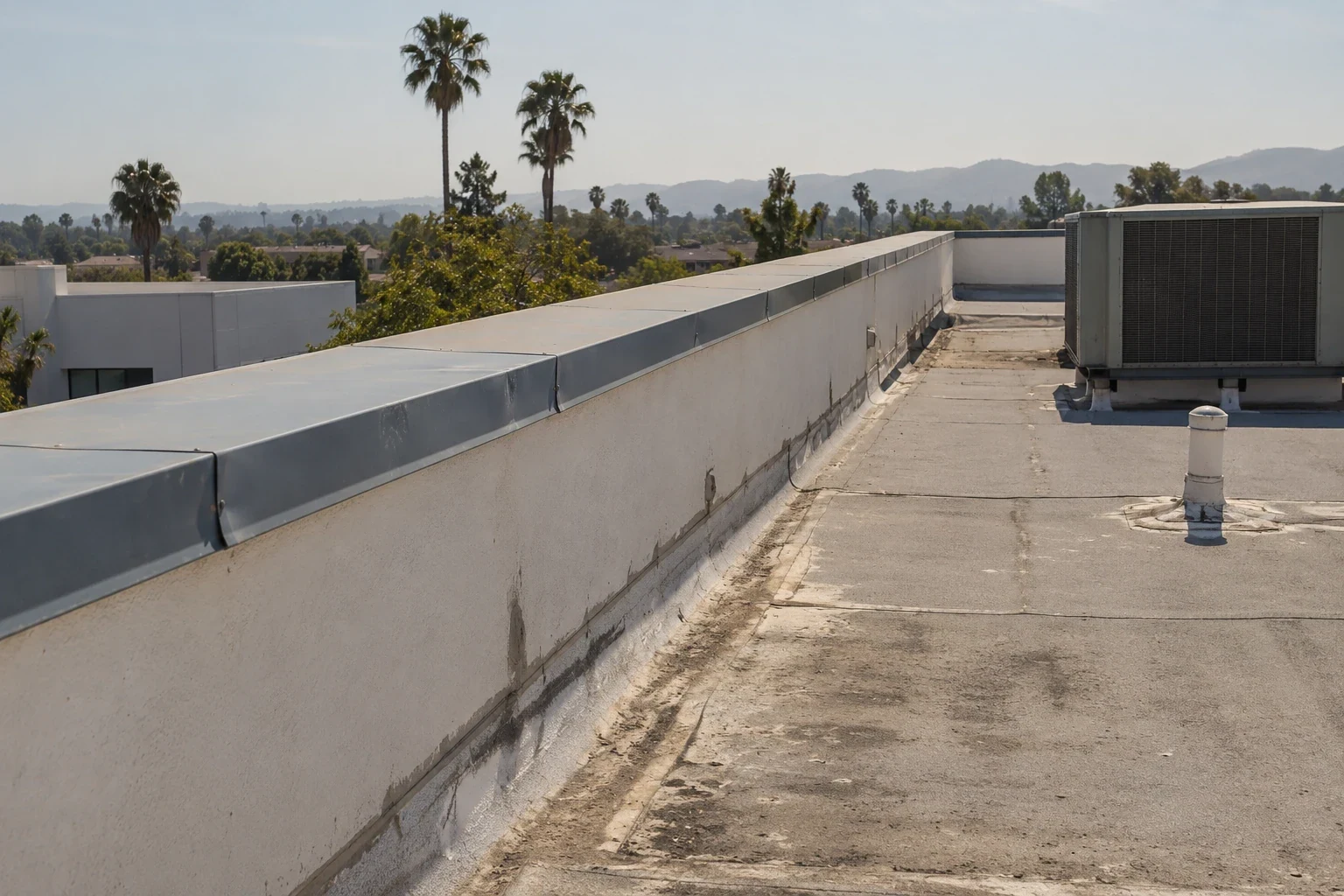
Commercial Roof Edge Metal, Coping and Gutters in Murrieta, CA
Read the full description and the questions owners ask about it.
Learn More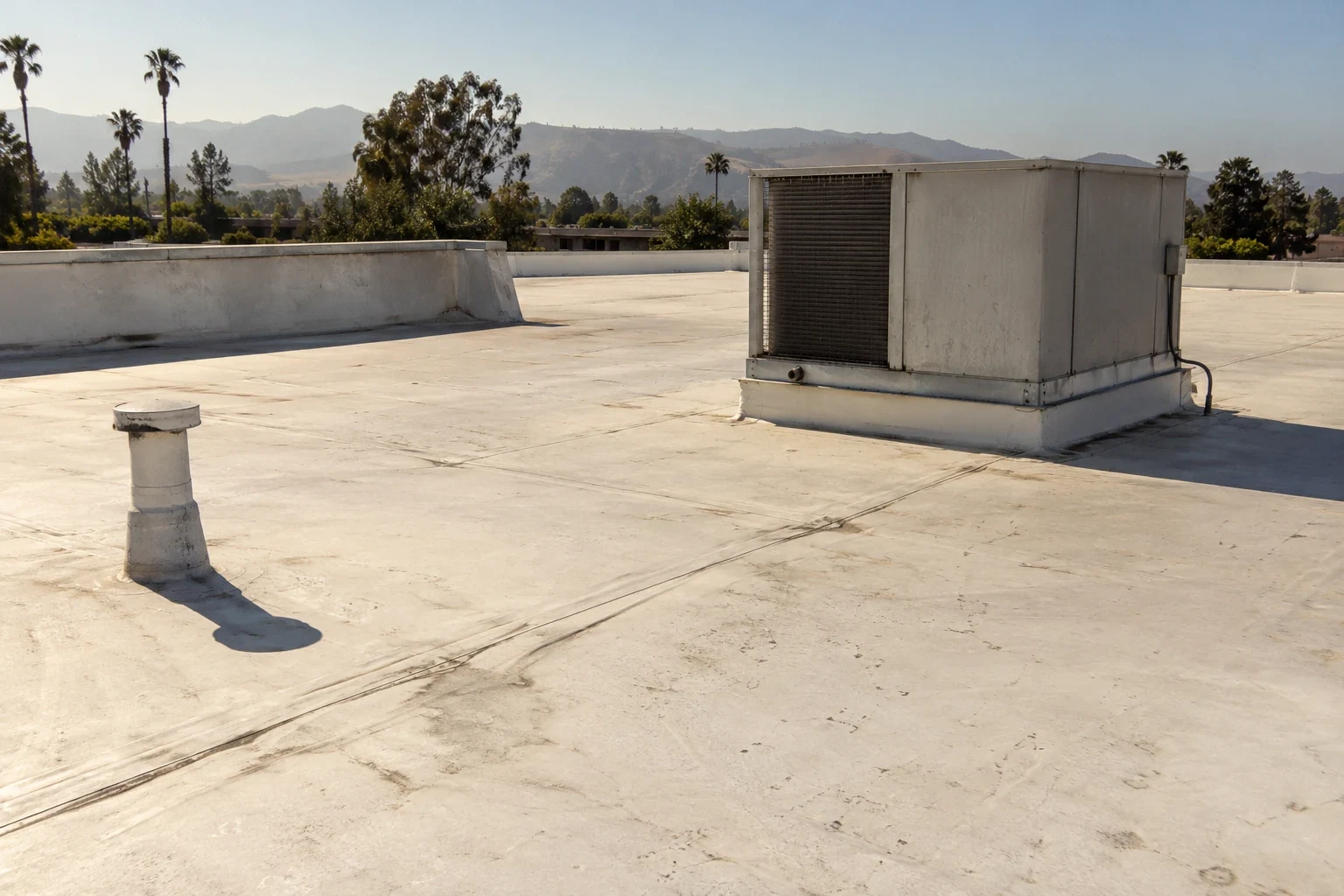
Commercial PVC Roofing in Murrieta, CA
See how this work fits the roof, the building and the schedule.
Learn More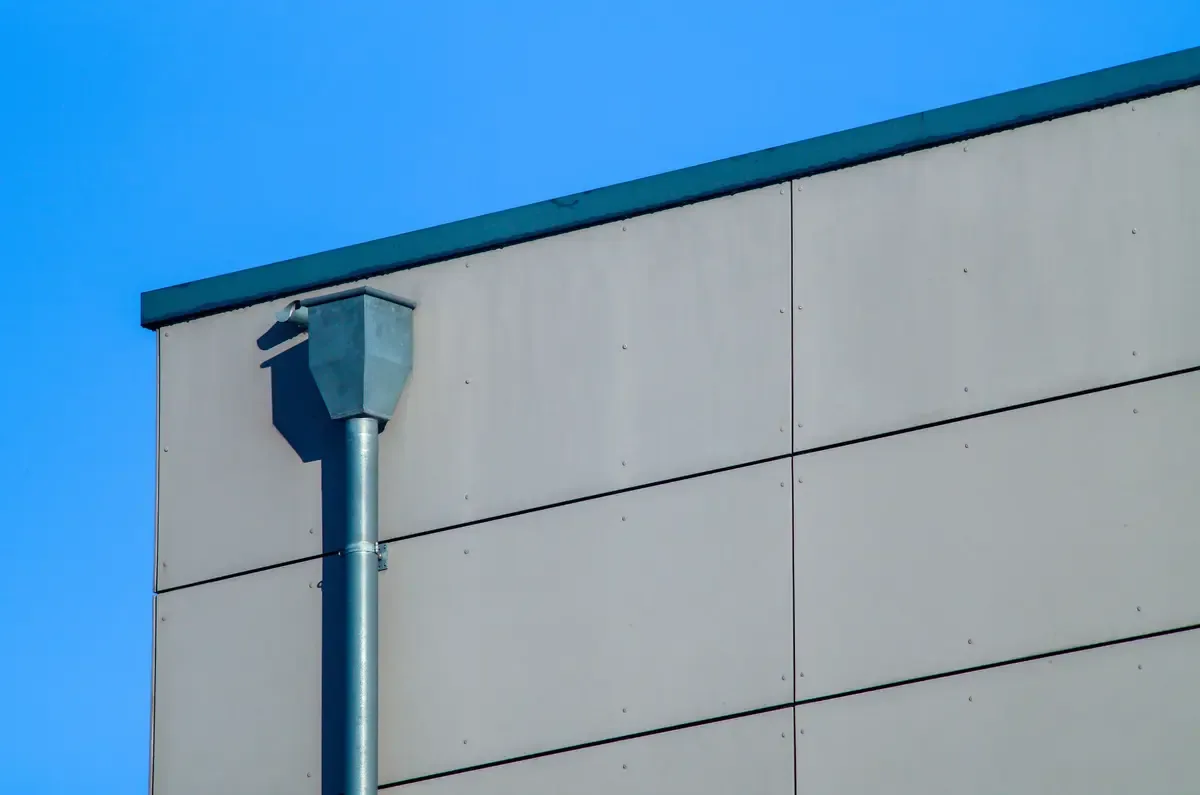
Commercial Roof Drains and Scuppers in Murrieta, CA
Related scope, access notes and questions to ask before work starts.
Learn More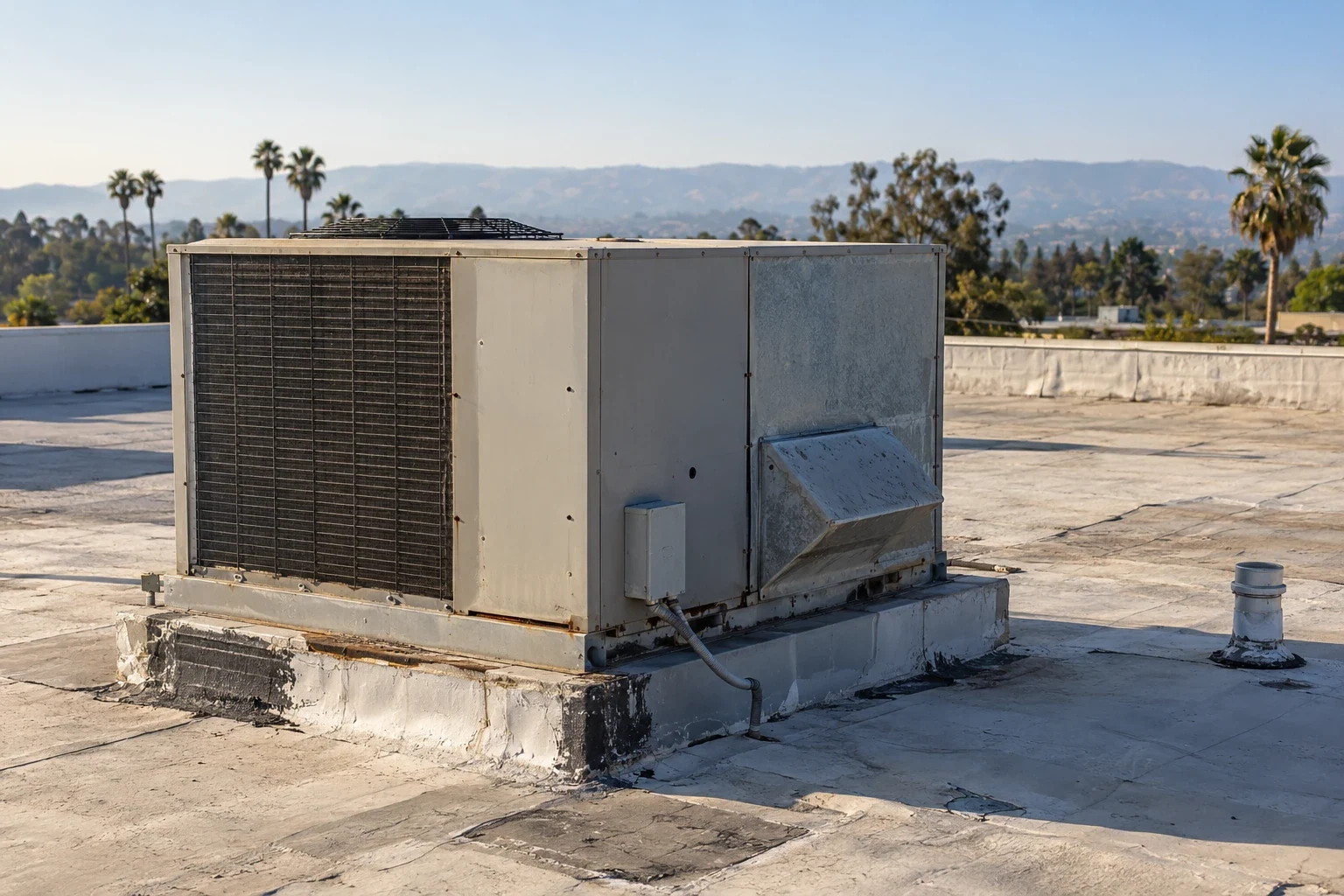
Rooftop Equipment Curbs and Supports in Murrieta, CA
Read the full description and the questions owners ask about it.
Learn MoreInspect Standing Seam Roofing in Murrieta
Arrange an inspection to record the panel profile, seam movement and transitions before planning a metal roof repair or replacement.