
Commercial Flashing Failure Repair in Murrieta, CA
Commercial flashing failure repair in Murrieta checks wall transitions, curbs and penetrations, then sets a repair boundary matched to the roof assembly.
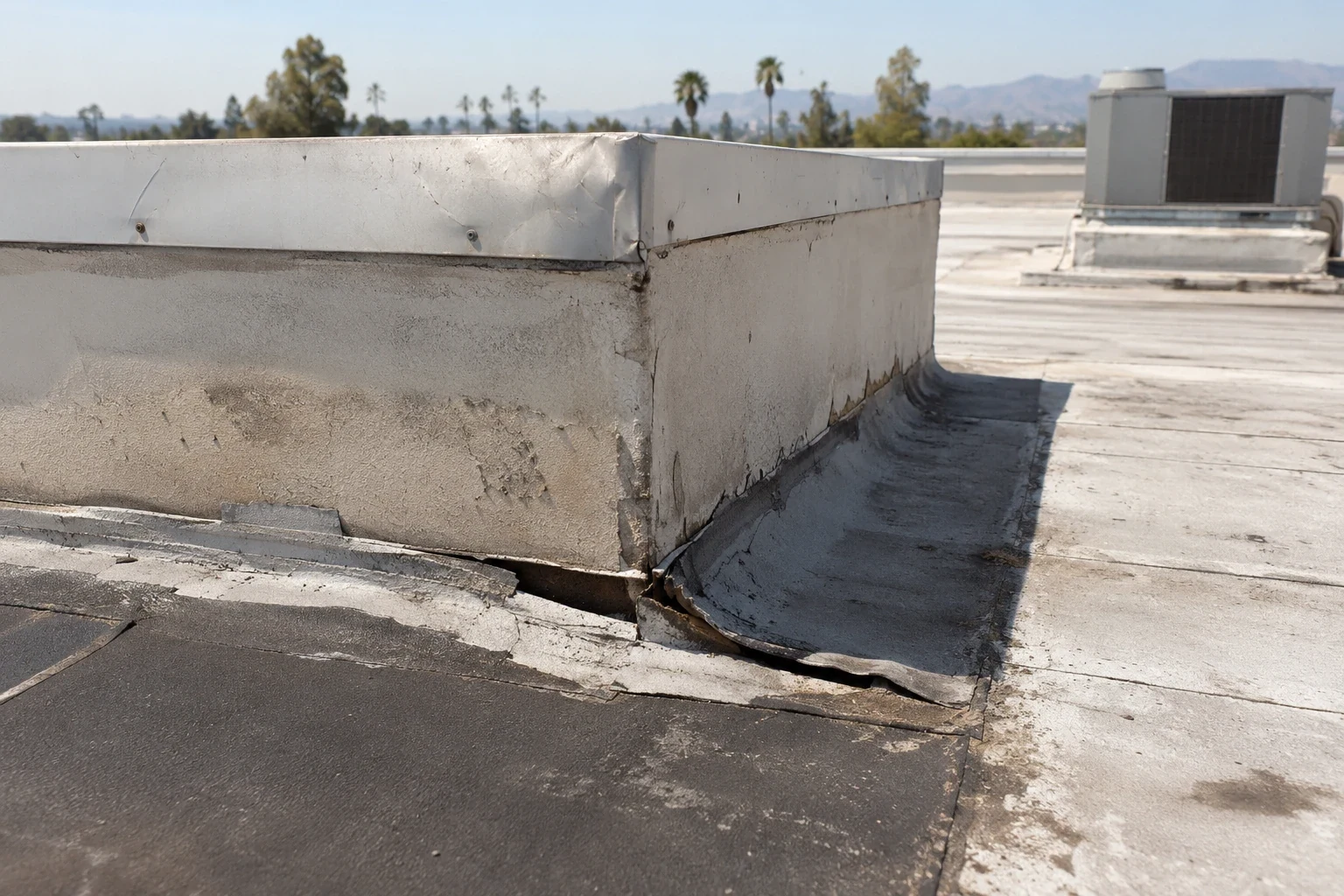
A ceiling stain below a rooftop unit can trace back to a curb corner where sealant has split. The flashing is the transition between the roof membrane and a wall, pipe, skylight, equipment curb or edge. When that connection opens, water can travel beneath the visible surface before it reaches the interior. We inspect the termination, substrate, fasteners and nearby membrane before choosing a repair. Murrieta’s commercial properties connect to Interstate 15 and Interstate 215, and occupied buildings along those routes need roof access planned around service traffic. A useful inspection leaves the property manager with photos, a marked location and a clear repair edge. Our penetration flashing service starts by identifying what the detail is joined to, because the same patch material does not suit every assembly.
Curb and Wall: Identify the Failed Transition
We look for a lifted membrane leg, a split corner weld, separated counterflashing, loose termination bar or sealant that no longer holds its intended joint. The detail should shed water across the roof surface rather than create a pocket behind the flashing. We check adjacent fasteners and the condition of the curb or wall face, then follow the membrane beyond the first visible crack. A failed bead may be a maintenance issue, while a detached base flashing can require removal and a new tie-in. Rooftop equipment vibration, prior access work and later trade penetrations may also change a detail. We record each condition separately so a repair to one curb does not become a vague instruction to reseal the entire roof. A commercial roof inspection includes the nearby seam and drain path, since water can enter at one transition and show up well downslope.
Membrane Compatibility: Make the New Joint Hold
Flashing repair depends on the membrane. Thermoplastic systems need a compatible flashing piece and a sound welded surface; adhered EPDM calls for a repair detail designed for that rubber sheet; modified bitumen and coated roofs require their own preparation and material sequence. We remove loose material, clean the bond area, rebuild corners and tie new material into firm, dry membrane. If the curb substrate is wet or deteriorated, covering it can leave the same path in place. Probe checks and selective removal help confirm what remains below a lifted edge. A wind-damage inspection may be useful when the termination shifted after high winds, and a drainage review can identify whether standing water is stressing the transition. The scope names the assembly and preparation steps, not just a tube of sealant.
Murrieta Operations: Keep the Opening Controlled
Murrieta has existing business-park space, and the city’s published inventory does not identify any one building’s roof type. At an occupied office, clinic or production facility, the important details are access to the curb, interior protection beneath it and a work window that does not conflict with rooftop service. We coordinate a safe route for tools and materials, isolate the work zone, and avoid leaving a partly opened transition at the end of a shift. For a roof near Interstate 215 or Jefferson Avenue, delivery and maintenance traffic may affect staging. Properties in nearby Wildomar can use the same practical review when the owner manages a portfolio across the city line. In each case, the flashing geometry and membrane condition determine the repair, while the building schedule determines when it can be completed.
Localized Repair or Rebuild: Follow the Substrate
A local repair can work when the curb is stable, the flashing leg can be reattached and the surrounding membrane remains bonded. Rebuild the transition when the substrate is soft, the curb corner has failed or water has reached insulation that needs removal. We compare the cost drivers qualitatively: access, removal area, material compatibility, equipment clearance and the need to protect occupied space. The written scope shows the tear line, attachment method, corner treatment, tie-in width and closeout photos. A roof repair can address the leak source; if several sections show repeated detail failure, an assembly assessment may help ownership compare a capital project with recurring patches. No broader replacement recommendation should rest on one failed curb without mapping the surrounding roof.
Closeout: Record the Detail for the Next Visit
The service record should identify the penetration, which side of the curb was repaired, what material was installed and what condition remains outside the repair boundary. We photograph the prepared surface and finished tie-in, then note whether interior moisture needs follow-up. If a mechanical contractor will return to the unit, the property manager can share the roof detail so later access does not cut through the new flashing. For a portfolio contact comparing buildings in Murrieta and Wildomar, a condition report keeps the issue tied to the correct roof section. That record makes the next decision clearer: monitor a sound transition, schedule routine maintenance or expand the repair where new evidence supports it.
Before the crew leaves, we check the finished corner and adjoining seam, remove loose material from the drain path and photograph the roof from a position that makes the repair edge understandable later. The closeout notes whether the curb was dry, whether any equipment access remains restricted and whether the interior contact should inspect a ceiling or wall after the next rain. If the same location has been patched before, we compare the earlier record with the current attachment and substrate. A repeat issue may point to movement, water retention or a broader membrane condition. That comparison avoids applying the same surface treatment without understanding why the previous repair opened.
Commercial Roofing Questions
Why does flashing leak after sealant has been added?
Sealant can close a surface crack without restoring a detached membrane leg or damaged substrate. We inspect the joint, curb and adjoining roof field, then decide whether cleaning and resealing is appropriate or the transition needs rebuilding. The repair record should identify the material and the actual bond surfaces.
Can you repair flashing around equipment without shutting down the building?
Often the work can be sequenced around normal operations, though equipment access and safety clearances control the work window. We coordinate with the facility contact, protect the interior below the curb and keep the repair area isolated. If equipment must be moved, that work needs to be scheduled with its service provider.
How do you tell a failed curb from a seam problem nearby?
We inspect both transitions and the membrane between them. A lifted curb flashing has a different repair edge from an open field seam, even when the water paths meet. Photos and a roof sketch let the owner see which condition supports each recommendation and where a moisture check or test cut is still needed.
Does every flashing crack need a complete curb rebuild?
No. We check whether the curb is firm, the flashing can be bonded to sound material and the adjacent membrane remains intact. A narrow, stable separation may accept a localized detail repair. Soft substrate, failed corners or wet insulation can expand the scope, and the inspection should show why.
What should happen after the new flashing is installed?
Keep the repair photographs with the roof plan and note any mechanical work scheduled at the same unit. We can include the curb on a maintenance visit to check adhesion, sealant condition and nearby drainage. A follow-up is useful when interior moisture needs time to dry or when the source was not fully visible during the first visit. If a separate stain remains, we map it as a new symptom instead of extending the original repair boundary without inspection.
Related Roofing Work
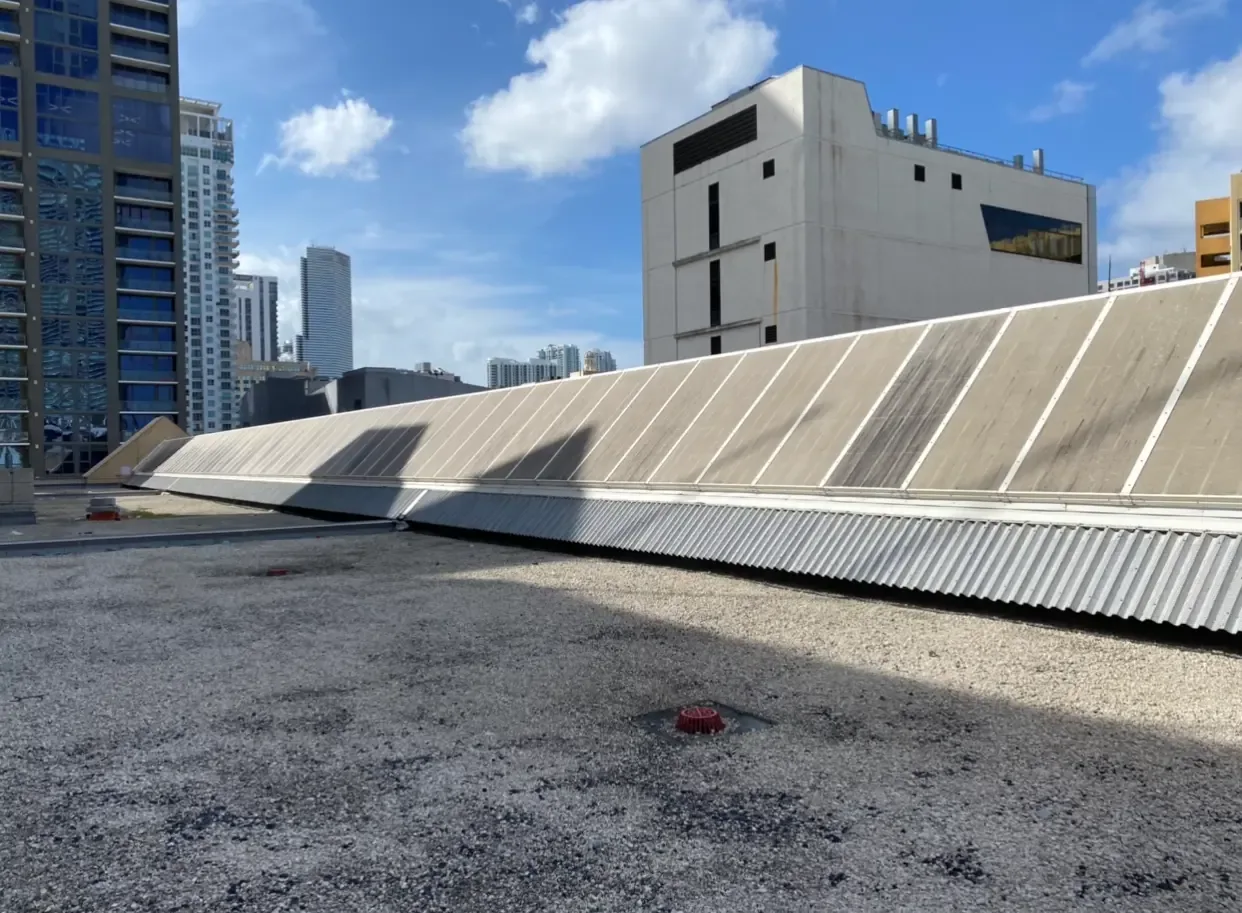
Commercial Skylight and Penetration Flashing in Murrieta, CA
See how this work fits the roof, the building and the schedule.
Learn More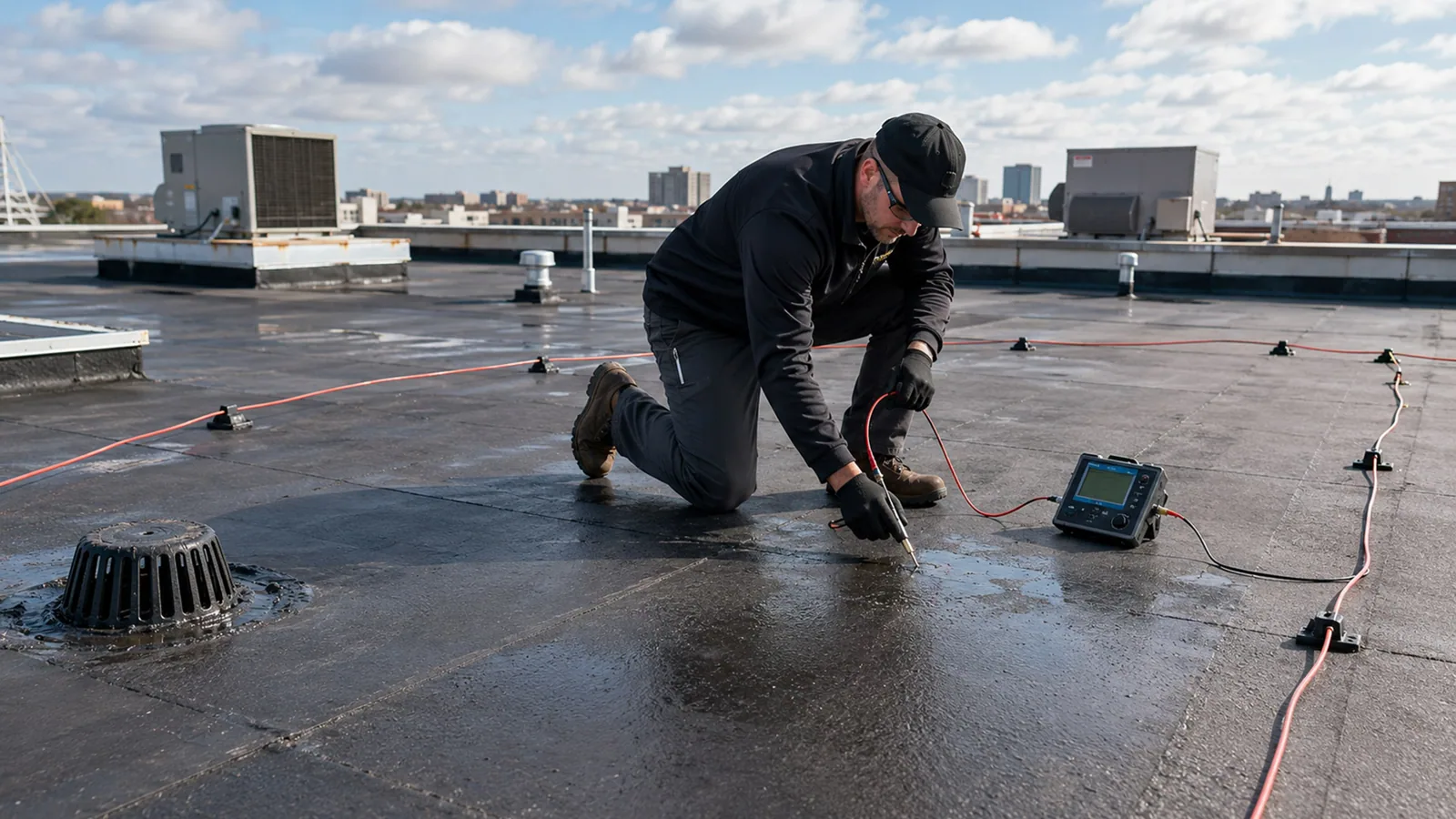
Commercial Roof Inspection in Murrieta, CA
Related scope, access notes and questions to ask before work starts.
Learn More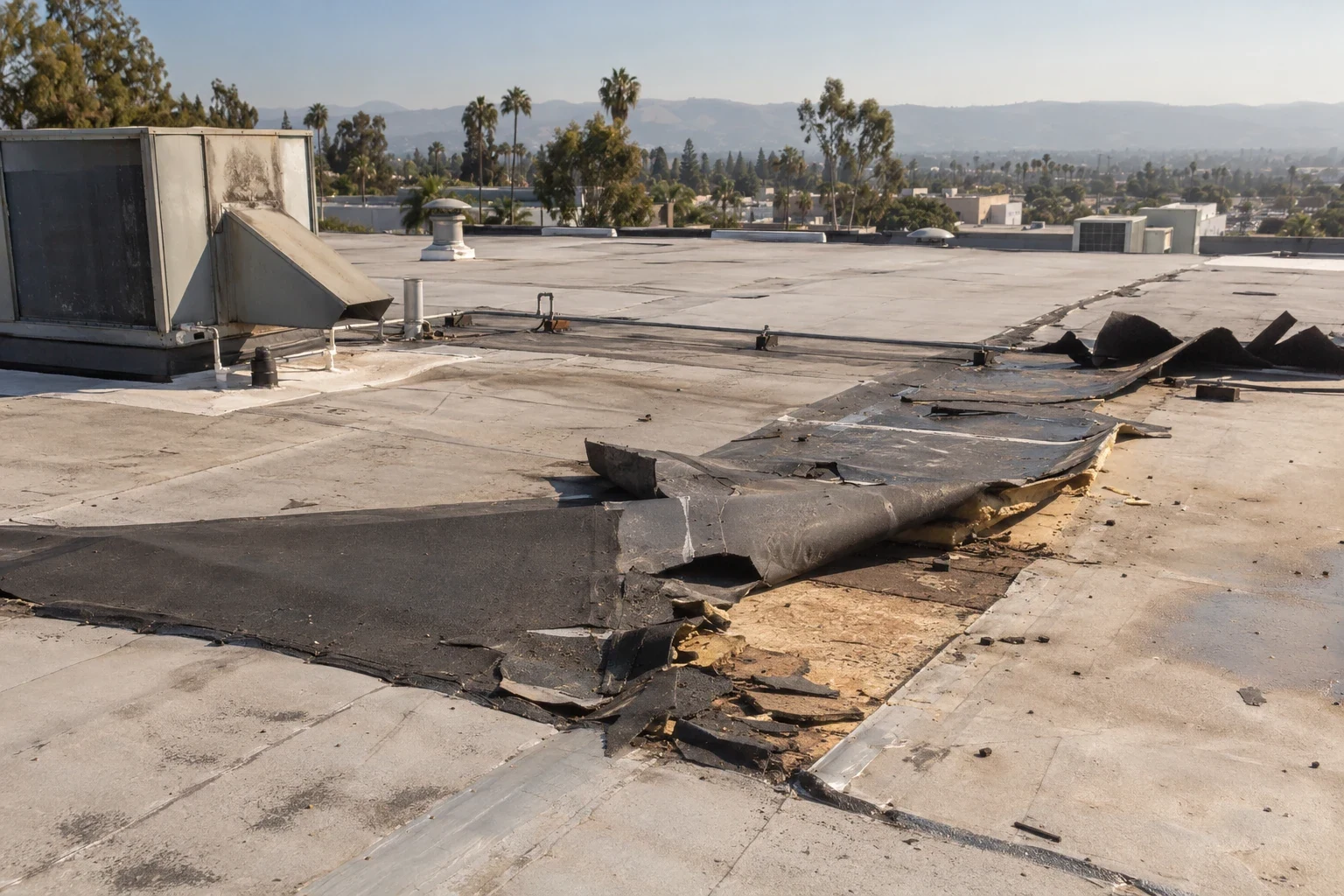
Commercial Wind Damage Roof Repair in Murrieta, CA
Read the full description and the questions owners ask about it.
Learn More
Commercial Ponding Water Roof Repair in Murrieta, CA
See how this work fits the roof, the building and the schedule.
Learn More
Commercial Roof Repair in Murrieta, CA
Related scope, access notes and questions to ask before work starts.
Learn More
Commercial Roof Replacement in Murrieta, CA
Read the full description and the questions owners ask about it.
Learn MoreTrace the leak to the flashing detail
Arrange an inspection to document the transition, substrate and membrane tie-in. We will map the repair limit and coordinate a work window for your occupied building.