
Commercial Roofing in Montclair, CA
Compare commercial roof repair, coating, and replacement in Montclair with a scope tied to the property's actual assembly and use.
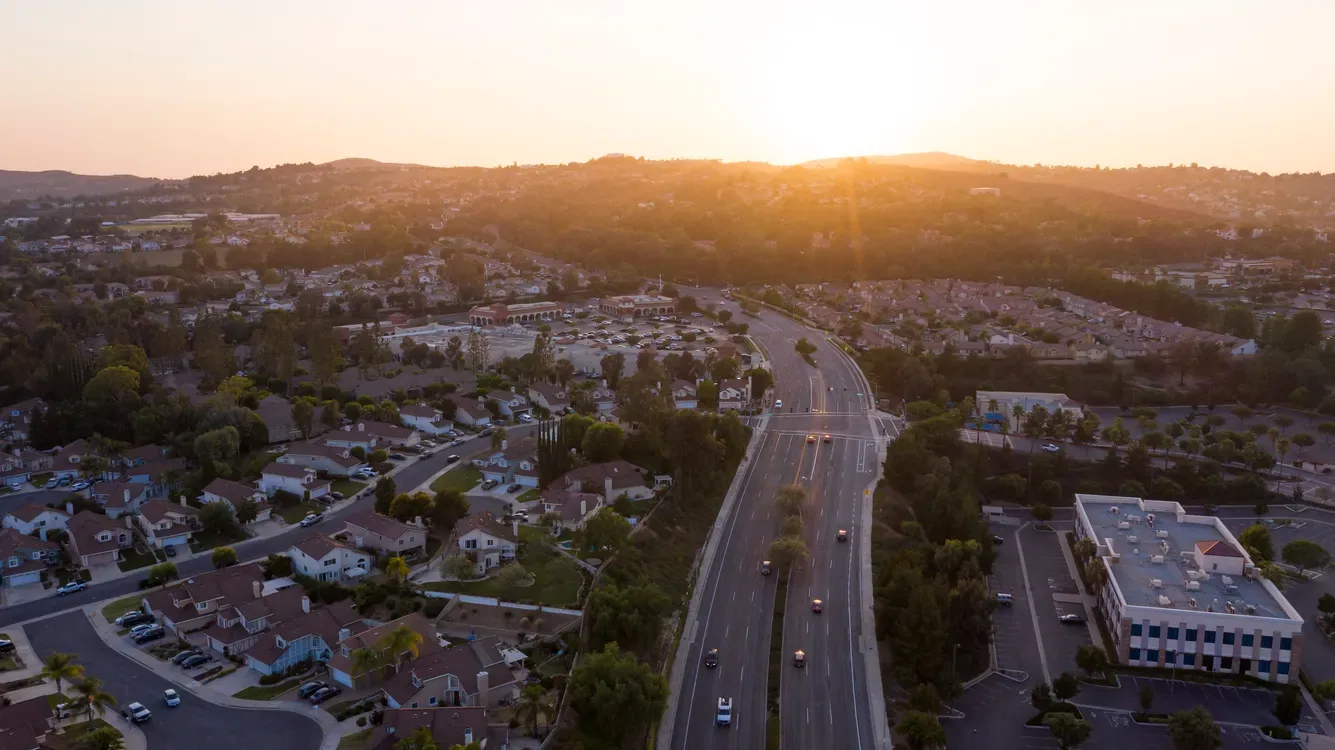
A roof scope in Montclair starts with the building's actual assembly and the work it can safely receive. The City's Corridors Code separates Commerce-Mixed Use and Commerce-Industrial place types. That distinction matters when a property team is comparing a proposed use with local rules, but it does not tell us whether a roof is TPO, built-up, metal, or another system. We inspect the surface, seams, curbs, drains, flashing, and prior repairs before recommending a patch, restoration, recover, or replacement.
The code's land-use table allows research and development in both place types, while warehouse and distribution uses are permitted in Commerce-Industrial and not allowed in Commerce-Mixed Use. Those rules apply by zone and parcel, not to every property across Montclair. The owner confirms the building's current use and access limits. A Palm Springs roof assessment or Cathedral City inspection has its own plan context and field record; we keep each property separate.
Commerce place types: do not turn zoning into roof inventory
Commerce-Mixed Use and Commerce-Industrial are named place types in Montclair's Corridor Code, not a description of installed roof systems. The code permits research and development in each; warehouse and distribution are listed for Commerce-Industrial but not Commerce-Mixed Use. Before a project, the property manager or developer confirms the applicable parcel rules. Our roofing inspection answers a different question: what layers, insulation, attachment, drainage, and edge details exist on this building today?
For a property changing use, proposed equipment or tenant improvements may introduce new curbs, supports, or penetrations. We compare available roof drawings with the actual surface, then identify who will form and flash each opening. A commercial roof inspection records the existing conditions before another trade modifies them. The proposal can assign temporary dry-in and final restoration so a change in the interior plan does not leave the exterior scope unclear.
Field walk: trace the stain beyond the visible ceiling
A ceiling mark may sit away from the point water enters the roof. We compare the report with seams, parapet transitions, curbs, penetrations, and the route toward a drain or scupper. Water can move along the deck or through insulation before appearing indoors, so we record the symptom separately from a confirmed opening. If moisture testing or a small test cut could change the repair boundary, the owner sees that question before we price a broad replacement.
Drainage is checked as a path: bowl, overflow, clamping detail, adjacent membrane, and low area. A clear bowl does not prove the flashing bond is intact; a separated seam calls for different work from a blocked strainer. We photograph the observation and identify what the roofer will restore. A drain and scupper repair can be priced independently from the membrane field so the owner can compare the cost of each known condition.
Repair choice: follow the failure across each roof zone
A localized repair fits when the defect is understood and nearby material can accept a stable tie-in. Repeated seam openings, moisture beyond one section, or failed flashing at several curbs may justify a broader comparison. We map the observed conditions before calling for a recover or tear-off. A commercial roof repair scope should state which detail is included, which condition remains concealed, and what finding would extend the work.
A recover adds another layer, so we check deck condition, attachment, wet insulation, layer count, parapet clearance, and drain elevation. Coating requires a stable substrate and compatible existing surface; it does not correct a low area that still holds water. A PVC assembly or another single-ply system is considered against the roof geometry and tie-ins, not the zoning category. Replacement is a clearer comparison when the assembly cannot support another layer or the repair boundary crosses too many details.
Trade handoff: settle curb and penetration ownership
Rooftop equipment work can affect the membrane even when the roofing repair is small. Before cutting around a curb, we confirm dimensions, support requirements, flashing material, and who closes the opening at the end of the shift. Electrical or mechanical work may also change conduit supports or service clearances. The owner should see the roofing portion and the other-trade responsibility as separate lines in the estimate, with a named approval step for concealed deck damage or wet insulation.
The schedule identifies the roof area that can be opened, where material will land, and what route must remain available below. If the building stays occupied, the property contact sets hours, noise limits, and access restrictions. A phased occupied-building plan shows each daily boundary and temporary dry-in. The team can then compare a short repair window with a larger renewal without leaving the operations handoff to the morning of mobilization.
Estimate: separate measured work from concealed conditions
Removal depth, insulation replacement, deck repair, edge metal, drain changes, and equipment coordination can move both price and duration. We list quantities that can be measured at the walk and show which allowance depends on an opening or test. The scope identifies who reviews a discovery, what documentation supports a change, and which work stays outside the roofing contract. This gives the owner a fair comparison between repair, recover, coating, and replacement without treating unknown material as a confirmed defect.
For a property portfolio, one roof's reserve should not become another building's estimate. A multi-site roof program can compare records when inspection dates, assumptions, and repair boundaries stay attached to each address. A due-diligence roof survey may also help a buyer identify where a test or follow-up inspection is needed before a capital decision. The field evidence remains the basis for the work, not the land-use label.
Handoff record: identify the detail that needs another look
At completion, we walk the repaired roof zone with the property contact and point to the restored seams, curb flashing, or drain transitions. The marked drawing shows where the work stopped; photographs capture the finished tie-in. If a later tenant improvement changes an opening, the next roofer can see which boundary belonged to this project and which condition is new. We also note deferred testing and the person who can approve that follow-up.
For a Montclair property in Commerce-Mixed Use or Commerce-Industrial, the Corridor Code remains a land-use reference, while the roof record describes the installed system. A future review can compare actual drawings, dates, repairs, and access conditions without guessing from the zoning table. Send the current roof plan, leak location, and expected access window to arrange a walk. We will identify the repair area and the next inspection question that affects scope.
Commercial Roofing Questions
Does Commerce-Industrial mean a building has a warehouse roof?
No. It is a place type where the code permits warehouse and distribution uses. We inspect the building and confirm its current operation before describing the roof work.
What if a tenant project adds rooftop equipment?
We coordinate the curb dimensions, support, opening, flashing limit, and temporary seal with the responsible trade before cutting the membrane. The proposal shows who restores the completed detail.
Can a coating solve ponding on a low-slope section?
Not by itself. We first check the drain path, low point, and surface condition. The estimate separates drainage correction from surface preparation and coating work.
When is a recover worth comparing with replacement?
We verify wet insulation, attachment, deck condition, existing layers, outlet height, and parapet clearance. The field findings determine whether another membrane can be supported.
What should an owner keep for the next roof decision?
Keep the dated inspection images, marked work zone, approved detail changes, and a note of any test that remains open. Those records show what the estimate actually covered.
Related Roofing Work
Commercial Roofing in Palm Springs, CA
See how this work fits the roof, the building and the schedule.
Learn More
Commercial Roofing in Cathedral City, CA
Related scope, access notes and questions to ask before work starts.
Learn More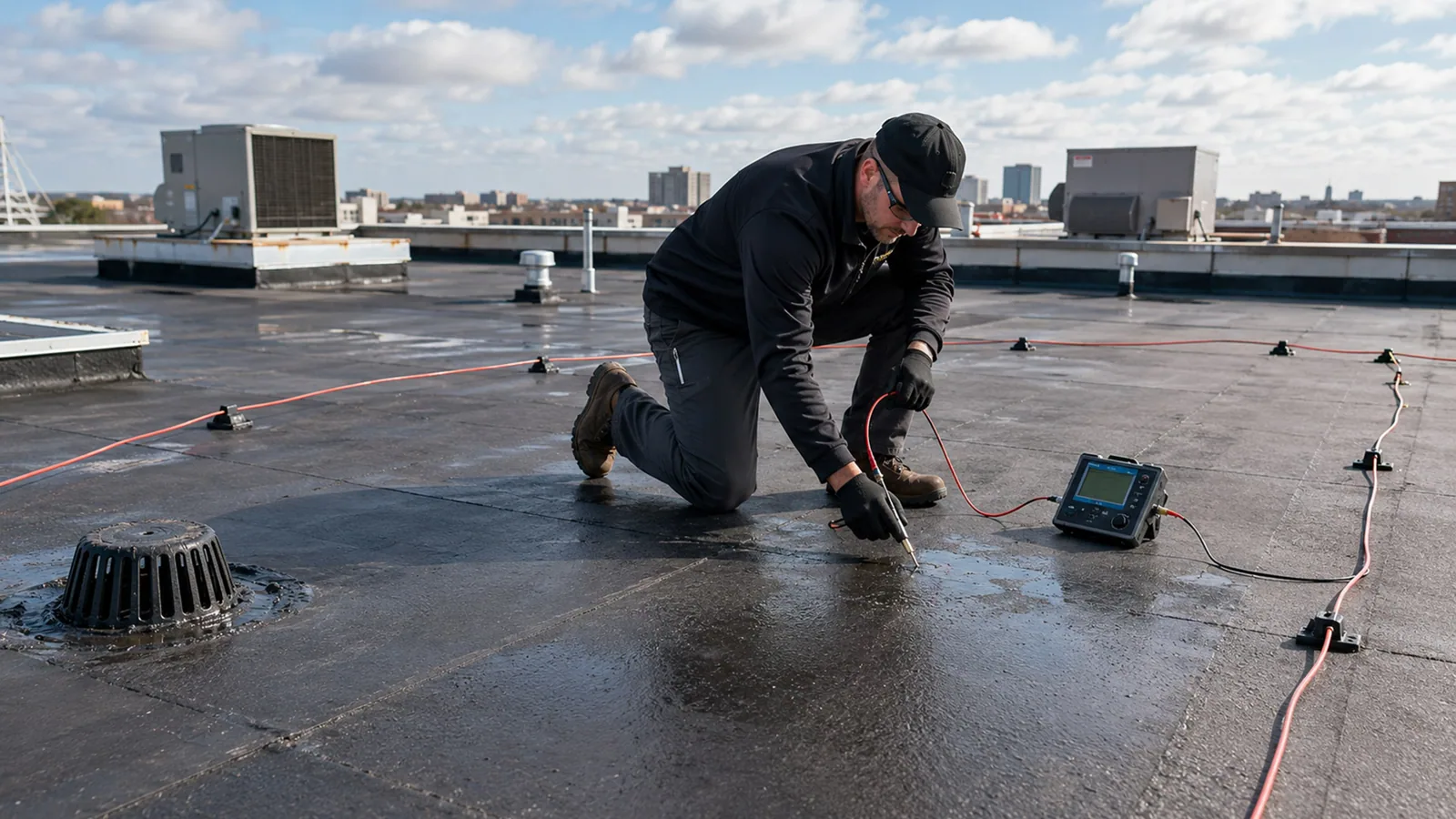
Commercial Roof Inspection in Murrieta, CA
Read the full description and the questions owners ask about it.
Learn More
Commercial Roof Drains and Scuppers in Murrieta, CA
See how this work fits the roof, the building and the schedule.
Learn More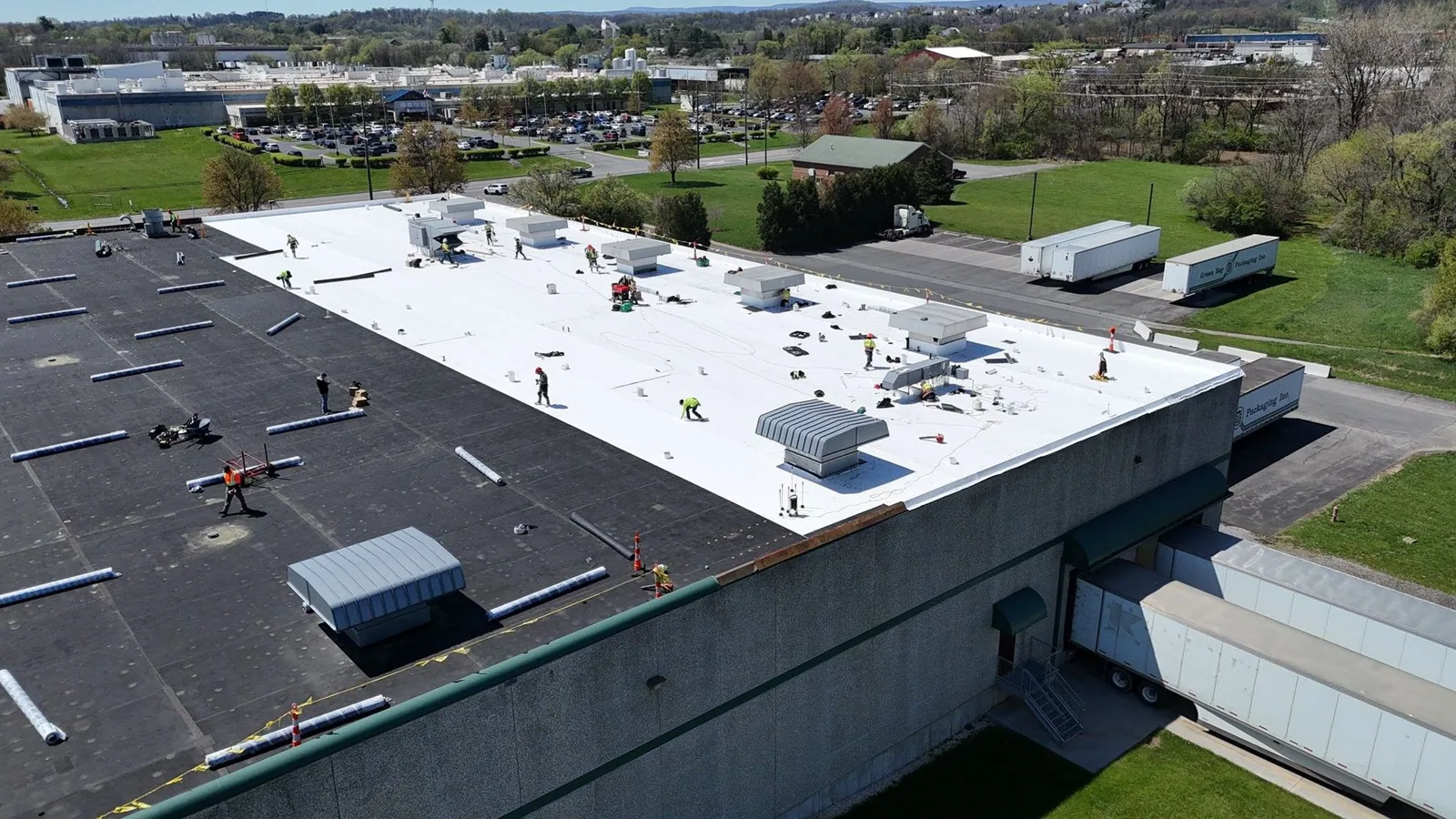
Commercial Roof Repair in Murrieta, CA
Related scope, access notes and questions to ask before work starts.
Learn More
Occupied-Building Commercial Reroofing in Murrieta, CA
Read the full description and the questions owners ask about it.
Learn MoreSet a Montclair roof inspection
Send the current roof plan, repair history, and access window. We will map visible conditions and identify what needs testing before a repair or replacement scope is approved.