
Commercial Roof Due Diligence Surveys in Murrieta, CA
Evaluate a Murrieta commercial roof before acquisition or refinancing. Review visible conditions, records, access limits, repair needs, and follow-up questions.
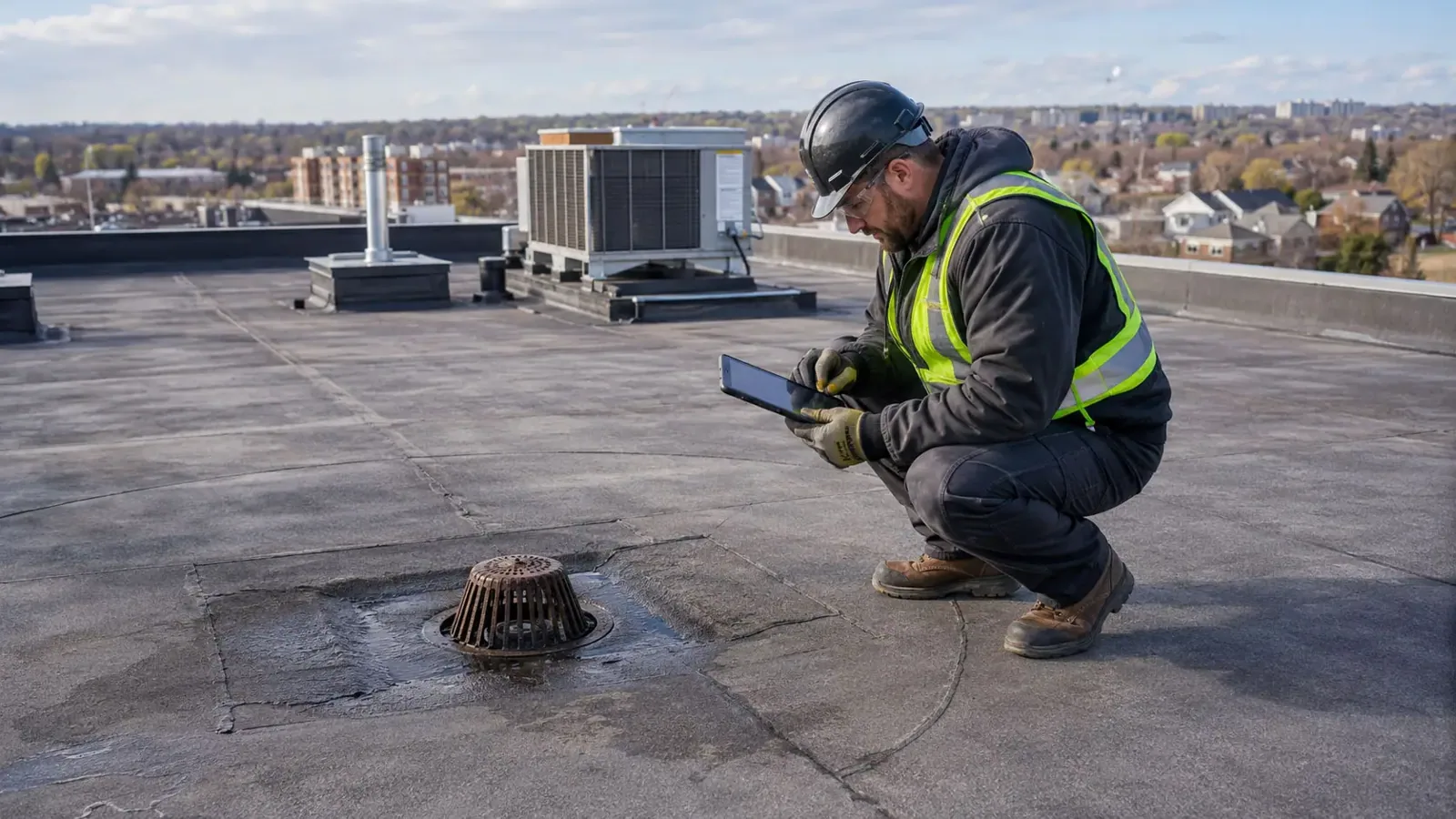
A sale calendar can move faster than the roof file. Before an acquisition or refinancing closes, we inspect accessible sections, review available records, and separate observed defects from questions that require more access. Murrieta's Madison Corridor includes a roughly 220-acre area zoned for Business Park and Innovation use. That planned geography can help orient the market review, but the survey still concerns one identified asset and its roof. The survey starts with the asset under review, including its actual systems, repairs, drains, penetrations, and access limits. A photo-backed condition report gives the buyer a basis for comparing the findings with the seller's file.
Owner decision: Set the Review Boundary
We confirm which buildings and roof sections are included before the visit. On a multi-tenant property, that means mapping areas by building and elevation, identifying locked or unsafe sections, and checking where different additions meet. We note which records were provided and which were unavailable, then compare the plan with what can be seen on the roof. A survey is not a destructive investigation unless that work is authorized. If a concealed condition could change the transaction decision, we state what opening or test is needed to evaluate it.
Murrieta's Interstate 15 and Interstate 215 connections frame regional access. A buyer still needs the subject property's own roof plan, access record, and inspection; highway proximity cannot supply a roof type or age. The asset schedule, roof plans, and inspection need to match the property actually changing hands. Commercial properties in the Jefferson and Madison area still require property-level access and records.
For a transaction with more than one building, we keep the findings separated by roof and by section. Similar use does not establish similar construction. A small office wing and a larger distribution building may have different systems, penetrations, and access requirements, so the survey should not merge their conditions into one portfolio score.
Owner decision: Separate Observation From Assumption
We record the visible assembly, seams, edge metal, flashing, drains, penetrations, coating condition, and signs of prior repair. Each observation gets a location and photo so the buyer can revisit it with the seller, lender, or maintenance lead. Interior staining is documented separately from the suspected roof entry point. Water can travel under a membrane or along a deck; a stain directly below a detail does not prove that detail is the entry point. When the route remains uncertain, we recommend further investigation rather than assigning a cause.
Murrieta's existing business-park inventory and its proposed Jefferson and Madison planning area describe different things. Neither establishes the use or condition of the property named in a purchase agreement. The survey records conditions at the subject building. If a wet area is suspected, moisture testing may help direct follow-up, while the limitations of each test remain clear in the report.
Inspection finding: Price the Findings as Separate Scopes
A buyer needs to know whether a finding calls for immediate protection, a defined repair, additional testing, or a larger renewal budget. We rank each item by observed condition and consequence, not by a blanket replacement recommendation. For active water entry, the first scope may be a temporary measure and a trace of the route. A separate proposal can price permanent work after the repair boundary, access, materials, and any concealed conditions are understood.
If the roof contains multiple layers, the survey notes what can be confirmed about them and what requires a test opening. A recover may be an option only when the existing assembly, attachment, moisture status, drainage, and applicable code permit it. Recover feasibility should be compared with a tear-off scope that accounts for insulation, edge details, debris handling, and protection of occupied areas. The buyer can then carry a defined contingency rather than a broad number detached from the roof.
Owner decision: Work Backward From Closing
When the review window is short, we identify the items that can be settled during the visit and those that need owner approval or follow-up access. A service record, maintenance log, warranty file, leak history, and prior proposal may answer different questions. We compare dates and locations, but do not treat an old invoice as proof that adjacent roof sections were repaired. If the seller's records conflict with the visible work, the report names that discrepancy for resolution before closing.
New Murrieta permit submittals from January 1, 2026 forward are subject to the 2025 California Building Codes; the roof survey records scope, not a permit determination. A due-diligence survey does not decide which permits a future project will need; it records the roof scope and identifies a code review as a separate step when work is planned. Warranty records and an asset history can help the buyer understand earlier work without implying that a warranty covers today's condition.
We can also note whether the seller's maintenance history names the same roof sections the survey inspected. A date without a location is hard to reconcile, and a repair description without a closeout photo may leave the buyer with a follow-up question. We list the missing item, who can supply it, and whether it affects the immediate scope, reserve estimate, or long-term plan. The report keeps transaction timing visible without allowing a deadline to turn an assumption into a condition finding.
Owner decision: Leave the Buyer With Clear Next Steps
Each recommendation should answer four questions: what was observed, where it was found, what action is proposed, and what information is still missing. We include photographs, a roof map, access notes, and a prioritized scope. If the owner wants pricing, we can tie it to the documented area and state exclusions or assumptions. The result supports negotiations, reserves, and post-close work planning without promising a future service life or claiming that an inaccessible section passed inspection.
Murrieta's direct access to Interstate 15 and Interstate 215 serves its business districts; the location does not replace a roof-by-roof review. For a buyer with a larger portfolio, a multi-building survey program can use consistent records while keeping each property's defects and cost drivers separate. A commercial roof inspection after closing can then update the baseline when access and records are available.
Commercial Roofing Questions
What is included in a roof due diligence survey?
We review accessible roof sections, document visible conditions and prior repairs, note access limits, and identify immediate work, additional testing, and capital questions. The report distinguishes observation from assumptions about concealed layers.
Can a survey confirm that a seller repaired every leak?
Only records and current inspection can establish what was addressed. We compare repair notes with the location and visible work, then flag missing or conflicting records. A historical invoice does not prove that another section was repaired.
Can the survey assign a precise remaining-life date?
A visual review cannot establish a precise remaining-life date, especially where concealed conditions are unknown. We explain the conditions observed, the scope needed now, and what further testing or a later inspection could change in the recommendation.
What if a roof section is locked or unsafe to access?
We identify the excluded area and why it could not be inspected. If the section affects the transaction decision, we can recommend a safe access plan or authorized follow-up so it is not mistaken for a clear finding.
Can the report support a repair reserve?
Yes. We can separate immediate protection, defined repairs, further investigation, and replacement planning, then price the scopes with stated assumptions. The reserve should be updated when opened conditions or new records change the assessment.
Related Roofing Work
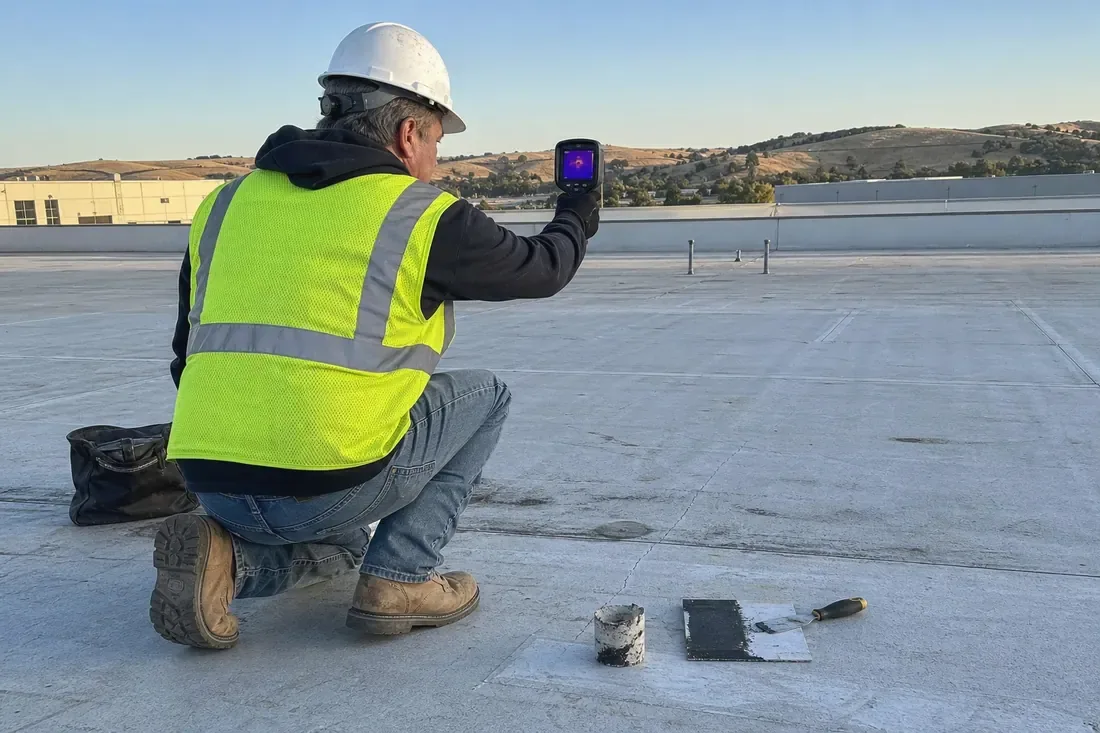
Commercial Roof Condition Reports in Murrieta, CA
See how this work fits the roof, the building and the schedule.
Learn More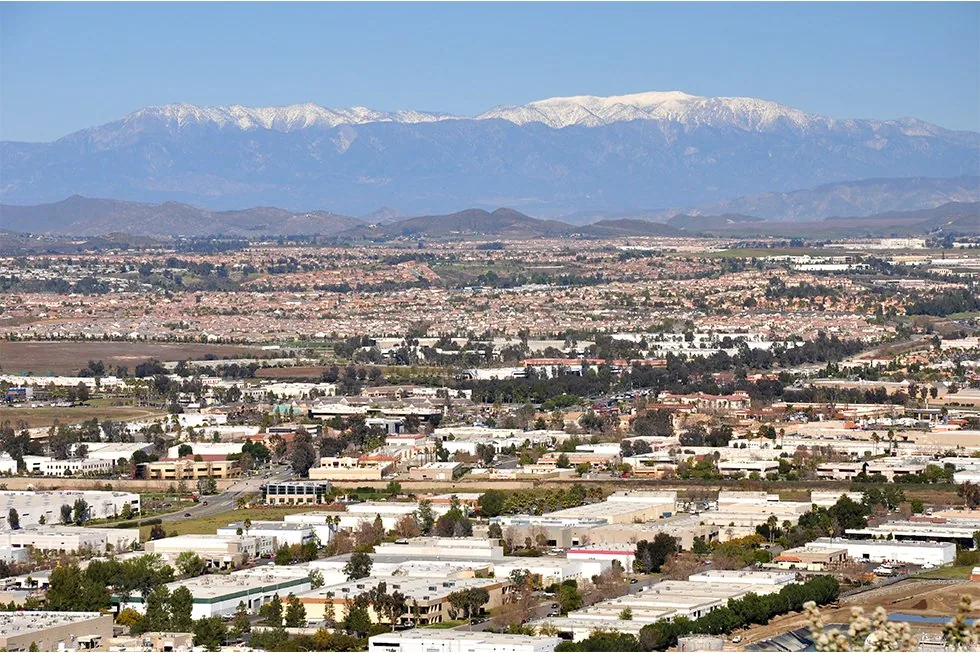
Commercial Roofing in Jefferson-Madison Corridor, Murrieta, CA
Related scope, access notes and questions to ask before work starts.
Learn More
Infrared Roof Moisture Survey in Murrieta, CA
Read the full description and the questions owners ask about it.
Learn More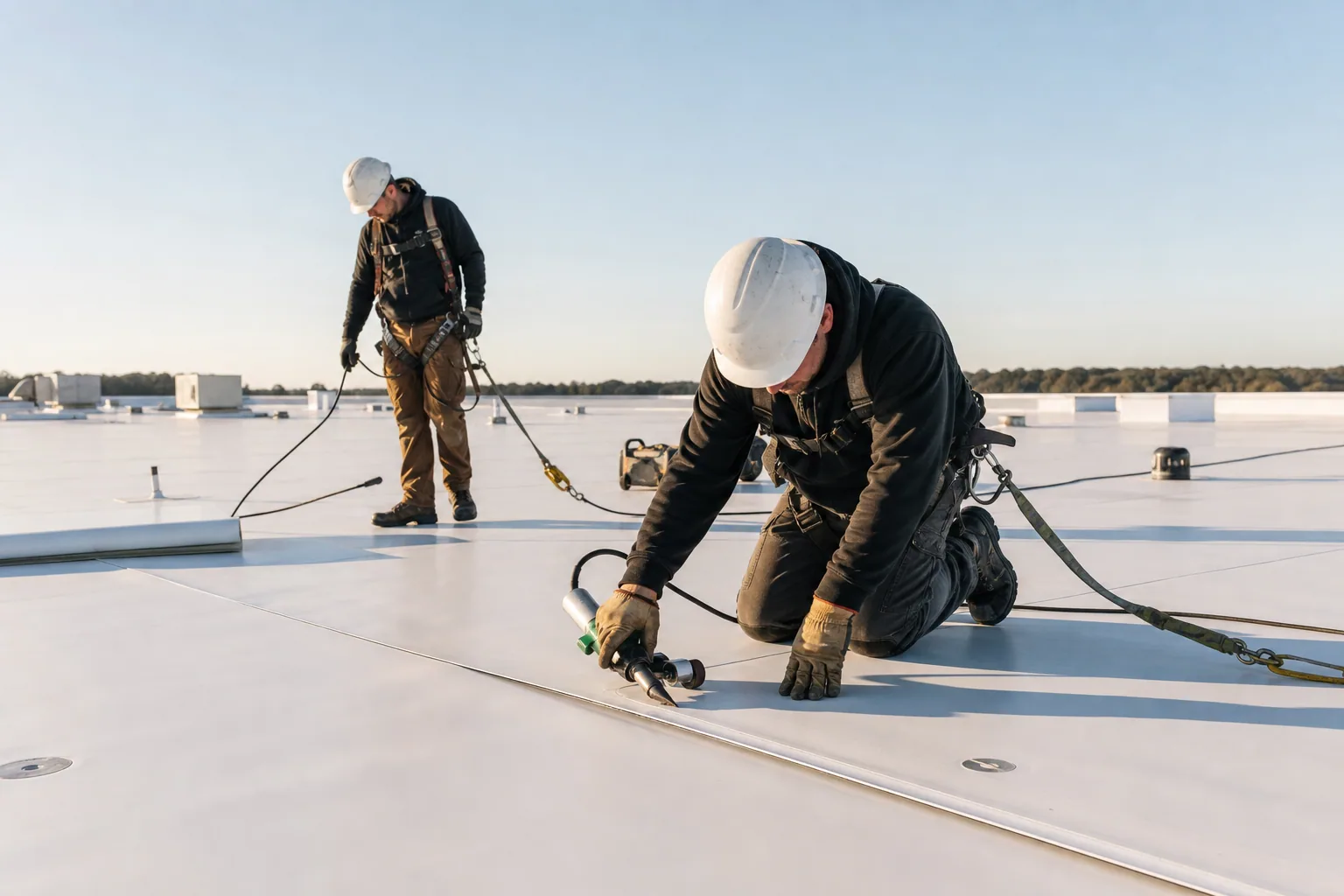
Commercial Roof Recover in Murrieta, CA
See how this work fits the roof, the building and the schedule.
Learn More
Commercial Roof Warranty Management in Murrieta, CA
Related scope, access notes and questions to ask before work starts.
Learn More
Commercial Roof Asset Management in Murrieta, CA
Read the full description and the questions owners ask about it.
Learn MoreReview the Roof Before the Decision
Arrange a Murrieta due diligence survey to document accessible roof conditions, repair needs, and unresolved questions before acquisition or refinancing.