
Commercial Roofing in Rancho Mirage, CA
Set a Rancho Mirage commercial roof scope around building access, drainage, and verified assembly conditions before repair or replacement.
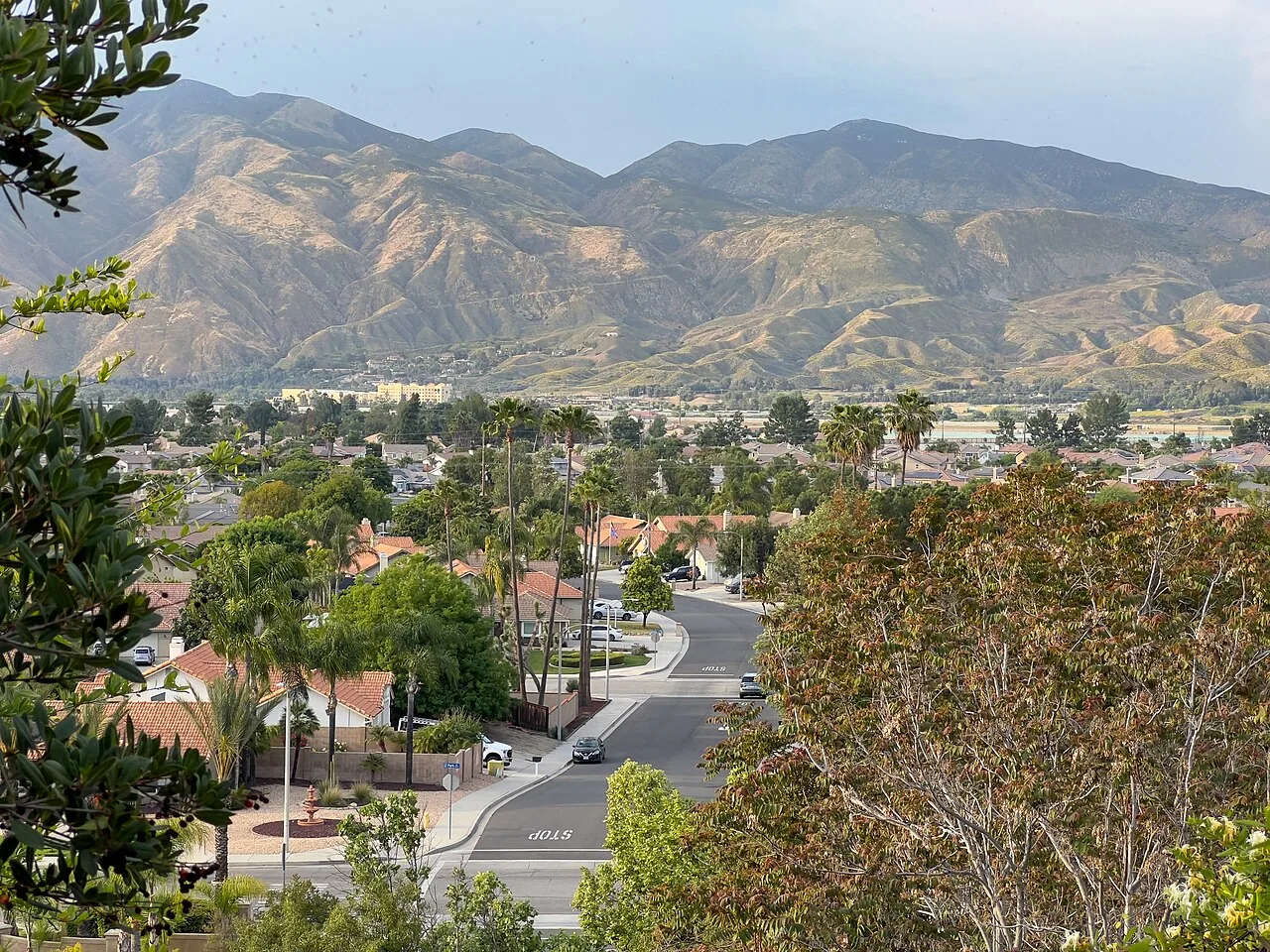
A commercial roof near Highway 111 or Bob Hope Drive needs a scope tied to the building, not only its corridor. Highway 111 is Rancho Mirage's principal commercial route; Bob Hope Drive is a primary entry and long central corridor. Those municipal descriptions help orient a property discussion; they do not identify a tenant, roof system, or entrance. We inspect seams, parapets, curbs, drains, flashing, and previous repairs before drawing a repair boundary.
The Highway 111 Corridor Specific Plan describes the corridor as about 4.5 miles long and a major circulation and commercial axis. It connects Rancho Mirage with Cathedral City to the north and Palm Desert to the south along a primary Coachella Valley route. A Cathedral City roof review or Montclair inspection still receives its own access plan and condition record. We compare sites using their drawings and inspection findings, not a shared assumption about the street or surrounding use.
Highway 111: connect the plan to a building-specific scope
The City's corridor plan gives a useful geographic frame, but a commercial roofing estimate begins at the property boundary. We ask for available roof drawings, prior repair notes, equipment plans, and the contact who can release the roof. During the walk, we note how each roof section connects to an outlet, parapet, curb, or adjoining membrane. If the building has a tenant schedule or service route below, those limits affect staging and daily dry-in rather than the membrane selection.
A route that connects Cathedral City and Palm Desert does not establish how a truck should enter a specific parcel. The property manager confirms gate instructions, material staging, lift position, and hours that access can be restricted. A commercial roof inspection should record those details beside the visible condition. This allows a facilities contact to review whether a patch, drain correction, or broader reroof can fit the building's operating window.
Roof walk: compare the interior report with each transition
A reported leak is a place to begin tracing, not a final work area. We compare the room or equipment affected with seams, wall transitions, penetrations, curbs, drains, and earlier patches overhead. Water can travel inside the roof assembly before it reaches an interior finish. The inspection records the visible opening separately from any suspected path and notes whether moisture testing or a small cut would alter the proposed repair.
At a drain, we inspect the outlet bowl, overflow path, flashing bond, and membrane around the low area. A blocked opening needs different work from a separated seam or wet insulation near the sump. We draw the path water should follow and identify whether plumbing or mechanical work intersects with the repair. A drain correction can be listed as a separate quantity, letting the owner approve a known issue while a broader condition is tested.
Assembly review: weigh another layer against the existing roof
A recover adds weight and height at drains, edges, and equipment. Before considering one, we check layer count, moisture, attachment, deck capacity, parapet clearance, and outlet depth. If damage repeats across roof zones or moisture extends beyond the defined repair, replacement may fit the condition better. The estimate names the inspection finding that supports each option and leaves any concealed layer as a test item, not a confirmed quantity.
A built-up roof evaluation considers plies, surfacing, flashing, and drain transitions as a connected assembly. A coating also needs stable material, compatible preparation, reinforced details, and an open drain path; it cannot correct a failed substrate. A replacement scope identifies the removal limit, insulation work, edge metal, curb details, and any interface assigned to another trade. The owner can then compare alternatives on the same condition record.
Daily handoff: state what stays open and what dries in
Before mobilization, we agree on roof access, material delivery, a staging location, and the section that can be opened during a shift. If tenants or staff remain below, the schedule needs an open-area limit and an assigned person to accept temporary protection. A curb change requires a separate handoff with the equipment trade, including who supplies the curb, who forms the opening, and who restores flashing. Those tasks appear in the work plan instead of being left to the field after removal starts.
Cost and duration follow tear-off depth, wet insulation, deck repairs, edge metal, drain changes, equipment coordination, and how much area can be protected at once. We separate measured work from allowances that depend on a test or concealed layer. If an exposed deck changes the scope, the proposal says who reviews photos, what approval is needed, and which work can pause. This keeps an owner from approving a roof quantity that assumes unknown material is already confirmed.
Owner review: keep each exception visible
A clear proposal connects every line to a roof zone, observed condition, and detail to be restored. We list removal, insulation, deck work, flashings, outlets, temporary dry-in, and equipment coordination separately where each changes the job. A photo condition report pairs dated images with marked locations so the owner can check the repair limit before signing. It also distinguishes visible defects from an area that still needs moisture testing.
For several buildings along Highway 111, the owner should compare current inspection records rather than assume a shared assembly. A roof capital review can organize repairs and future replacement by condition, date, and documented quantity. The Rancho Mirage General Plan also identifies Bob Hope Drive as a primary entry and central corridor; that is useful municipal context, not the approved route into a property. The building contact sets current access and delivery rules.
Turnover: mark the point another trade takes over
At the final walk, we point out the restored drain edges, seams, curbs, and termination details with the owner or facilities contact. A marked drawing shows the repair limit, while photographs capture the finished tie-in and any excluded area. If another trade later opens the roof, the file helps distinguish that new penetration from the completed roofing work. We add the approved changes and any deferred test to the building record before closing the project.
Highway 111 connects Rancho Mirage with Cathedral City and Palm Desert, but the property condition determines the next roof decision. Share the current leak report, available drawings, and hours the roof can be accessed. We will trace the affected area, identify the detail that failed, and state whether a test opening is needed before the owner approves repair or replacement. A portfolio can compare this building with the Cathedral City service area only after both records are complete.
Commercial Roofing Questions
Does the Highway 111 plan determine a property's delivery entrance?
No. It describes a city corridor and its regional connections. The property contact confirms the current gate, staging area, and delivery hours before we set the work sequence.
Can the owner compare repair and recover on the same proposal?
Yes. We can show a defined repair, then evaluate another layer after checking moisture, attachment, deck strength, layer count, drain depth, and edge clearance.
What should the first inspection settle?
It should map the reported condition, trace nearby seams and transitions, note drainage, and identify any test that could move the repair boundary. The owner receives the next decision with the photos.
How should work be planned around an occupied property?
The building team identifies hours, restricted paths, and spaces that must remain accessible. We mark each daily roof limit and temporary dry-in handoff before removal begins.
Which details belong in closeout?
Keep the approved quantities, marked repair area, images of the restored transitions, and any unresolved test together. The record should identify who owns a later opening or equipment change.
Related Roofing Work
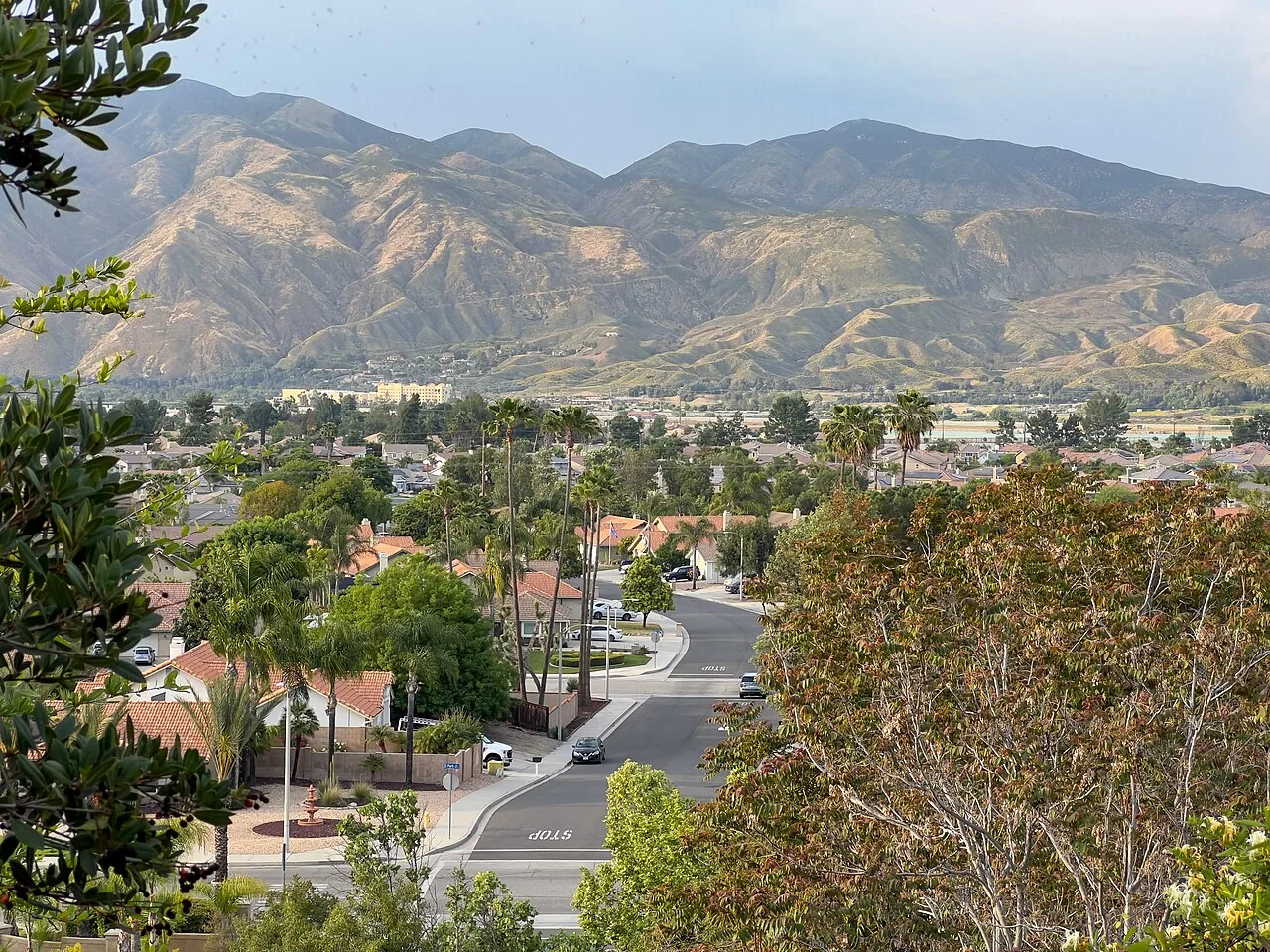
Commercial Roofing in Cathedral City, CA
See how this work fits the roof, the building and the schedule.
Learn More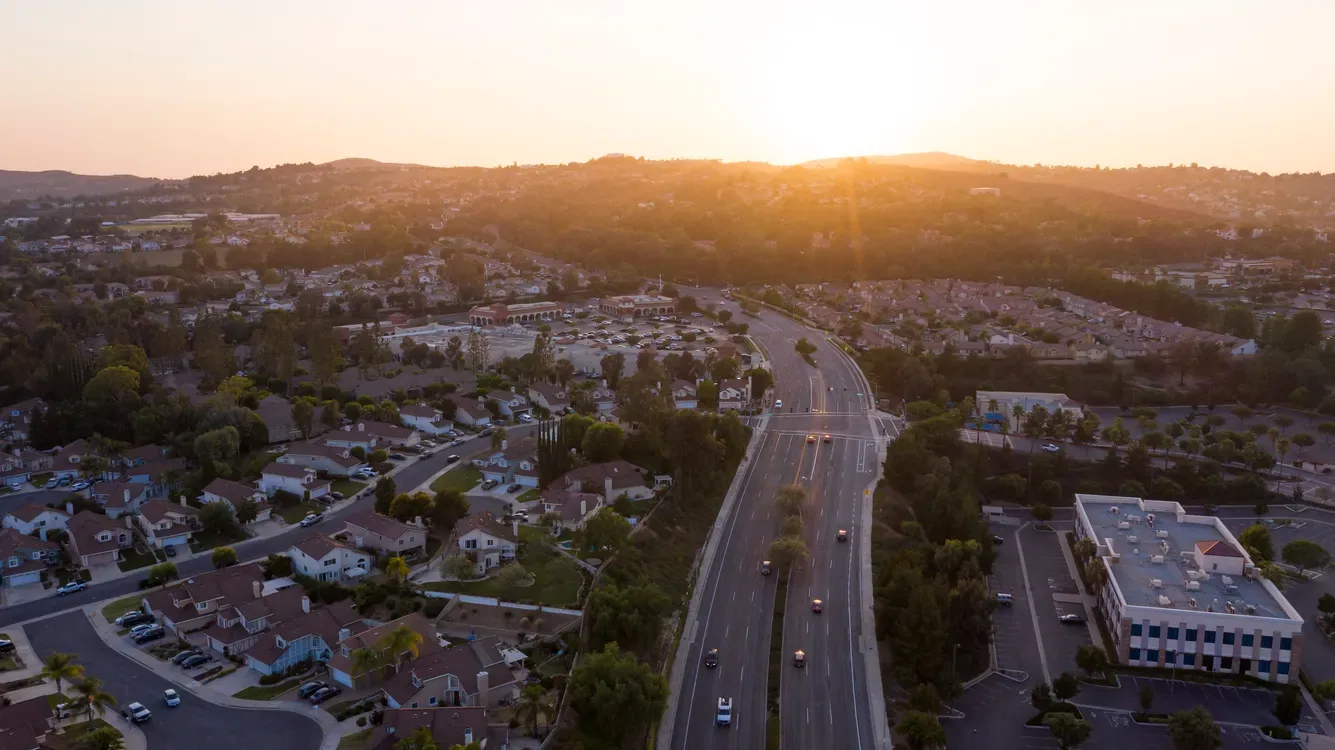
Commercial Roofing in Montclair, CA
Related scope, access notes and questions to ask before work starts.
Learn More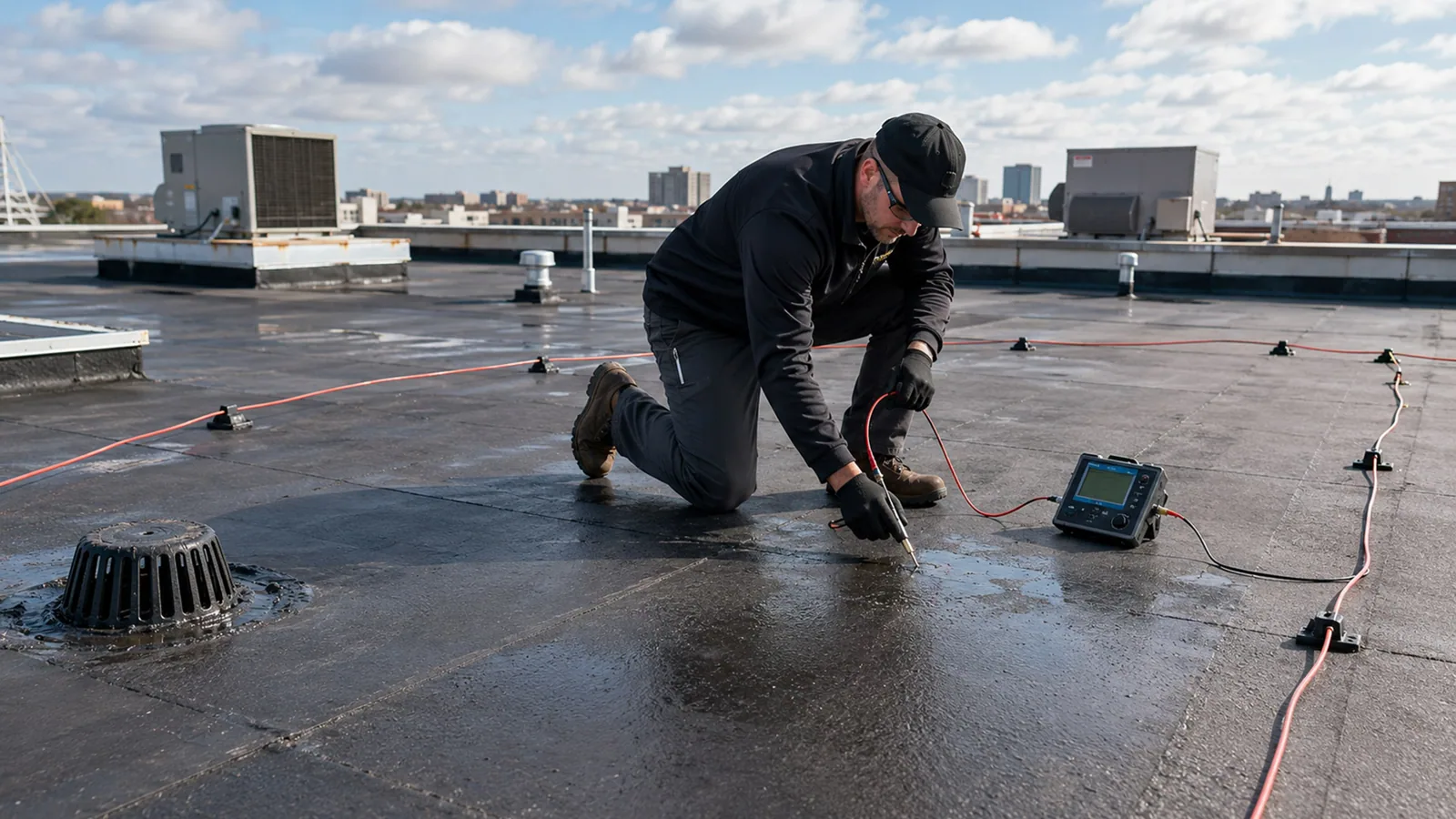
Commercial Roof Inspection in Murrieta, CA
Read the full description and the questions owners ask about it.
Learn More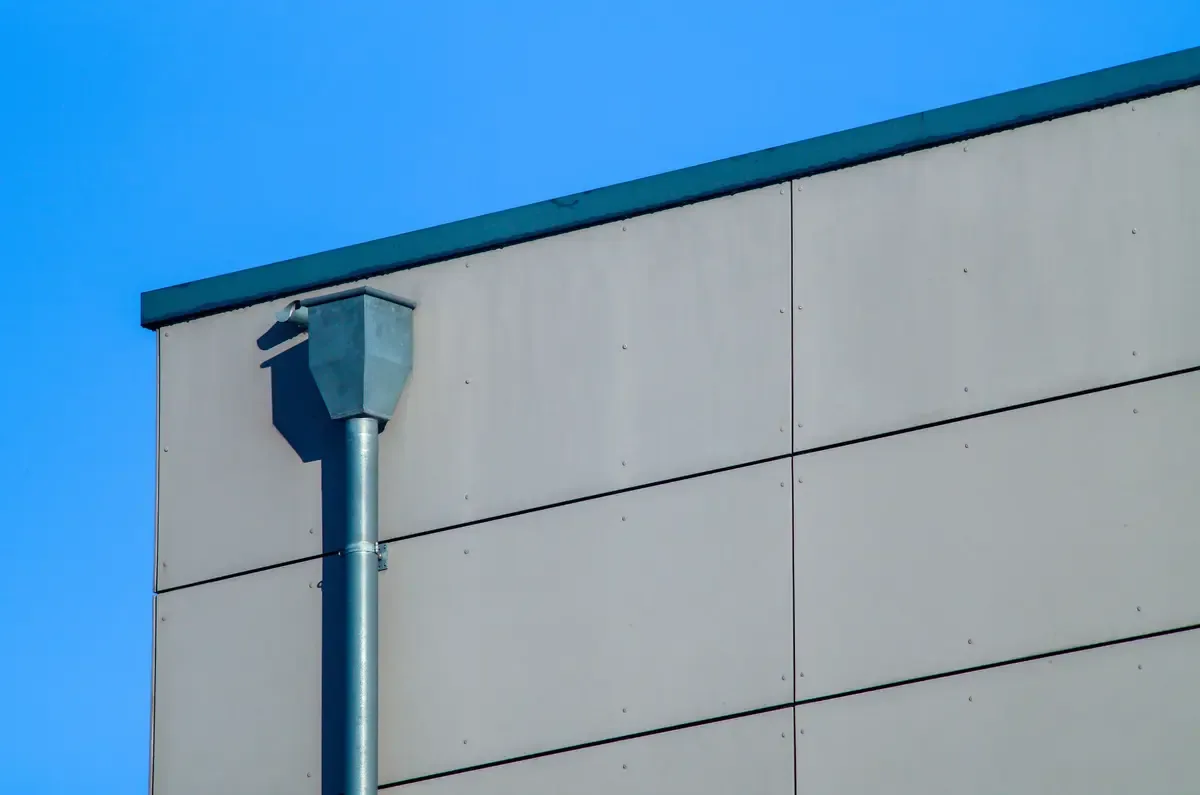
Commercial Roof Drains and Scuppers in Murrieta, CA
See how this work fits the roof, the building and the schedule.
Learn More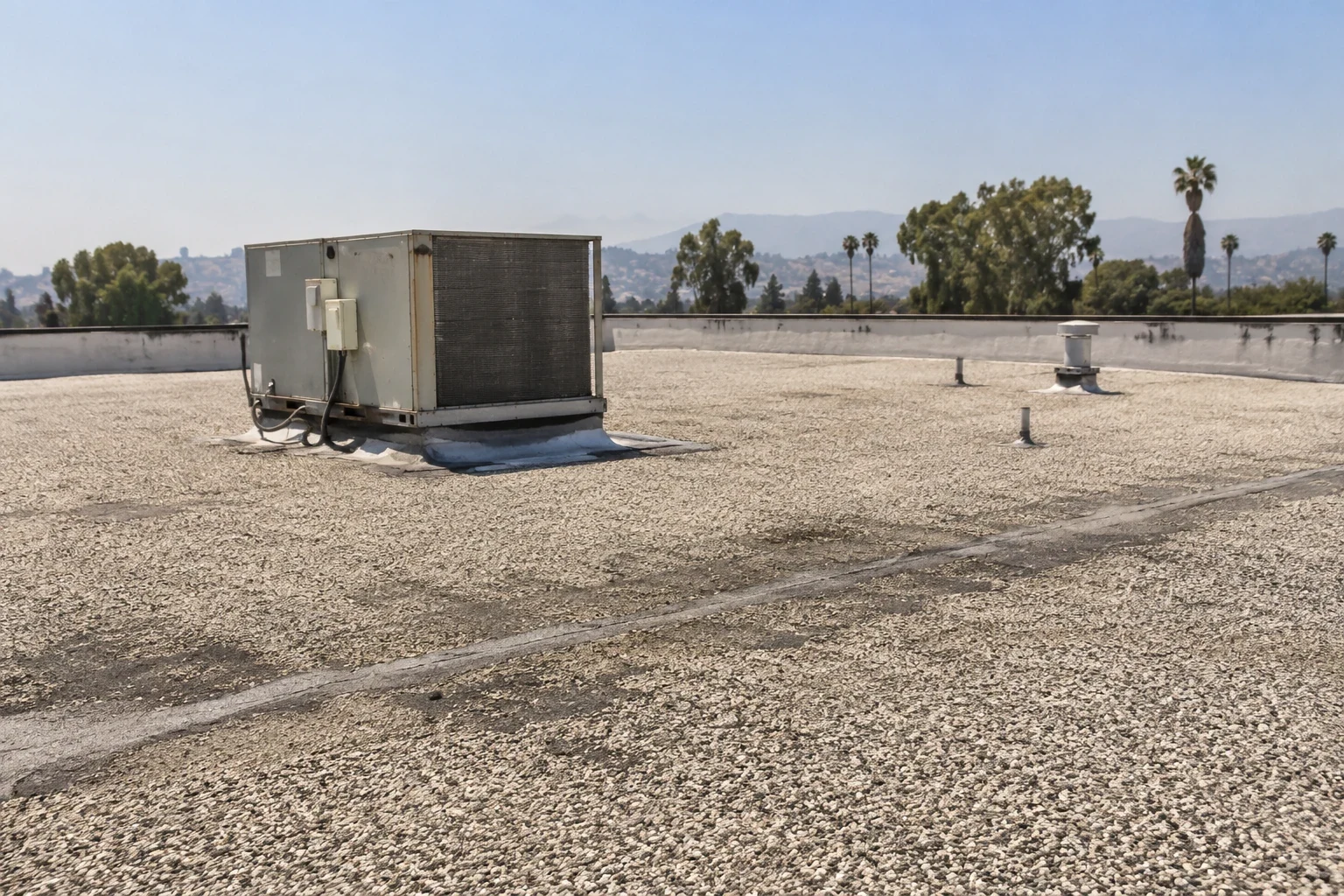
Commercial Built-Up Roofing in Murrieta, CA
Related scope, access notes and questions to ask before work starts.
Learn More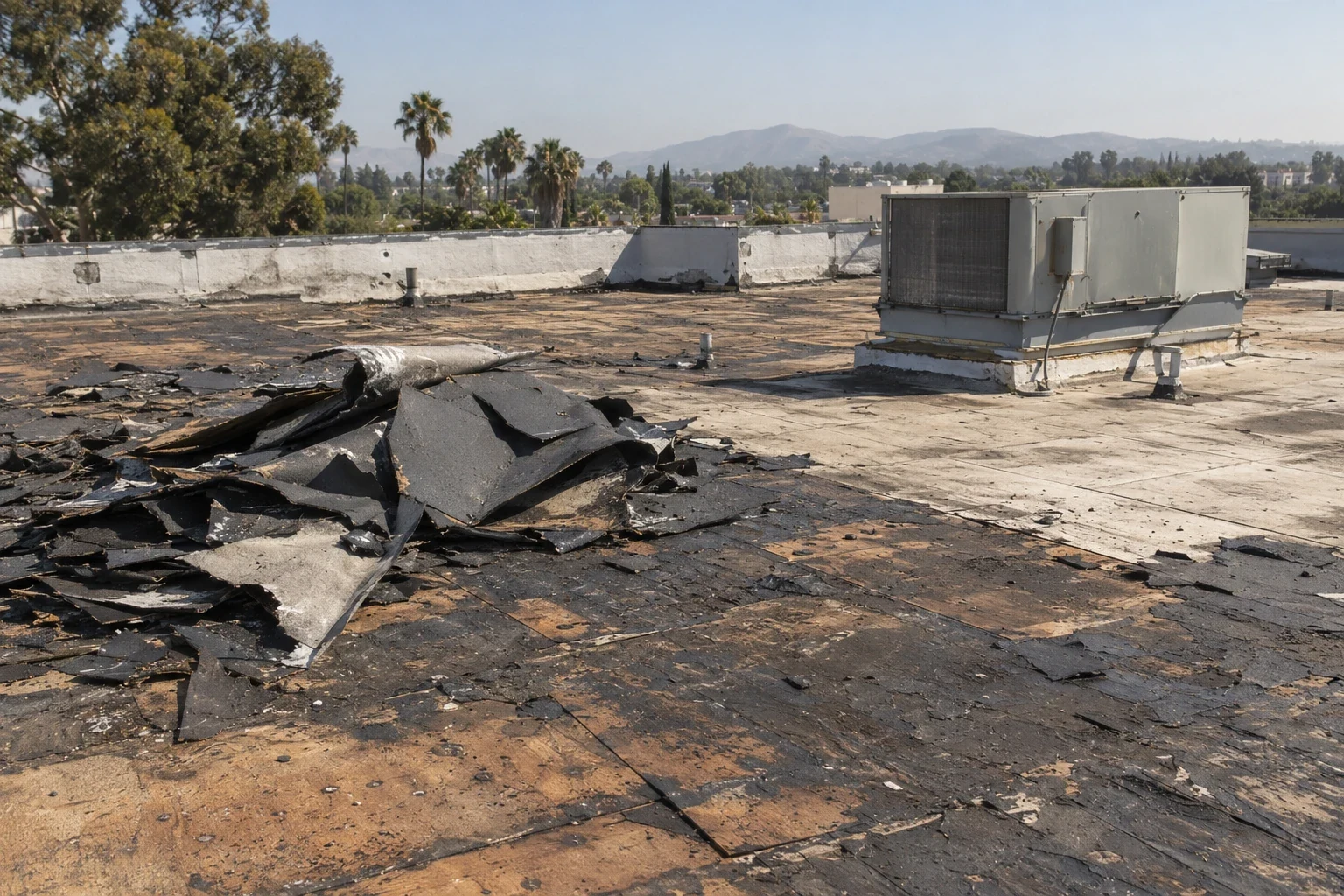
Commercial Roof Replacement in Murrieta, CA
Read the full description and the questions owners ask about it.
Learn MoreDiscuss a Rancho Mirage roof condition
Send the roof plan, prior repair notes, and access hours. We will trace the reported condition, mark the repair limit, and identify what still needs testing.