
Commercial Roof Capital Planning in Murrieta, CA
Compare repair and replacement scopes for commercial roofs in Murrieta. Use current condition, access, and phasing needs to plan the next capital decision.
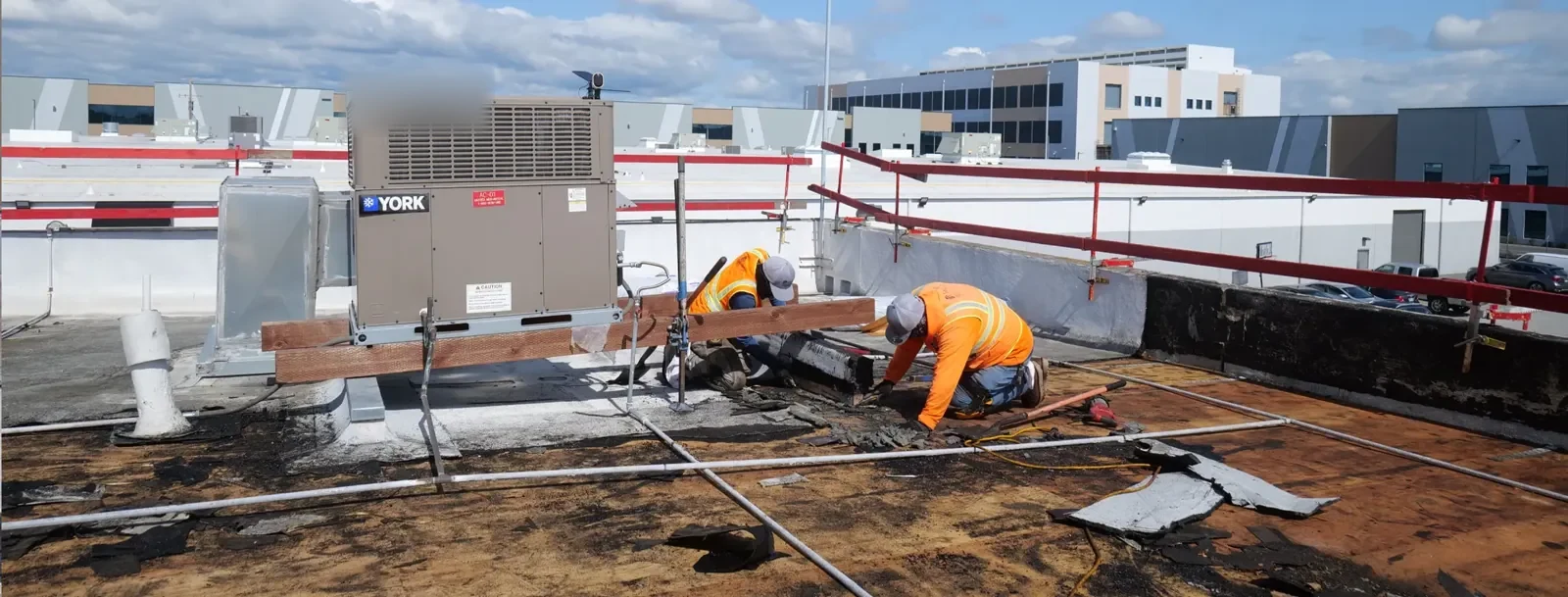
A budget review deserves a roof scope with a boundary, not a round number and a guessed replacement year. We inspect the assembly, document active defects, and separate work that protects the building now from work that can be planned. Murrieta's business districts connect to Interstate 15 and Interstate 215, but each capital estimate still begins at the actual roof section under review. Road access does not establish assembly, condition, or project timing. That is a reminder to assess each property rather than multiply one building's scope across a portfolio. Owners can start with a written roof condition report that identifies what the proposed dollars address.
Owner decision: Build the Estimate From the Roof
A capital estimate starts with a defined roof section. We record the membrane or metal assembly visible, seam and flashing conditions, drainage, penetrations, and any signs that water has reached the layers below. If a test opening or core is needed, we show that as a separate investigation step before pricing a larger scope. The owner should be able to see what is included, what remains unknown, and which assumptions could change the number. A replacement allowance without that boundary can make two unlike buildings look comparable when they are not.
Murrieta's 2025 California Building Standards Code took effect on January 1, 2026. A budget review checks whether the proposed scope and filing date trigger a permit or energy-code step. Permit review and energy-code requirements need to be checked against the actual scope and submittal date; a maintenance repair and a larger roof alteration do not automatically follow the same path. We coordinate the proposed scope with the applicable review instead of inserting a generic allowance that may not match the project.
Roof observation: Separate Today’s Water Control From Renewal
Water entry has its own budget urgency. The first scope may be to find the route, stop active entry, and protect the occupied space, while the capital question remains open. We identify whether the defect sits at a seam, curb, drain, edge, or transition and state the repair boundary. If repeated repairs cross several sections, a broader rehabilitation or replacement study may be the better comparison. The estimate should show both the near-term action and the condition information needed before committing the larger amount.
A recover can preserve a serviceable roof assembly, but only after the existing layers, moisture conditions, drainage, attachment, and code limits are assessed. If those conditions do not support an overlay, the budget should show tear-off, disposal, insulation, and protection of rooftop equipment as distinct cost drivers. A recover feasibility review is different from a promise that the existing system can stay in place. The decision follows inspection, not a low first-page allowance.
A fair comparison keeps the included roof area and edge details consistent, then lists the differences that matter: tear-off depth, insulation replacement, drain work, curb changes, and protection for rooftop equipment. We identify exclusions beside each option instead of burying them in a total. If a board or lender needs a dated recommendation, the report states the inspection date and what condition would require an earlier review. A later visit can update the decision without treating the original estimate as a warranty of future roof performance.
Timing and access: Price the Work Window as Well as the Materials
Access changes both schedule and price. Occupied offices, medical operations, delivery routes, rooftop equipment, and tenant entrances can require phased work, temporary dry-in, coordination with other trades, and a defined daily boundary. We ask who controls the roof, when noisy work is acceptable, how materials reach the section, and what must remain open. A cost comparison that ignores those conditions can understate the work needed to keep the building functioning.
The Jefferson and Madison corridor has land zoned for future Business Park and Innovation uses. A planned district is not a completed roof inventory, so the budget includes only buildings whose conditions and access have been reviewed. The Jefferson and Madison planning area is a broad land-use framework, not proof that a project or a roof inventory is complete. It does make property-level phasing useful: an owner can compare the access and occupancy conditions at an existing building with the work plan for a future project without assuming they are the same.
System detail: Use Scenarios Instead of a Single Date
We can lay out alternatives that hold the same assumptions: localized repair, broader repair, restoration where the assembly qualifies, or replacement. Each scenario identifies its scope, expected disruption, included details, and conditions that would move the work to another option. We avoid assigning a roof an exact remaining-life figure when the inspection has not established the concealed condition. A review date is more useful than a false precision: it tells the owner when to revisit inspection findings and what change would trigger a new decision.
Murrieta prioritizes manufacturing, medical services, science, and commercial-property management for business retention and expansion. That list does not establish the use or operation of an individual building. For a portfolio serving those sectors, occupied-building phasing can be evaluated with each property's work windows and protection needs. The budget then follows actual access constraints rather than a standard duration copied from another job. We list the decision date, information needed before approval, and the person who can authorize a change when opened conditions differ from the estimate. That gives the owner a practical checkpoint instead of a calendar promise.
Owner decision: Keep Contingencies Tied to Evidence
Contingencies should name the condition they cover. Concealed wet insulation, damaged deck, failed attachment, or deteriorated wood at an edge may change the scope once the roof is opened. We explain how the project will identify those conditions, who approves a change, and how the exposed roof will be protected while the decision is made. A broad percentage with no trigger does not tell the owner whether the allowance is for hidden damage, weather protection, or additional coordination.
When an owner compares multiple properties, an asset record by roof section can keep repair history and current observations together. A replacement scope can then be compared with a defined alternative instead of an old invoice. For work along the broader Temecula market, we can document property-specific access and conditions through commercial roof work in Temecula; no Murrieta budget should be transferred there without its own inspection. If active water entry drives the immediate work, a defined repair scope can be priced beside the longer renewal options.
Commercial Roofing Questions
What information should a roof capital plan include?
It should list the inspected sections, observed conditions, recommended scope, access constraints, and assumptions that could change cost or timing. We separate immediate water-control work from a larger renewal decision and identify when the next inspection should update the plan.
Can the roof receive another recover instead of replacement?
That depends on the existing layers, attachment, drainage, moisture findings, and applicable code requirements. We inspect those conditions and state whether a recover merits pricing; the option is not selected from age or appearance alone.
How should we budget for hidden damage?
Tie the allowance to a defined trigger, such as wet insulation or damaged deck uncovered during removal. The proposal should explain how that condition is documented, who approves a change, and how the building stays dry while the scope is confirmed.
Does the 2025 California code apply to every roof project in Murrieta?
Murrieta's adopted building-code set changed in 2026. We verify the specific submittal date and proposed work with Building and Safety, since a repair visit and a permitted reroof do not automatically follow the same path.
When should a budget estimate be refreshed?
Refresh it after a meaningful leak, repair, new inspection, change in occupancy, or change in project scope. We can revisit the estimate when new inspection findings change the roof condition or the access plan.
Related Roofing Work
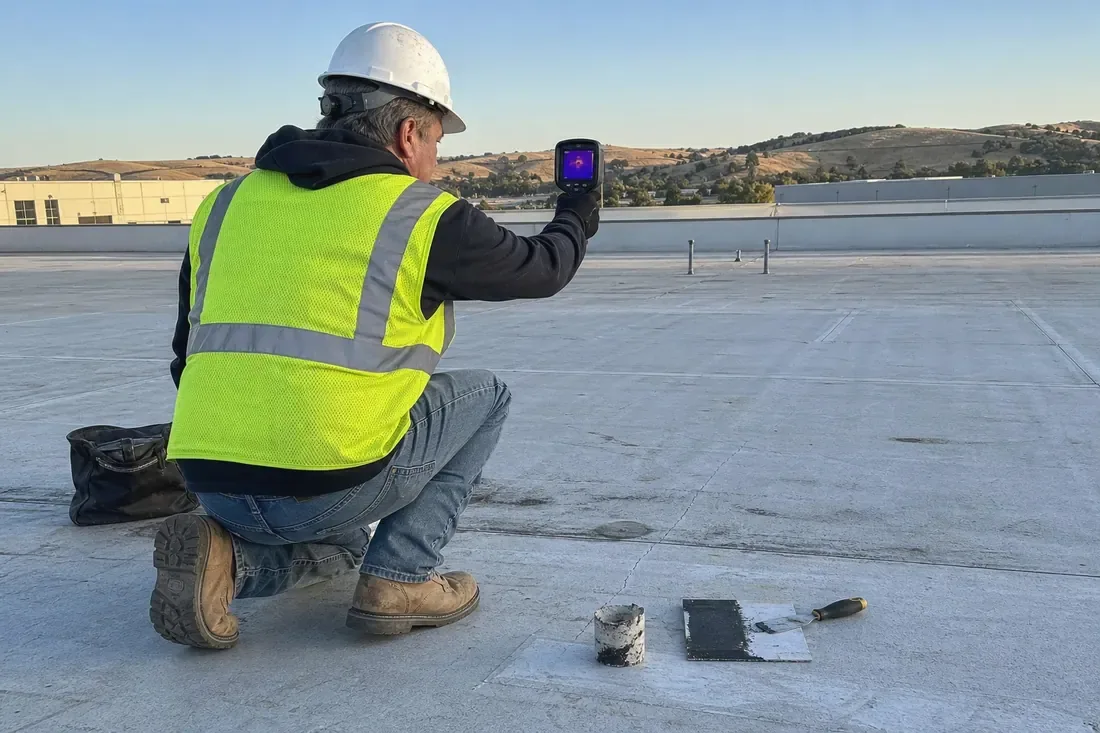
Commercial Roof Condition Reports in Murrieta, CA
See how this work fits the roof, the building and the schedule.
Learn More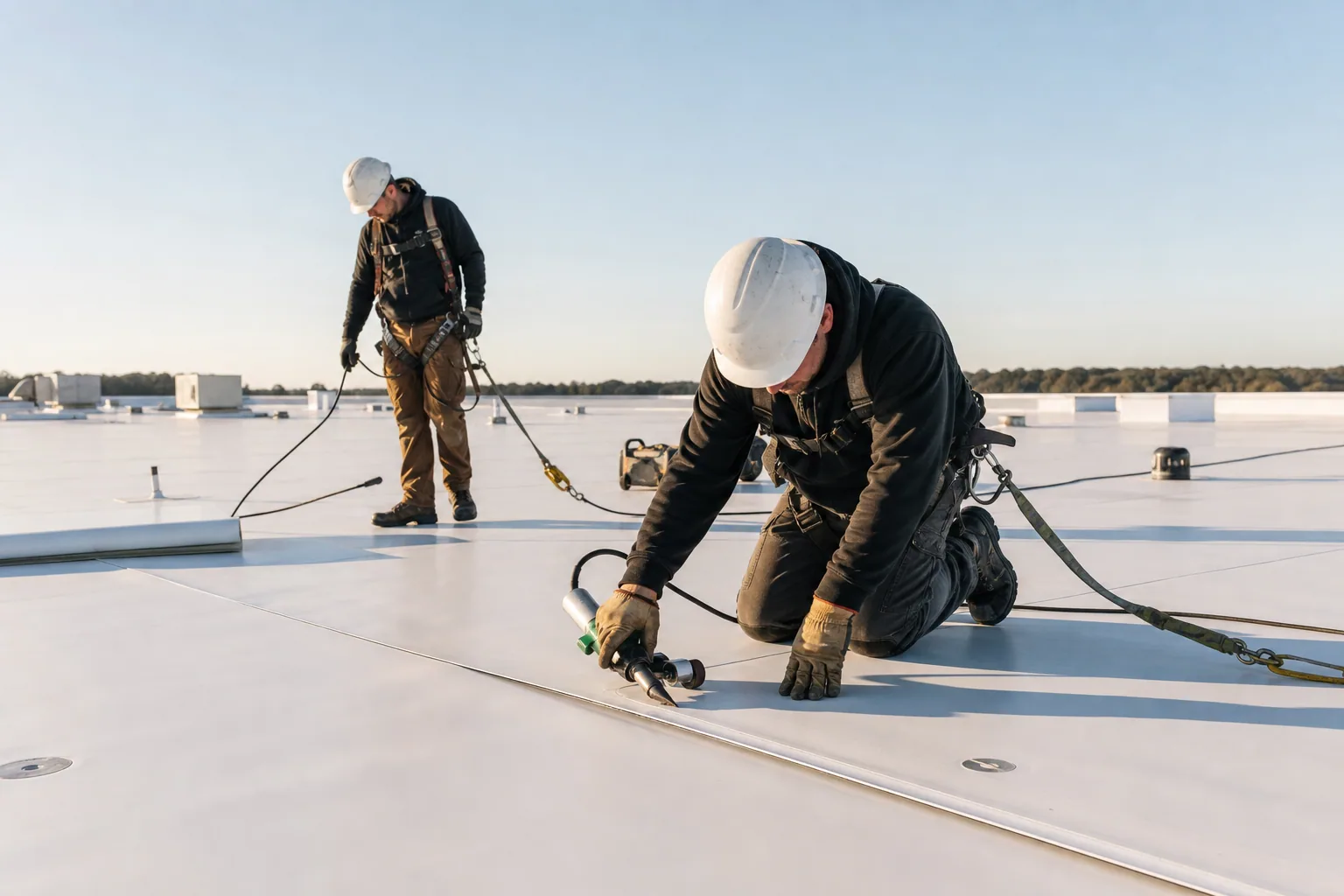
Commercial Roof Recover in Murrieta, CA
Related scope, access notes and questions to ask before work starts.
Learn More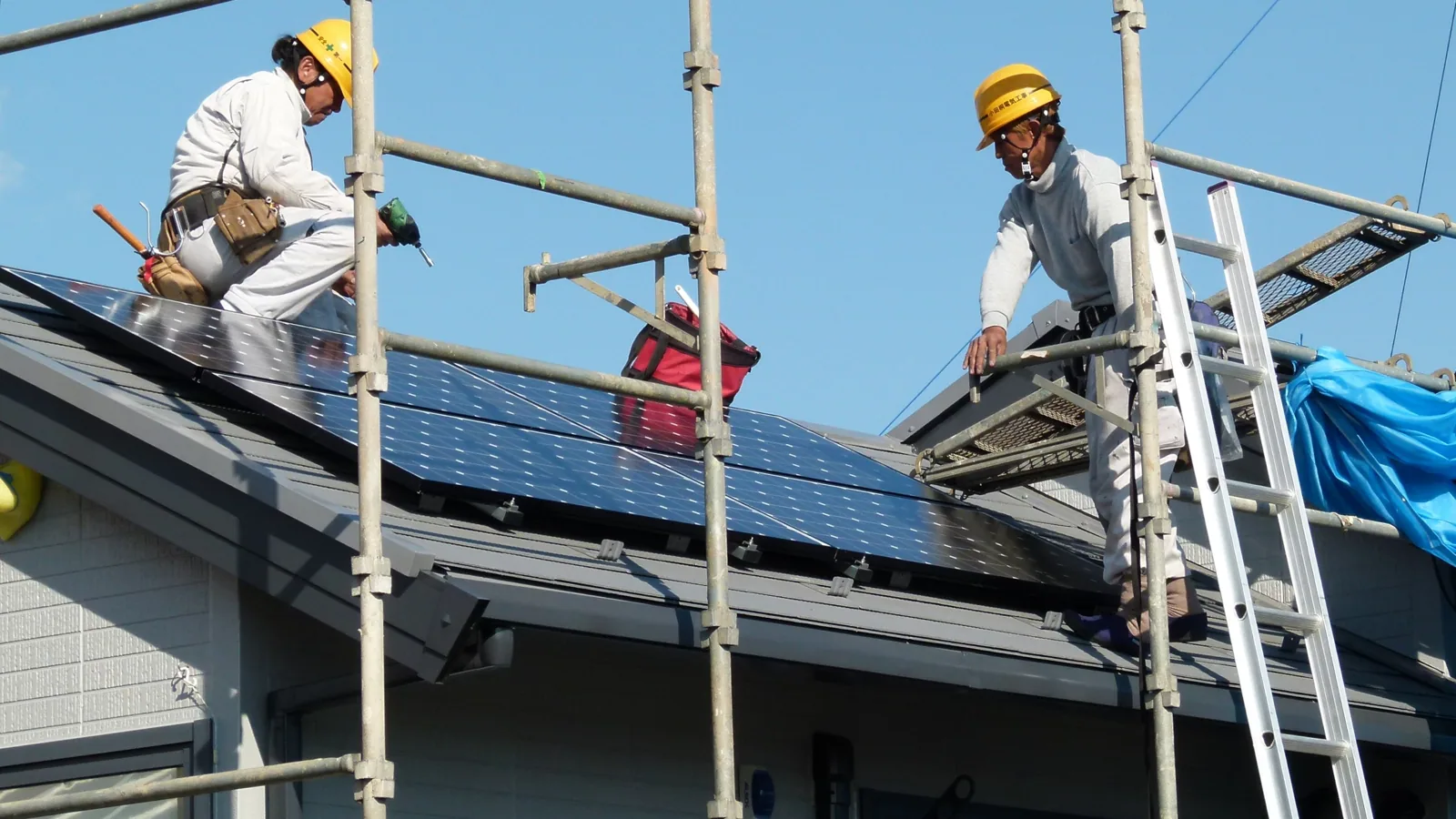
Occupied-Building Commercial Reroofing in Murrieta, CA
Read the full description and the questions owners ask about it.
Learn More
Commercial Roof Asset Management in Murrieta, CA
See how this work fits the roof, the building and the schedule.
Learn More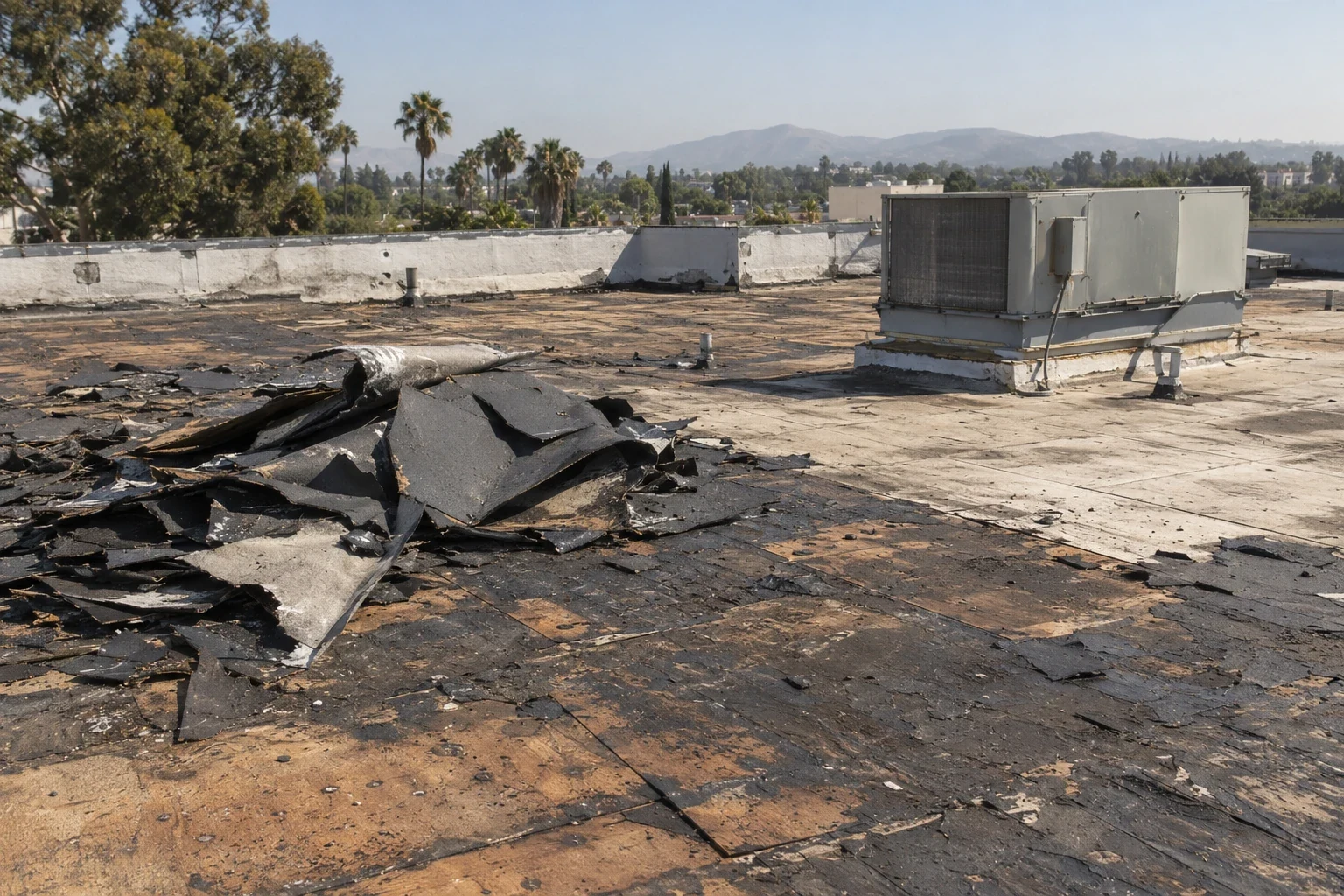
Commercial Roof Replacement in Murrieta, CA
Related scope, access notes and questions to ask before work starts.
Learn More
Commercial Roofing in Temecula, CA
Read the full description and the questions owners ask about it.
Learn MoreSet the Next Roof Decision
Arrange an inspection in Murrieta to define the repair boundary, replacement assumptions, and information needed for a defensible capital plan.