Commercial Ponding Water Roof Repair in Murrieta, CA
Commercial ponding water roof repair in Murrieta traces drain paths, checks membrane and insulation, and separates standing water from a failed roof detail.
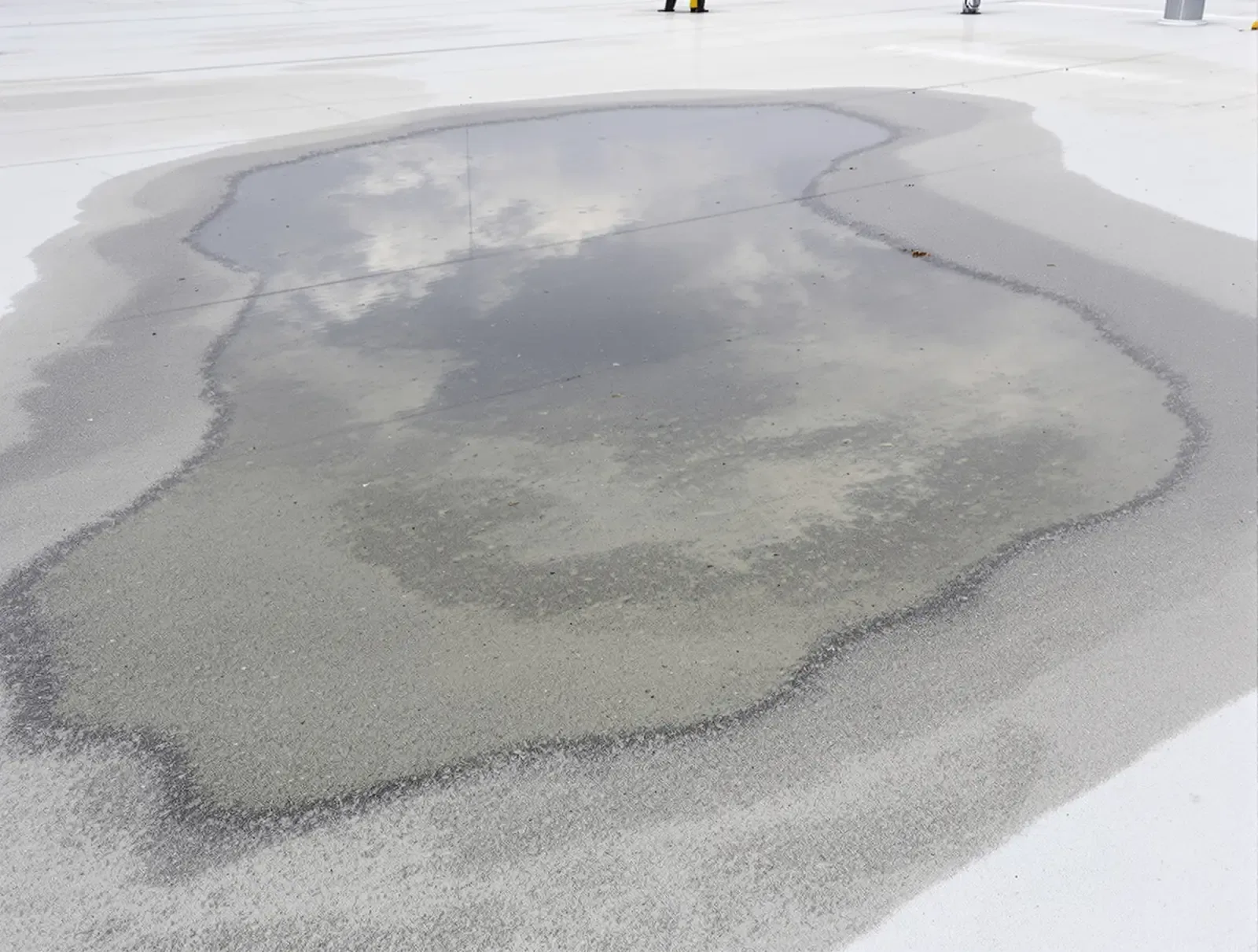
A shallow pool beside a rooftop unit can remain after the surrounding surface has dried. On a commercial roof, that pattern deserves a drain-path check before anyone adds a layer of coating or cuts a new opening. We map the low area, inspect the drain or scupper, and look at seams, curbs and nearby patches. Murrieta’s climate assessment puts annual precipitation at a 15.0-inch historical average and gives a 15.0 to 21.4-inch scenario range by 2099. The projection does not predict ponding at one building; we still measure its slope, outlet, and overflow path. On each property, the building geometry has to show how water moves. Our drain and scupper work starts with a sketch of where water collects, where it can leave, and which roof details need closer review. If a wind event displaced a termination nearby, we also trace the wind-damage repair area so the water path is not confused with a second opening.
Low Area: Find the Water’s Exit
We check whether water reaches a drain, scupper or open discharge path without crossing a raised seam or trapped curb. Debris, a shifted strainer, compressed insulation and a blocked leader can each slow flow, but a visible pool alone does not identify the cause. We note depth and extent, compare the area with the roof slope, and inspect the perimeter of the pond for soft spots or open laps. Interior reports help narrow the section, though a ceiling mark may appear away from the source. Murrieta’s business-park inventory includes existing commercial space; that citywide figure does not describe any one roof. For each building, we record the actual roof geometry and drainage condition. A roof inspection can show whether the immediate work belongs at the outlet, in the membrane, or below the surface.
Membrane and Insulation: Check What Holds Water
Standing water can expose weak laps, loose patches and low seams, yet it does not make a sound membrane fail by itself. We inspect the selected assembly: a thermoplastic weld, adhered EPDM lap, modified-bitumen cap sheet or coated surface each needs a compatible repair. A probe at a seam can locate separation. Moisture indicators or infrared scanning may flag areas for confirmation, and a test cut can show whether insulation has taken on water. We document the method and the location rather than marking every discolored surface for removal. If the roof remains dry and the drain path is obstructed, clearing the outlet may be the right first step. If the insulation is wet or the substrate has softened, a targeted roof repair needs a defined removal edge and dry-in plan. For a broader condition picture, a roof condition report records the evidence by section.
Murrieta Drainage: Keep the Roof Evidence Specific
Murrieta’s commercial districts connect to Interstate 15 and Interstate 215, where delivery and service traffic make a blocked discharge path inconvenient as well as damaging. The city’s existing business-park inventory is a useful reminder that property types vary; it is not a roof count or a description of any one assembly. We inspect each drain, overflow route and nearby penetration, then separate routine clearing from membrane repair. A drain that clears water today still needs a recorded service condition so staff can tell if ponding is new, recurring or tied to a recent roof alteration. That distinction matters when a facilities manager compares roof sections: a slow outlet may be corrected through maintenance, while compressed insulation or a failed lap can need a defined repair. We note which observation supports each recommendation and where a second visit is needed to confirm drying.
Repair and Slope: Decide What Changes the Outcome
Drain cleaning can restore flow when the outlet is the obstruction and the surrounding membrane is intact. A seam repair may be enough when a lap is open but the insulation beneath is dry. Wet board, repeated low areas or inadequate slope can require a broader correction, with tapered insulation or a system replacement considered only after field measurements and assembly review. We mark where the correction begins and ends, how the drain tie-in will be made, and whether overflow capacity needs separate design review. A recover assessment helps compare added material against removal, while coating restoration is considered only when the existing surface is eligible and prepared correctly. Nearby flashing can also contribute, so our flashing inspection follows the low area to its curbs and walls. We photograph the outlet before and after service, note whether water remains at the follow-up check, and flag any area that still needs a slope correction. That record keeps a drain service from being mistaken for a membrane repair and gives the property contact a practical basis for the next maintenance visit.
Work Record: Track the Next Rain
The closeout should show the cleared or repaired outlet, the membrane tie-in, the inspected insulation area and any remaining low spot. We add photographs and a roof sketch so the next service visit can compare the same point. Where the building is occupied, we agree on interior protection and roof access before moving material through a tenant or loading area. If water is still inside, temporary protection can control the immediate path while a permanent scope is prepared. For properties in Wildomar and Murrieta, a portfolio contact can keep the maintenance record tied to the correct address and roof section. That record is more useful than a note saying only “ponding,” because it preserves what changed, what was repaired and what should be checked after the next substantial rain.
Commercial Roofing Questions
How long can water remain before ponding needs attention?
The location and roof assembly matter more than a single universal time. We measure the pool, check slope and outlet flow, and inspect the membrane edge around the low area. A recurring pool near a curb may need a different correction from water held by debris at a drain. The visit should record the finding and its likely cause.
Could a clogged drain be the only problem?
Yes, when the outlet is blocked and the roof surface around it remains sound. We clear the drain path, inspect the strainer and leader connection, and check the overflow route. If the membrane is open or insulation is wet, clearing debris alone does not complete the repair. Those conditions receive separate locations and next steps in the written scope.
Does a roof coating remove a low spot?
A coating follows the prepared surface and does not correct roof slope. Before recommending restoration, we inspect drainage and confirm the substrate can support the coating system. Tapered materials or localized reconstruction may change water movement, but their tie-ins and drain elevations need to be measured on site. The repair plan should describe the outlet and the corrected path.
Does a local planning forecast tell us whether this roof will pond?
No forecast can establish the slope, outlet condition or membrane integrity on a particular building. We measure the low area, inspect the drain and check for wet insulation before choosing the repair. Murrieta’s citywide business-park figures describe property inventory, not roof assemblies, so the useful evidence comes from the roof section itself.
What should be included in the repair closeout?
Include the drain condition, repair limits, materials used, photographs and a sketch locating the work. We also record whether water movement changed after the outlet was cleared or the surface was repaired. That gives facilities staff a point to revisit on the next maintenance cycle and helps separate a new leak from the earlier condition.
Related Roofing Work
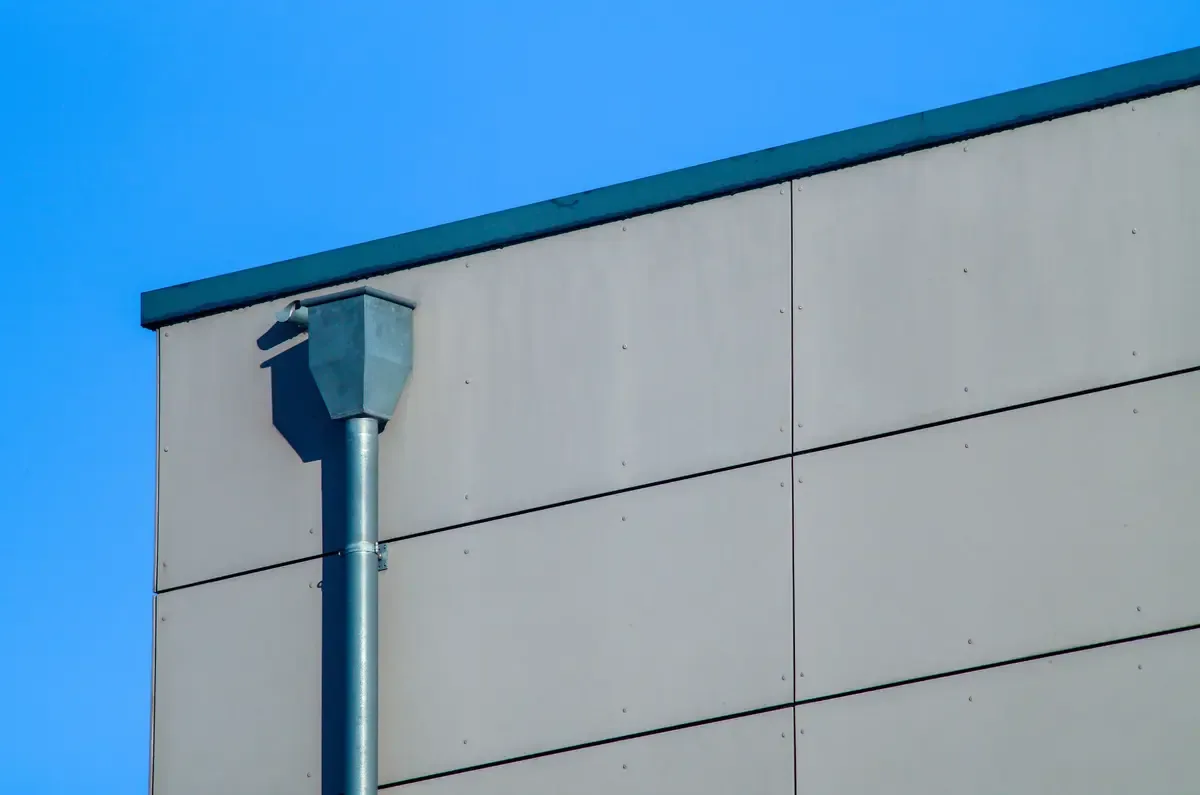
Commercial Roof Drains and Scuppers in Murrieta, CA
See how this work fits the roof, the building and the schedule.
Learn More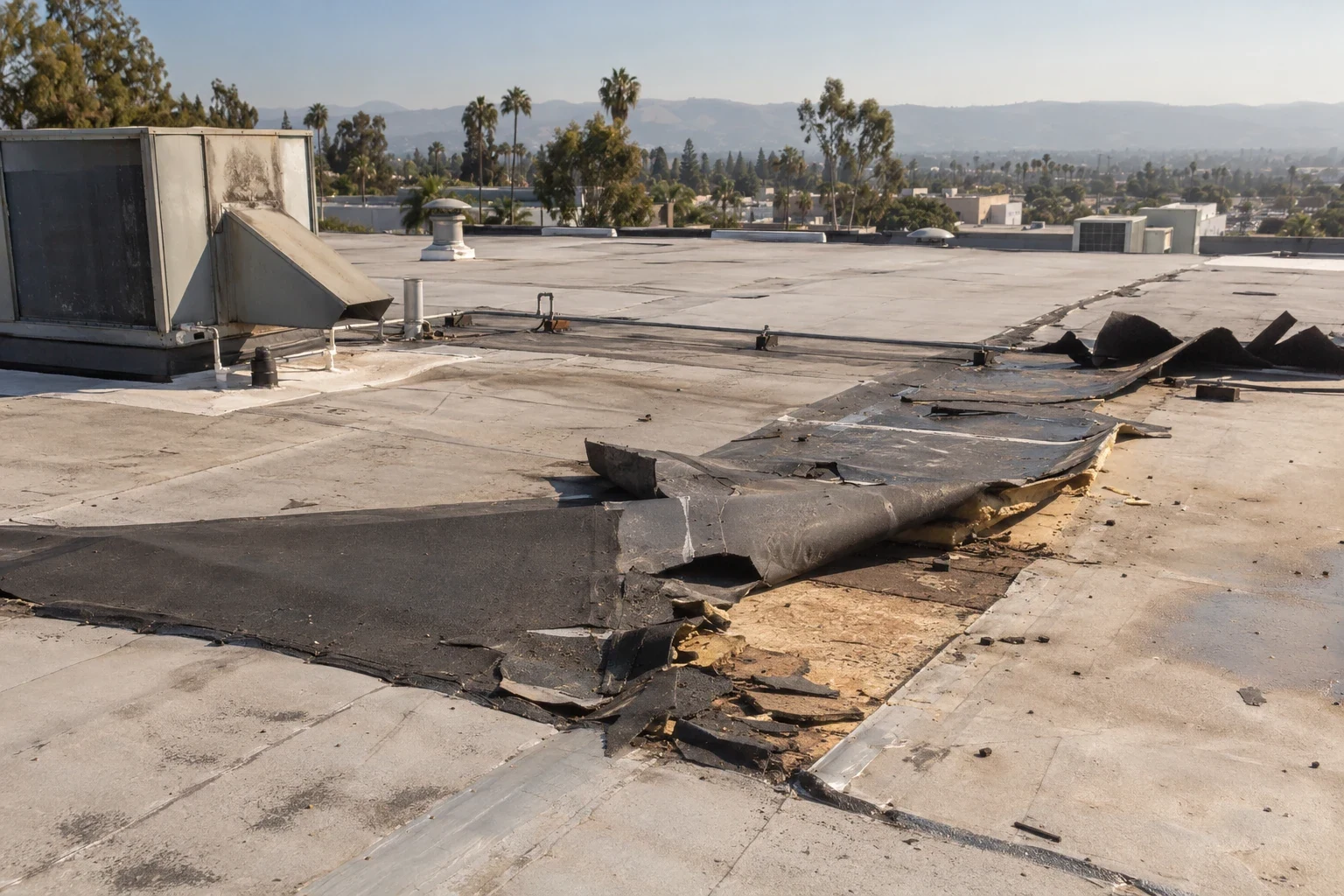
Commercial Wind Damage Roof Repair in Murrieta, CA
Related scope, access notes and questions to ask before work starts.
Learn More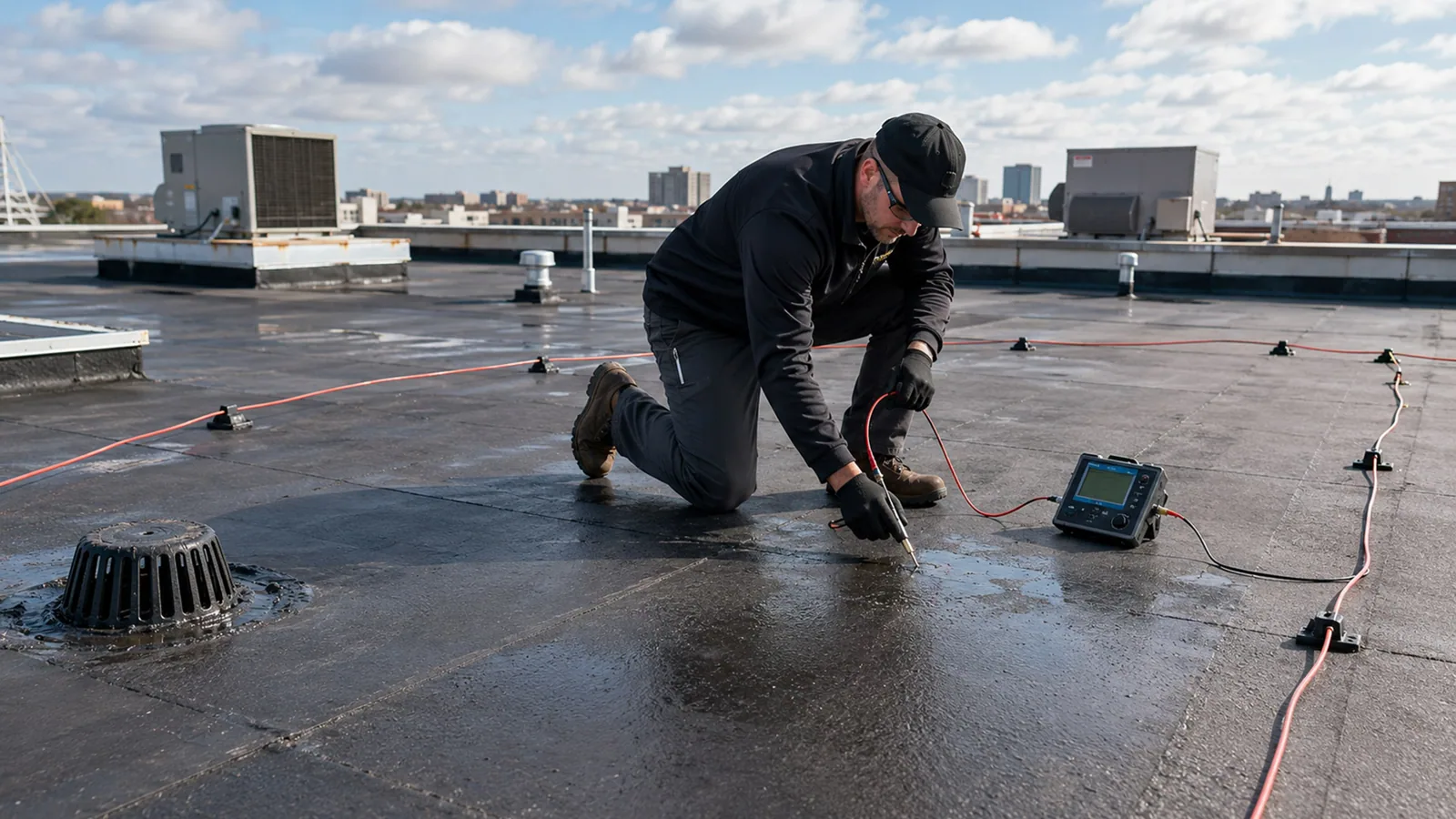
Commercial Roof Inspection in Murrieta, CA
Read the full description and the questions owners ask about it.
Learn More
Commercial Roof Repair in Murrieta, CA
See how this work fits the roof, the building and the schedule.
Learn More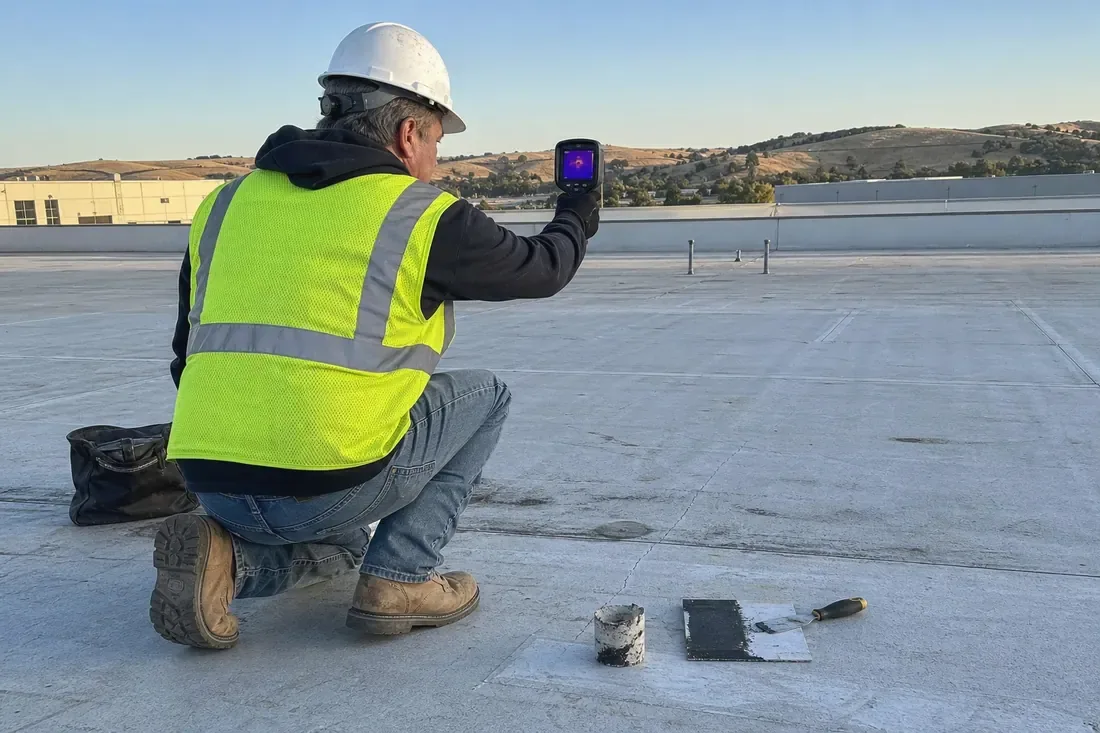
Commercial Roof Condition Reports in Murrieta, CA
Related scope, access notes and questions to ask before work starts.
Learn More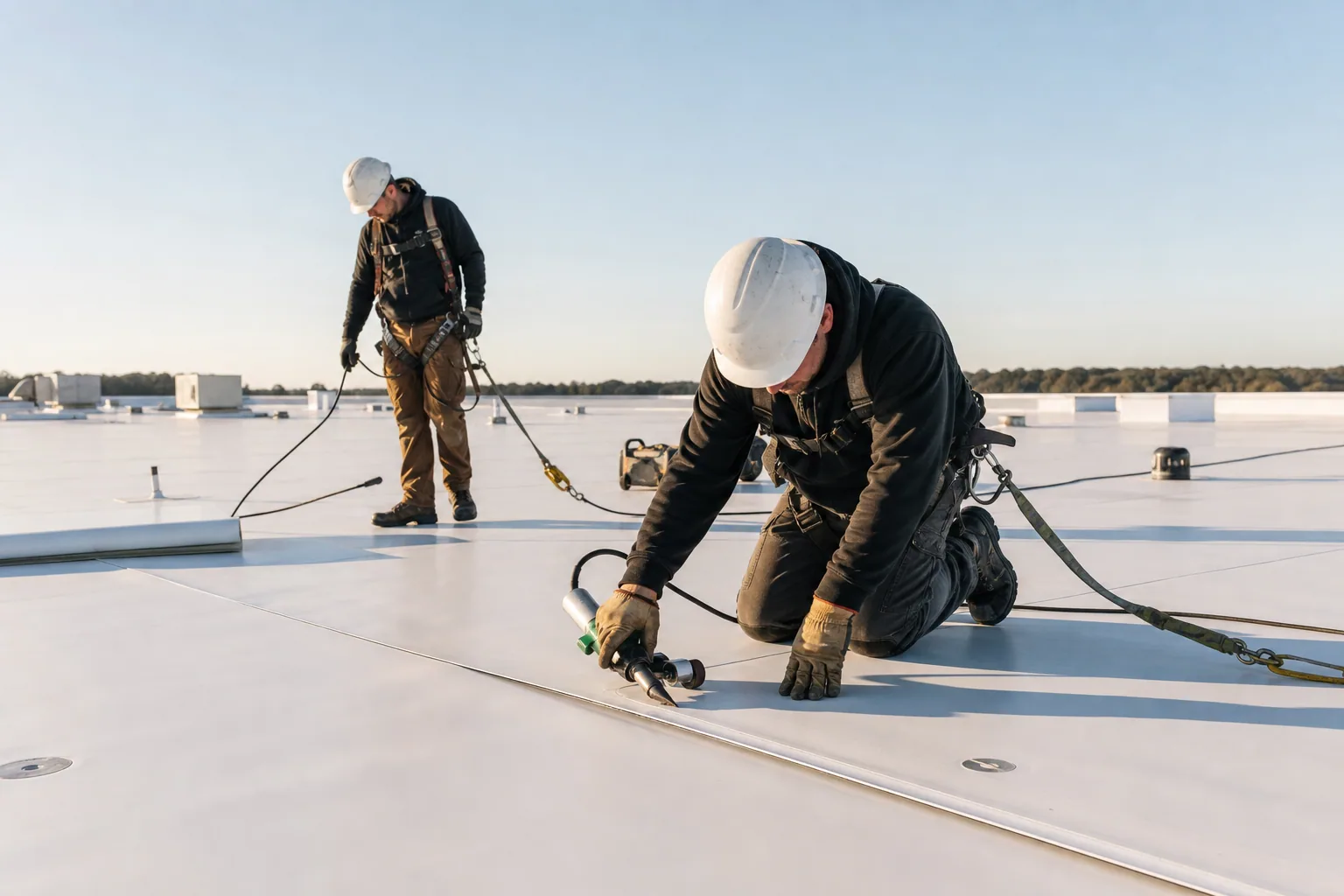
Commercial Roof Recover in Murrieta, CA
Read the full description and the questions owners ask about it.
Learn MoreMap the drain path before the next storm
Schedule a roof inspection to document the low area, outlet and membrane condition. We will distinguish maintenance from repair and leave a clear record for the next facilities review.