
Commercial Roof Membrane Puncture Repair in Murrieta, CA
Repair commercial roof punctures in Murrieta, CA with a membrane-specific patch, a check of the layers below, and a documented access plan.
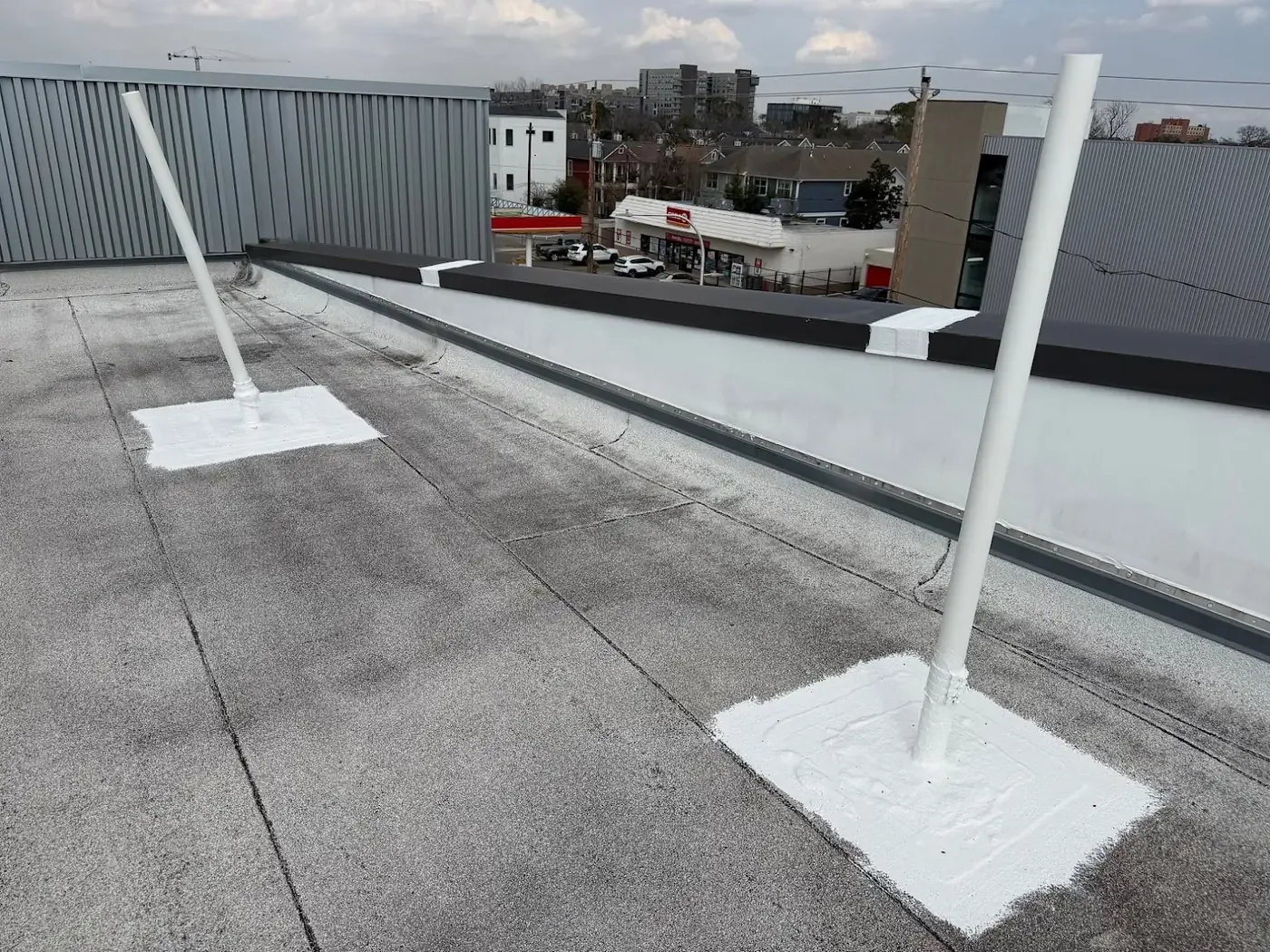
A puncture beside a rooftop unit may look small, but the water path can extend below the membrane before a ceiling mark appears. In Murrieta, CA, we locate the opening, check its edges, and trace nearby seams, curbs, and equipment routes before selecting a patch. A screw, dropped tool, sharp debris, or service traffic can leave a different tear pattern. The repair starts with the assembly and the surrounding roof section, not with a bead of sealant placed over the first visible mark.
Long-range Murrieta climate projections place historical annual precipitation at 15.0 inches for 1950-2005 and the scenario range at 15.0 to 21.4 inches by 2099, with possible increases in both flood and drought periods. The projection does not establish a roof condition; we inspect the drain path and the layers below the puncture. If water is entering the occupied space, our emergency roof response can limit exposure while we confirm the permanent repair boundary.
System detail: Map the Puncture and Its Edges
We record the puncture location, dimensions, shape, and nearby conditions on a roof sketch. A clean round opening, a cut, and a pulled fastener can leave different edges. We check for lifted membrane, crushed insulation, loose cover board, and older patches that may hide a second defect. Water can run along a lap or beneath insulation before turning toward a drain, so the inspection follows the likely path instead of stopping at the mark directly above the interior stain.
Murrieta’s economic priorities include manufacturing, medical services, scientific research, and commercial-property management. Those uses can have different rooftop service schedules, so we confirm equipment paths and roof access with the site contact instead of guessing from a business category. A commercial roof inspection can record surrounding seams and penetrations when there are several punctures or a longer service route.
System detail: Find What Reached the Membrane
Recurring punctures often trace to a route rather than one isolated event. We look near ladders, access doors, pipe supports, mechanical equipment, and stored materials for marks that line up with maintenance work. A loose fastener, dropped tool, or sharp edge needs a different correction from ordinary foot traffic.
For a portfolio that crosses into Wildomar, keep a separate access sketch: city routes split at Interstate 15, and the Clinton Keith Road area includes several commercial land uses. We confirm the delivery and roof path at each building. If service traffic repeats at one point, a maintenance visit can track the route and set a follow-up check after equipment service.
System detail: Use a Patch That Fits the Existing System
Thermoplastic membranes require a prepared surface and a compatible weld. EPDM uses a different bonding detail, while coated or asphalt-based assemblies need their own repair materials and preparation. We confirm the system from field observation and available records before setting the patch dimensions and overlap. The written scope states the repair method, surface preparation, and how the finished edge will be checked.
If the puncture reaches damp insulation, displaced cover board, or a damaged deck, we stop at the approved boundary and show the condition before covering it. The owner can approve removal or a wider inspection as a separate step. A TPO assembly review can inform the weld detail after confirmation, while an adjacent split lap belongs in the seam repair assessment. Those are related conditions, not a substitute for documenting the puncture itself.
Timing and access: Set a Dry Work Window
The crew limits how much roof is opened to the area it can prepare, patch, inspect, and protect during the shift. Heat, wind, surface moisture, and debris affect the selected product and work sequence. We stage materials away from drains and equipment access, then confirm the surrounding membrane is ready before lifting the damaged piece. If the substrate is damp, it is dried or protected and left open for a decision; a new patch should not conceal a wet layer.
We confirm truck access and roof staging with each property contact before materials are moved. A route used by maintenance staff may cross drains or delicate seams, so the site contact identifies the safe path before the opening is prepared. When runoff is blocked around the puncture, drain and scupper work can be scheduled with the patch if the scopes fit the same work window.
Repair option: Keep Repair and Prevention Separate
A localized patch is appropriate when the membrane around the puncture remains sound and the underlying layers can be closed safely. Several impacts, brittle material, repeated seam separation, or moisture beyond the opening can change the recommendation. We show the repair limit and list what was confirmed. If further removal is likely to expose additional damage, the scope gives the owner a stop point and an approval step before the crew expands the work.
Timing and cost depend on the number and size of punctures, membrane type, access, patch preparation, and any insulation or deck work. A walkway or protective surface can reduce future damage along a recurring service route, but it is priced separately from the immediate repair. A roof recover evaluation is considered only if the broader condition supports that option; one puncture does not decide the future of the entire roof.
Inspection finding: Record the Patch for the Next Visit
At closeout, we photograph the repaired spot, note the membrane and materials if confirmed, and mark the location on the roof plan. The record captures removed layers, the tie-in check, and any observation that remains outside the approved scope. If the opening appeared along a service path, the facility contact can match that record to the related equipment work order. A later inspection then has a precise starting point instead of relying on a ceiling stain or a remembered repair location.
For a building in Murrieta's Jefferson-Madison business area, we tie the note to its roof section and access path, not to the overall planning district. The Jefferson-Madison service area can be used to arrange the inspection. If water entered through a separate flashing defect, the flashing repair review keeps that boundary distinct.
Commercial Roofing Questions
Can a small puncture be patched without replacing the roof section?
It can when the membrane around it is sound and the layers below can be closed safely. We check the puncture edges, nearby laps, and substrate before defining the limit. Wet insulation or several related defects may call for additional removal, which we present as a separate decision.
How do you keep foot traffic from causing another hole?
We compare the damage locations with ladders, service doors, equipment routes, and walk pads. The immediate repair restores the membrane; a walkway or changed access path addresses recurring movement. We record both choices so the facility manager can approve prevention work without delaying the active leak repair.
Does a puncture always mean water reached the insulation?
No. The surface opening tells us where water may enter, not how far it traveled. We inspect the surrounding assembly and use a controlled opening when the layers remain uncertain. The report distinguishes a dry, localized repair from a condition that needs moisture removal or broader testing.
What repair material works on an older membrane?
The existing membrane type and its condition govern preparation, primer, adhesive, and tie-in. We identify the assembly from available records and field checks before specifying the patch. If the surface is too worn to support a reliable bond, that limitation is included in the written scope.
What information speeds up the puncture inspection?
A roof plan, known system, service history, equipment schedule, access restrictions, and photographs of the leak help us find the right roof section. We still verify the puncture and substrate in the field. Those details make the repair boundary and any follow-up decision easier to document.
Related Roofing Work

Emergency Commercial Roof Repair in Murrieta, CA
See how this work fits the roof, the building and the schedule.
Learn More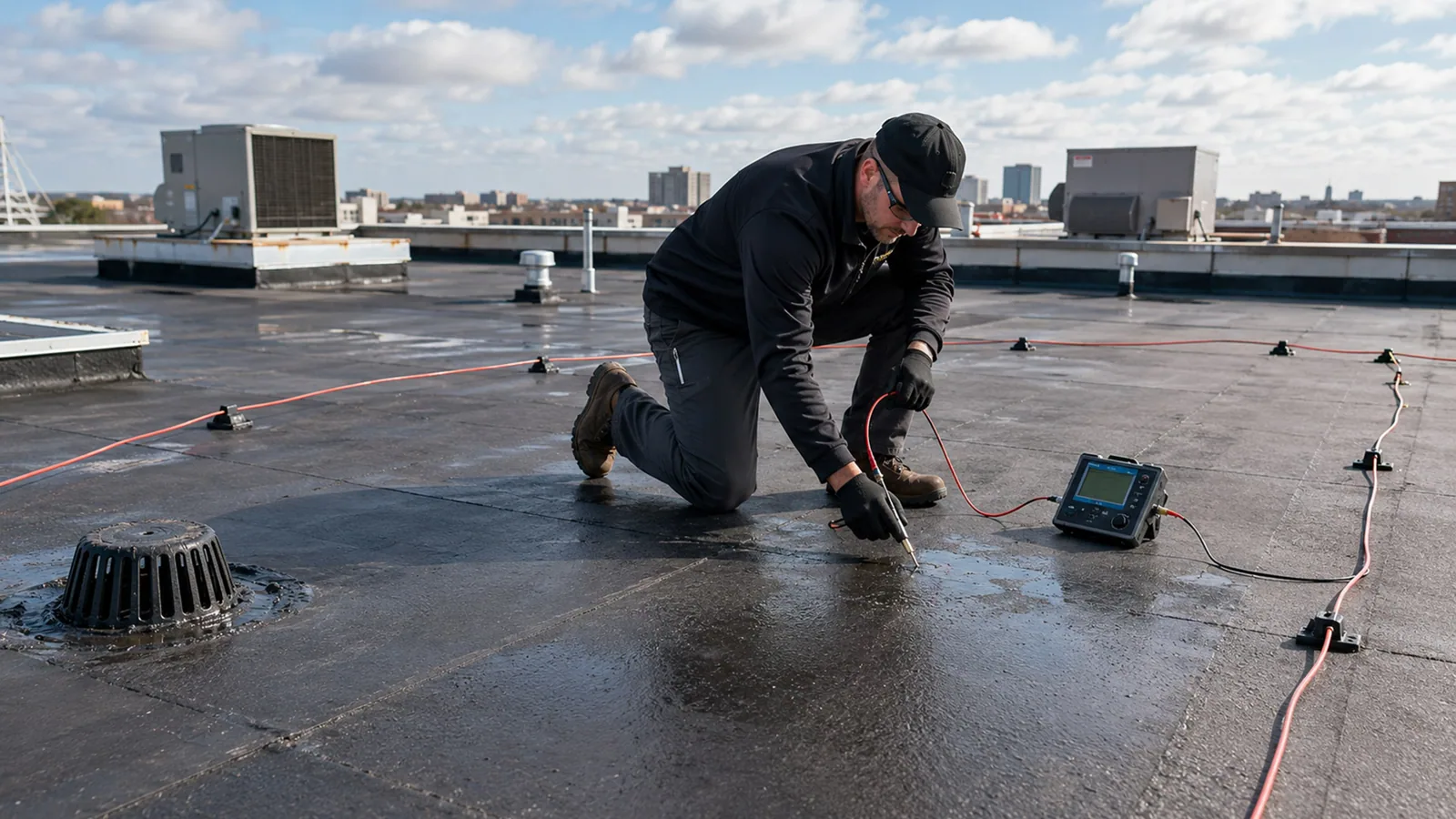
Commercial Roof Inspection in Murrieta, CA
Related scope, access notes and questions to ask before work starts.
Learn More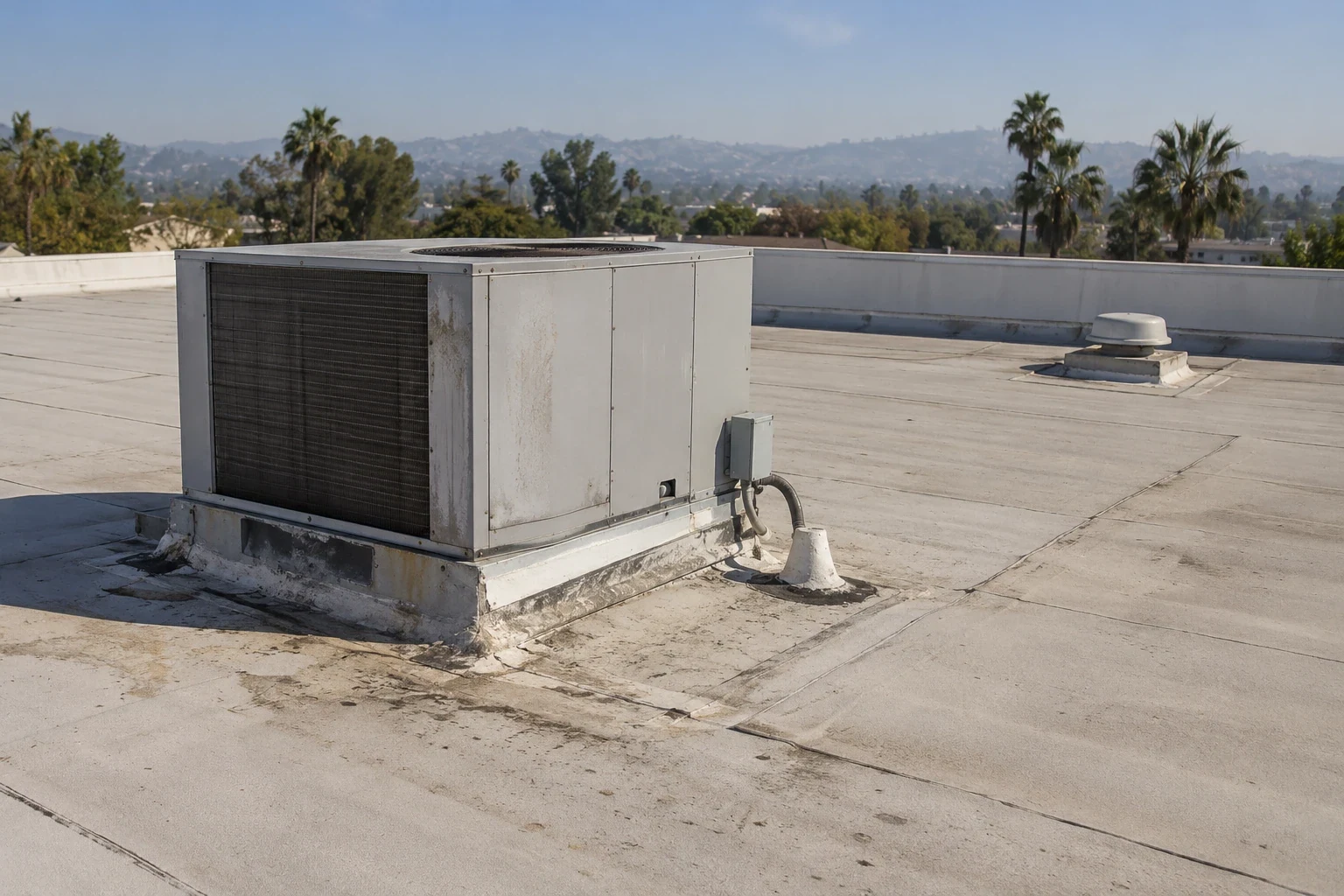
Commercial Roof Maintenance in Murrieta, CA
Read the full description and the questions owners ask about it.
Learn More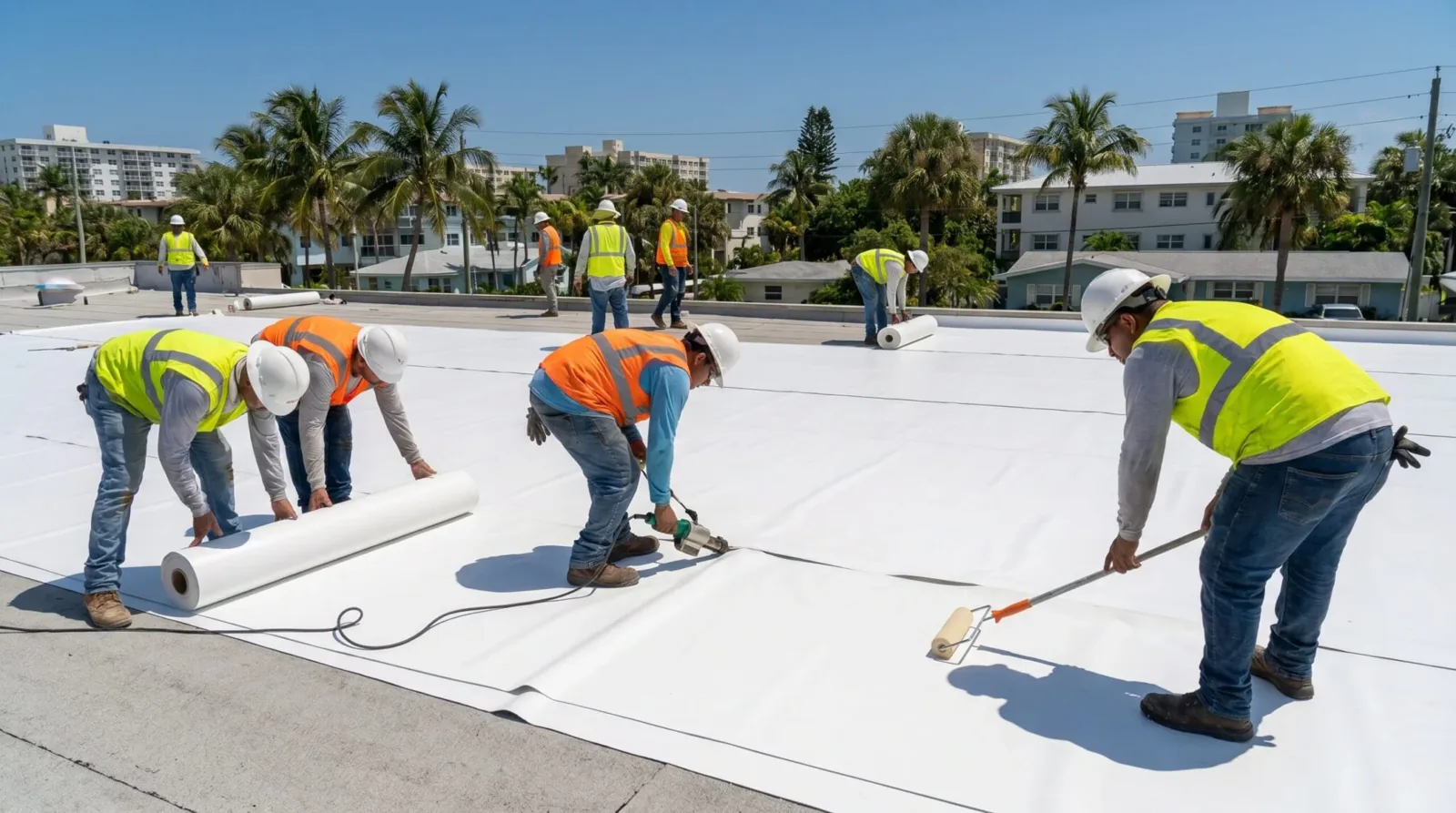
Commercial TPO Roofing in Murrieta, CA
See how this work fits the roof, the building and the schedule.
Learn More
Commercial Roof Seam Failure Repair in Murrieta, CA
Related scope, access notes and questions to ask before work starts.
Learn More
Commercial Roof Drains and Scuppers in Murrieta, CA
Read the full description and the questions owners ask about it.
Learn MoreLocate the Opening and Confirm the Repair
Have the roof plan, membrane records, leak location, equipment schedule, and access rules ready. We will inspect the puncture and its surrounding layers, then set a repair boundary with any prevention work listed separately.