
Commercial Roofing in San Bernardino, CA
Plan commercial roof repair, replacement, and maintenance in San Bernardino from documented roof sections, verified assembly conditions, and operating needs.
A commercial roof in San Bernardino, CA should be evaluated as an assembly with a work history, not as a square-foot number alone. The City’s planning materials cover residential, commercial, and industrial entitlements, and its development code organizes commercial districts into office, general, regional, and heavy categories. Those labels describe land-use review. They do not tell us whether a particular roof is membrane, metal, built-up, or a layered recover. We begin with records, access, drainage, visible transitions, and the owner’s account of where water appeared.
For an occupied property, the useful first question is which roof sections can be inspected without interrupting the work below. We compare drawings with field observations, identify areas that need closer testing, and explain what each test could resolve. A Chino roof assessment is approached the same way: its local context informs coordination, while the assembly itself decides the repair. The report separates observed conditions from concealed assumptions so an owner can compare a focused repair, restoration, recover, or replacement with a clear basis.
Commercial districts: connect land use to roof access
San Bernardino’s code names office, general, regional, and heavy commercial zone families. Its planning division also administers entitlements for proposed residential, commercial, and industrial projects. We ask the facilities contact what is operating under each section, where deliveries or customer activity must continue, and which access routes are available to a crew. The answers shape staging and sequencing without making assumptions from a zoning label.
The city’s published planning framework also distinguishes office-industrial park and light, heavy, and extractive industrial zones. The cited descriptions include research and development, warehousing, distribution, manufacturing, and repair uses. That range makes it useful to document the actual operating pattern at the property before proposing an outage or material drop. We confirm gate procedures, rooftop equipment clearance, lift placement, and the person who can approve a change in scope. A phased reroof sequence can then identify the work area and temporary protection expected at each close of shift.
Inspection record: what did the roof actually show?
We divide the roof into sections that can be located again by the owner and crew. For each section, the Diligence Notes identify visible membrane or metal, seams, perimeter transitions, penetrations, drains, curbs, equipment supports, and prior patches. We do not treat a ceiling stain as proof of the entry point. Water may travel before it appears indoors, so we compare the reported timing with roof slopes, drains, wall interfaces, and the condition of nearby details.
Where plans identify one assembly but the field suggests another, both observations belong in the report. The report marks confirmed surface observations separately from unknown conditions. If layer count, insulation, or deck is uncertain, we explain whether an opening could settle that question. Before making that opening, the owner should know where it will be placed, how weather protection will be restored, and what decision follows from each possible result. A commercial roof inspection is more useful when it produces a repeatable map instead of a loose list of defects.
San Bernardino’s code families do not substitute for roof testing or a project-specific code review. We confirm the existing assembly, proposed scope, and applicable project requirements with the responsible design and construction team. The estimate should identify its assumptions rather than imply that a zone label determines what can be installed. For a broader comparison, a Rialto roof review can organize records, visible condition, and open questions for review.
Repair or replace: define the decision before pricing
A repair is a reasonable candidate when the defect has a traceable cause and surrounding material can accept a durable tie-in. We document the limit of the proposed work, the detail to be restored, and any nearby condition that remains outside the repair. If the same symptom appears across several roof sections, the pattern may justify additional investigation before a patch plan grows one visit at a time.
Restoration or coating depends on a compatible and sufficiently sound substrate. We verify the existing system, adhesion needs, moisture concerns, and the details that the selected product can address. A recover adds another layer, so we first review moisture, deck condition, attachment, drainage, existing layer count, and edge height. If those conditions do not support another assembly, replacement becomes a more useful comparison. The replacement scope should distinguish confirmed removal from allowances for concealed conditions and explain how access, disposal, insulation, curbs, and perimeter metal affect the total.
For a new TPO roof system, the proposal describes the full assembly rather than just the membrane. Insulation, attachment, seams, perimeter details, drains, and transitions work together. If a different system is being considered, the owner should be able to compare details, warranty requirements, maintenance expectations, and building use on the same basis. We identify why an option fits the verified conditions and where more testing could change that recommendation.
Project sequence: keep protection tied to each shift
The work plan names the roof section to be opened, expected production limit, dry-in point, and person responsible for approving concealed-condition work. These details help a facilities team review the sequence without asking the contractor to guess about active operations.
In Murrieta, the study’s earlier record averaged fifteen inches of precipitation per year. Its late-century cases span roughly fifteen to twenty-one point four inches annually, alongside discussion of shifting flood and drought exposure. This is a Murrieta planning scenario, not a San Bernardino forecast. Here, we use current conditions, system instructions, crew safety, and owner access limits.
If removal exposes wet insulation or a different layer count, the crew should have a documented pause-and-contact path. We define how the exposed area will be protected while the owner reviews photos and the proposed adjustment. A recover-versus-replacement review is only useful after the assembly and its constraints are known.
Closeout: leave a record the next team can use
At completion, the owner should receive a record tied to the same roof sections used during inspection. It can include before-and-after photographs, repair boundaries, replaced components, test results, remaining conditions, and the maintenance items that should be watched. A repair invoice without location detail can be difficult to connect to a later leak report. We make the closeout practical for the facilities team that will receive the next call.
San Bernardino’s planning and zoning framework is relevant when a broader capital project is being coordinated, but the roof record remains specific to the installed work. We keep product information, warranty documents, approved changes, and maintenance requirements together. A photo condition report gives an owner a repeatable baseline for comparing future inspections, while a roof capital plan can organize sections by condition, urgency, and budget period.
Our recommendation should explain what was observed, what was repaired, and what still needs monitoring.
Commercial Roofing Questions
Does San Bernardino zoning identify the roof system on a building?
No. Zoning categories describe land-use planning. We inspect the roof, review available records, and confirm the installed assembly before recommending a repair or system.
What should a roof condition report show?
It should locate each section, note visible materials and details, connect findings to reported leaks, and separate confirmed conditions from areas that need testing.
When might replacement be a better comparison than patching?
Broad deterioration, recurring failures, moisture in multiple sections, or an assembly that cannot support another layer can justify evaluating replacement alongside repair. Testing may be needed first.
Can a coating correct every leak?
A coating is not a substitute for diagnosing the entry point or confirming substrate compatibility. We review the existing system, adhesion, moisture, and repair details before considering restoration.
How do Murrieta heat projections affect a San Bernardino work date?
Those projections describe Murrieta planning scenarios, not a San Bernardino forecast. A local schedule follows the actual conditions, product instructions, safety requirements, and the property’s operating limits.
Related Roofing Work
Commercial Roofing in Chino, CA
See how this work fits the roof, the building and the schedule.
Learn More
Occupied-Building Commercial Reroofing in Murrieta, CA
Related scope, access notes and questions to ask before work starts.
Learn More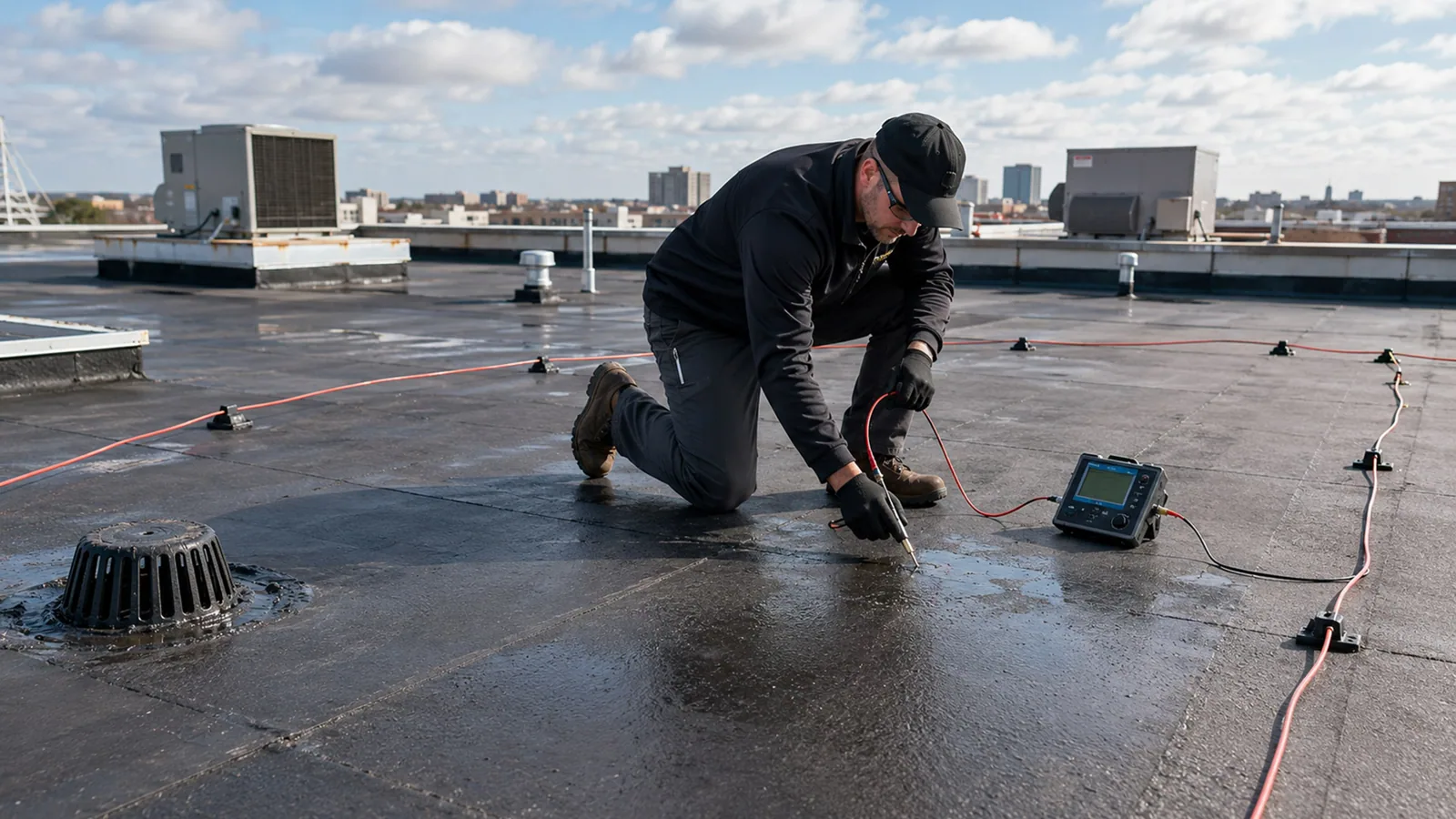
Commercial Roof Inspection in Murrieta, CA
Read the full description and the questions owners ask about it.
Learn More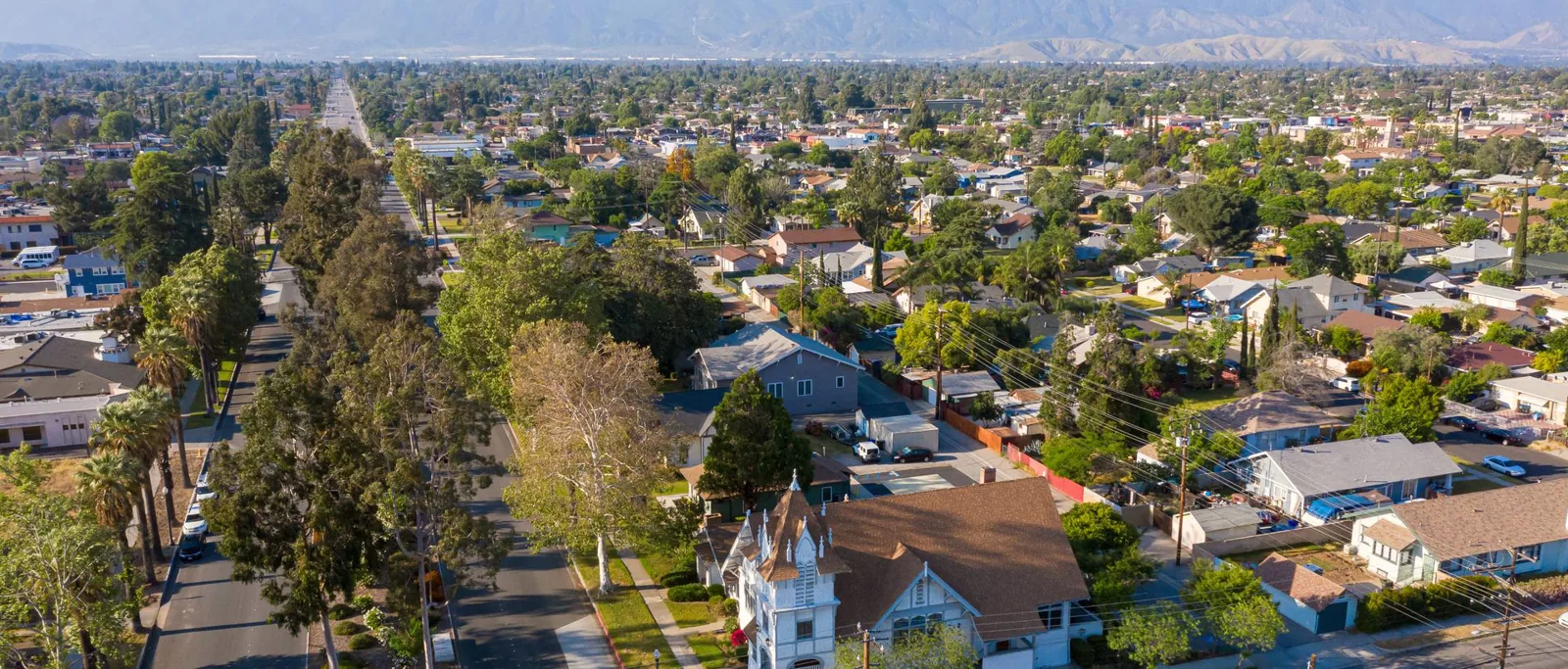
Commercial Roofing in Rialto, CA
See how this work fits the roof, the building and the schedule.
Learn More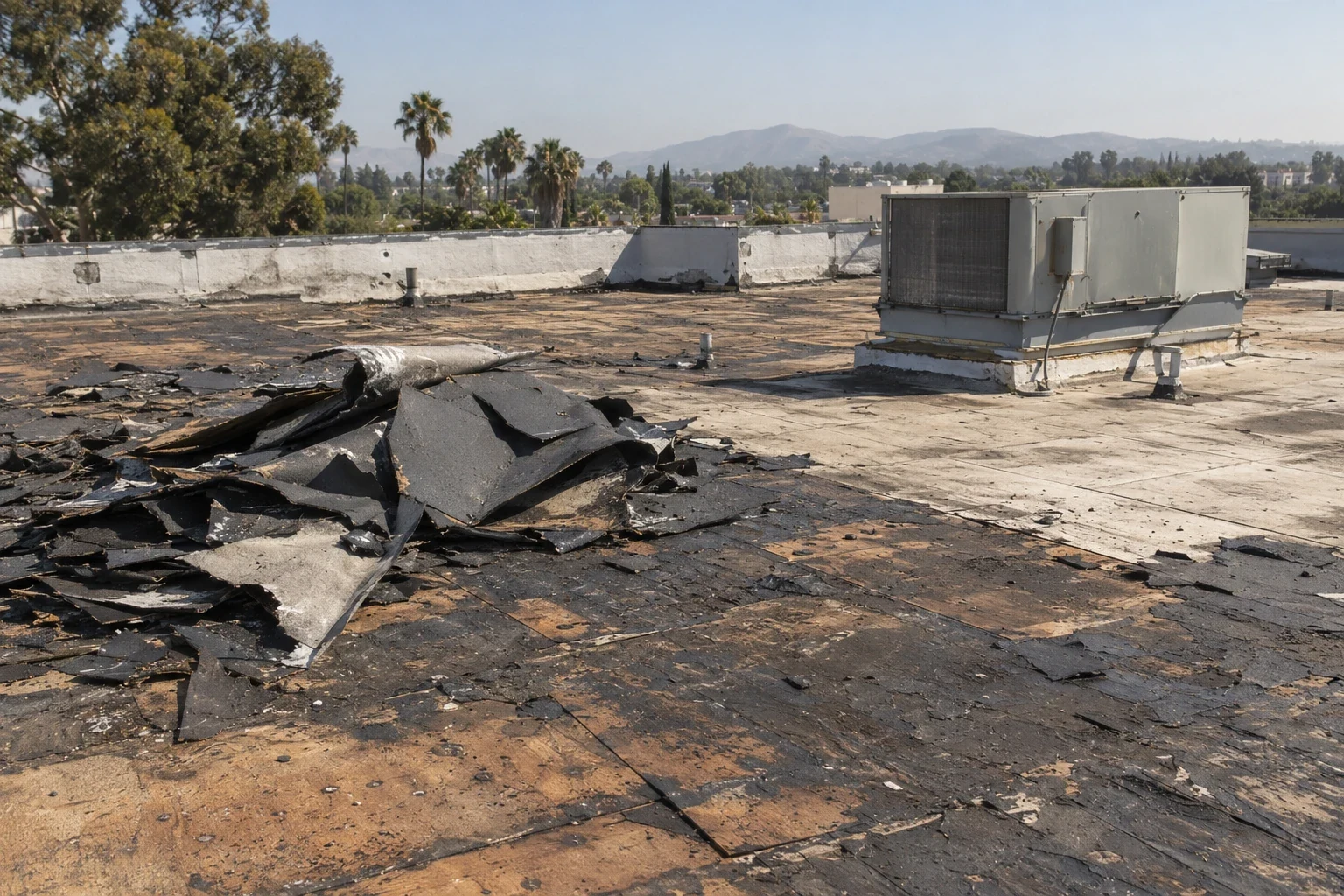
Commercial Roof Replacement in Murrieta, CA
Related scope, access notes and questions to ask before work starts.
Learn More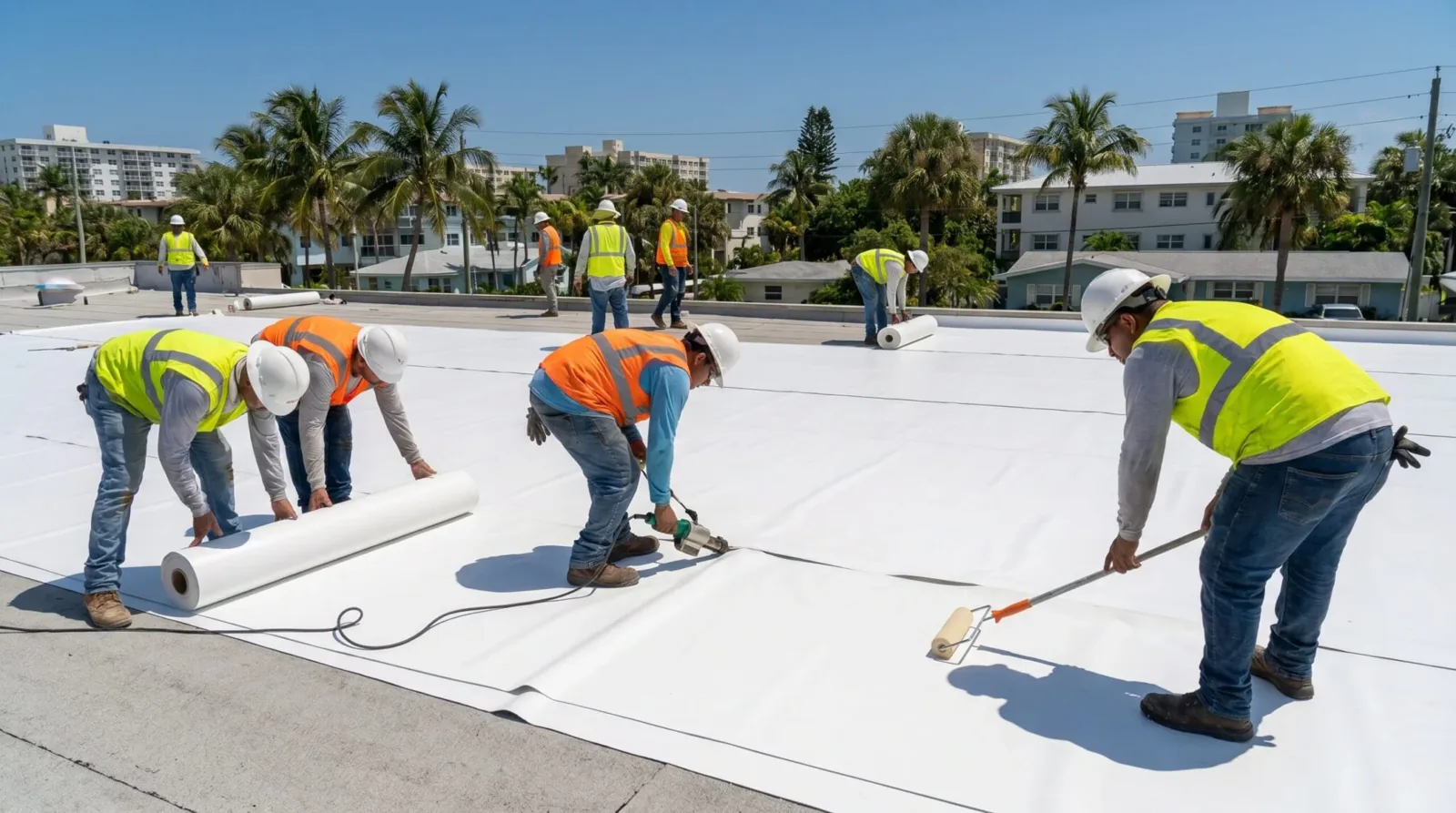
Commercial TPO Roofing in Murrieta, CA
Read the full description and the questions owners ask about it.
Learn MoreArrange a commercial roof review in San Bernardino
Share the property’s roof history, reported condition, and access window. We will document the relevant sections, explain what the findings support, and outline next steps for review.