
Commercial Roofing in Chino, CA
Set commercial roof repair and replacement in Chino around roof-zone findings, supply access, and a work sequence that protects active operations.
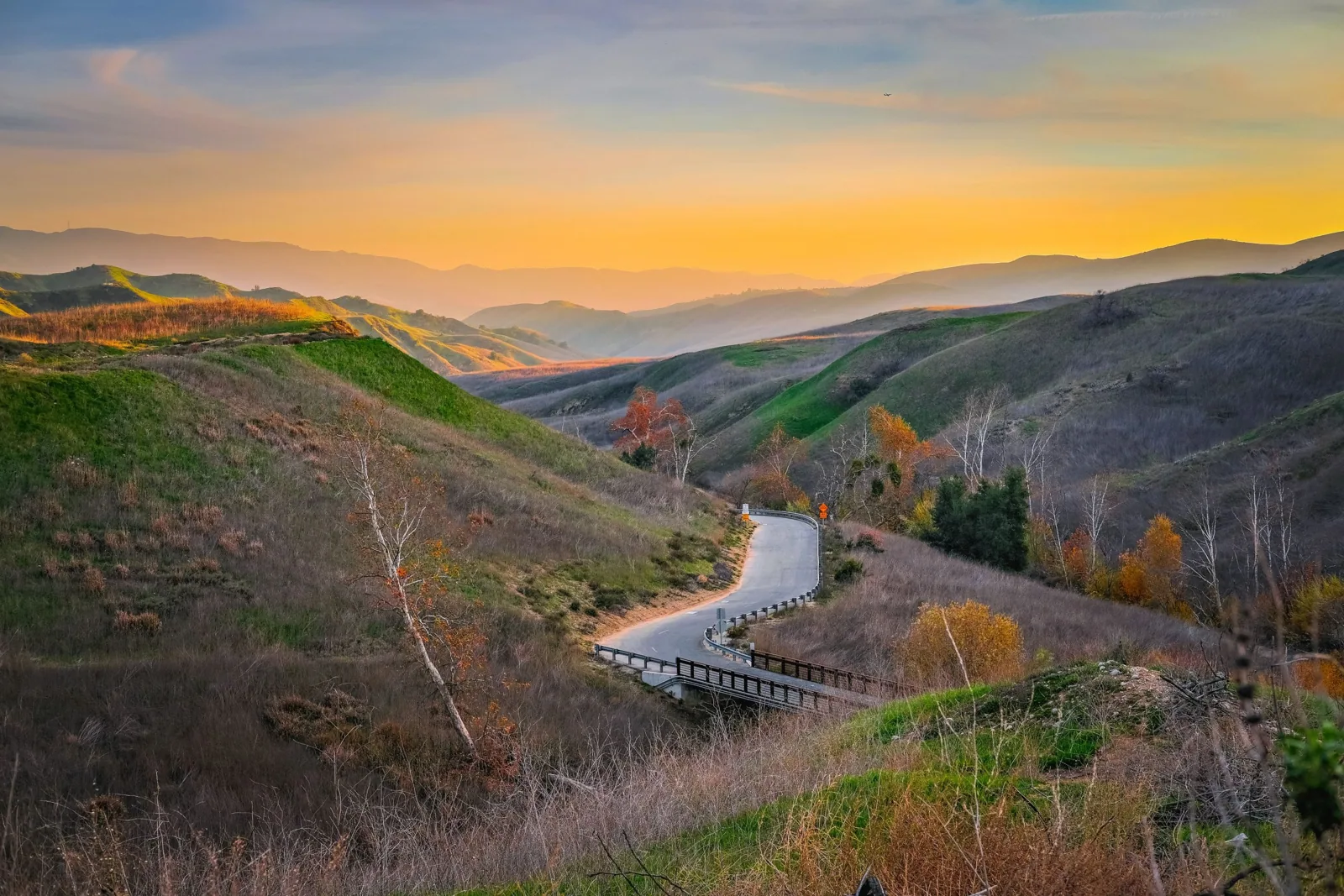
A logistics or wholesale building in Chino, CA needs a roof scope that follows the active use below and the water path above. Manufacturing, wholesale trade, logistics, and warehousing are part of Chino's economy, with access to State Routes 60 and 71. That context makes delivery timing a useful planning question, but it does not tell us the building’s roof type. We inspect the assembly, roof edges, drains, penetrations, and prior repairs before marking a repair boundary.
Chino’s commercial property decisions begin with the actual site record: available drawings, last service visit, interior water report, and access restrictions. We connect observations to each roof section instead of assuming that buildings serving the same business use have the same layers or drainage. Murrieta’s long-range analysis anticipates warmer annual highs there, with the amount dependent on the scenario. That model belongs to Murrieta; conditions on the Chino roof set its scope.
Operating context: keep delivery routes out of the roof guesswork
The City’s description of Chino’s economy includes several uses that may affect facility scheduling, from manufacturing and wholesale activity to logistics and warehousing. We do not infer a particular tenant or roof from those categories. The site contact tells us when receiving occurs, which gates or docks must remain clear, and whether rooftop equipment has a service window. A Rialto roof inspection in the same regional portfolio gets its own access map and assumptions.
State Routes 60 and 71 are named in the City’s General Plan as access connections. For an asset manager, that is regional context for coordinating crews and materials, not a promise about the best truck approach to a specific parcel. We confirm gate clearance, lift position, and delivery rules with the property team. The condition report identifies sections that can be repaired during normal operations and those requiring a defined outage or interior protection. A phased roof plan records the work area and dry-in point for each shift.
Condition map: what belongs beside each roof section?
For each section, we note the material where it can be identified, the visible seam condition, penetrations, wall transitions, drains, equipment supports, and previous repair locations. We pair those observations with the owner’s report of when water appeared and where it was seen indoors. That comparison guides the next test, but a ceiling mark is not a roof entry point by itself. A commercial roof inspection leaves a map that helps the facilities contact return to the same locations.
Where drawings and the installed assembly differ, we record both rather than carrying an old detail into a new scope. A moisture survey or test opening is useful when it will answer a specific question about insulation, deck, or layer count. We identify the location, approval path, and expected decision before the opening is made. If wet material is found, the work boundary and daily dry-in plan may change. The owner receives a distinction between what is observed and what remains concealed so pricing does not hide an untested assumption.
Repair choices: where does a tie-in remain dependable?
A patch is considered when the defect can be located and the surrounding material can accept a sound tie-in. If several sections show similar symptoms, we compare the pattern with the service record before expanding the repair. Before considering a recover, we confirm the drainage path, existing layer count, moisture, fastening, available edge height, and deck capacity. Replacement becomes a useful comparison when deterioration is broad or the current assembly will not support another layer. Each option lists what finding supports it.
Chino’s manufacturing and logistics context can make a daily work limit as important as material selection. We price removal depth, wet insulation, equipment curbs, edge metal, disposal, and the amount of roof that can be opened at one time. A replacement scope separates confirmed work from an allowance for concealed conditions. For a new TPO assembly, the proposal describes insulation, attachment, membrane, perimeter details, and drain transitions together so the owner can review the whole roof section.
Work window: what can stay in service during the project?
Before mobilization, we identify the entry route, material staging, active operating zones, rooftop access, and the part of the surface the approved work window can safely accommodate. The owner confirms any production, receiving, or tenant limits. The daily plan states how the crew protects the building and where dry-in is complete before leaving. If a test cut changes the scope, the person who approves added work should be reachable without waiting for a later coordination meeting.
Long-range scenarios cannot set a Chino crew schedule. The field team checks the actual forecast, roof surface, product temperature limits, and required preparation before choosing a work window. A coating restoration needs suitable adhesion, dry substrate, and prepared details, while any assembly needs a clear temporary protection plan.
Capital review: what should the file make easy to compare?
A useful capital review separates current water control, maintenance, and a later replacement project. The condition record should give each item a roof-zone name, date, photograph, and reason for the recommendation. If a hidden layer or deck condition has not been tested, the document states what approval would trigger that work. The manager can then compare timing and cost drivers without treating an estimate as a fixed outcome before field conditions are known.
Murrieta and Chino should remain separate entries when one owner manages both. The Jefferson-Madison area in Murrieta is planned for future business and innovation uses, while Chino's current economy includes manufacturing, wholesale trade, logistics, and warehousing. Neither planning fact supplies a roof inventory. A roof capital plan compares buildings through their maps, scopes, and access limits. The next review should use the same zone names and preserve open questions from the first walk.
Closeout record: what should travel to the next inspection?
At turnover, we provide dated photos, a roof-zone map, completed details, product information, approved changes, and any area left for testing or later maintenance. The record notes which drains and penetrations were touched and whether another trade needs to restore a detail after equipment work. A photo condition report lets the next contact compare the repaired section without relying on a verbal handoff.
Where Chino operations depend on scheduled deliveries, the record can also note the approved entry route, staging limit, and contact who coordinated the work window. That is useful when a future inspection or service call has to distinguish a new leak from a prior repair. A nearby Fontana property review remains a separate site record even if the same facilities group oversees it. Share the roof history, current symptom, and next access window to arrange an inspection and receive a documented scope.
Commercial Roofing Questions
Which local facts help plan roof work in Chino?
Chino's economy includes manufacturing, wholesale trade, logistics, and warehousing, with State Routes 60 and 71 as access connections. We use those as context, then verify the building’s use, routes, and roof condition with its facilities contact.
How should a roof scope handle an active leak?
We record the room, time, and roof section, then compare that report with seams, penetrations, walls, and drains above. The written scope separates a visible defect from any concealed condition needing a test.
What must be confirmed before adding another roof layer?
We review the current build-up, attachment, moisture, deck, drainage, and perimeter clearance. Findings determine whether an overlay can be considered or removal needs pricing.
Do Murrieta heat projections describe Chino conditions?
Murrieta’s assessment provides planning context for Murrieta. The Chino inspection records the surface and assembly actually present, and the work window follows conditions at that site.
What should the roof record include after the work?
Keep the map, dated photos, completed details, material information, approved changes, and any open test or maintenance item together. The next visit can use the same roof-zone names.
Related Roofing Work
Commercial Roofing in Rialto, CA
See how this work fits the roof, the building and the schedule.
Learn More
Occupied-Building Commercial Reroofing in Murrieta, CA
Related scope, access notes and questions to ask before work starts.
Learn More
Commercial Roof Inspection in Murrieta, CA
Read the full description and the questions owners ask about it.
Learn More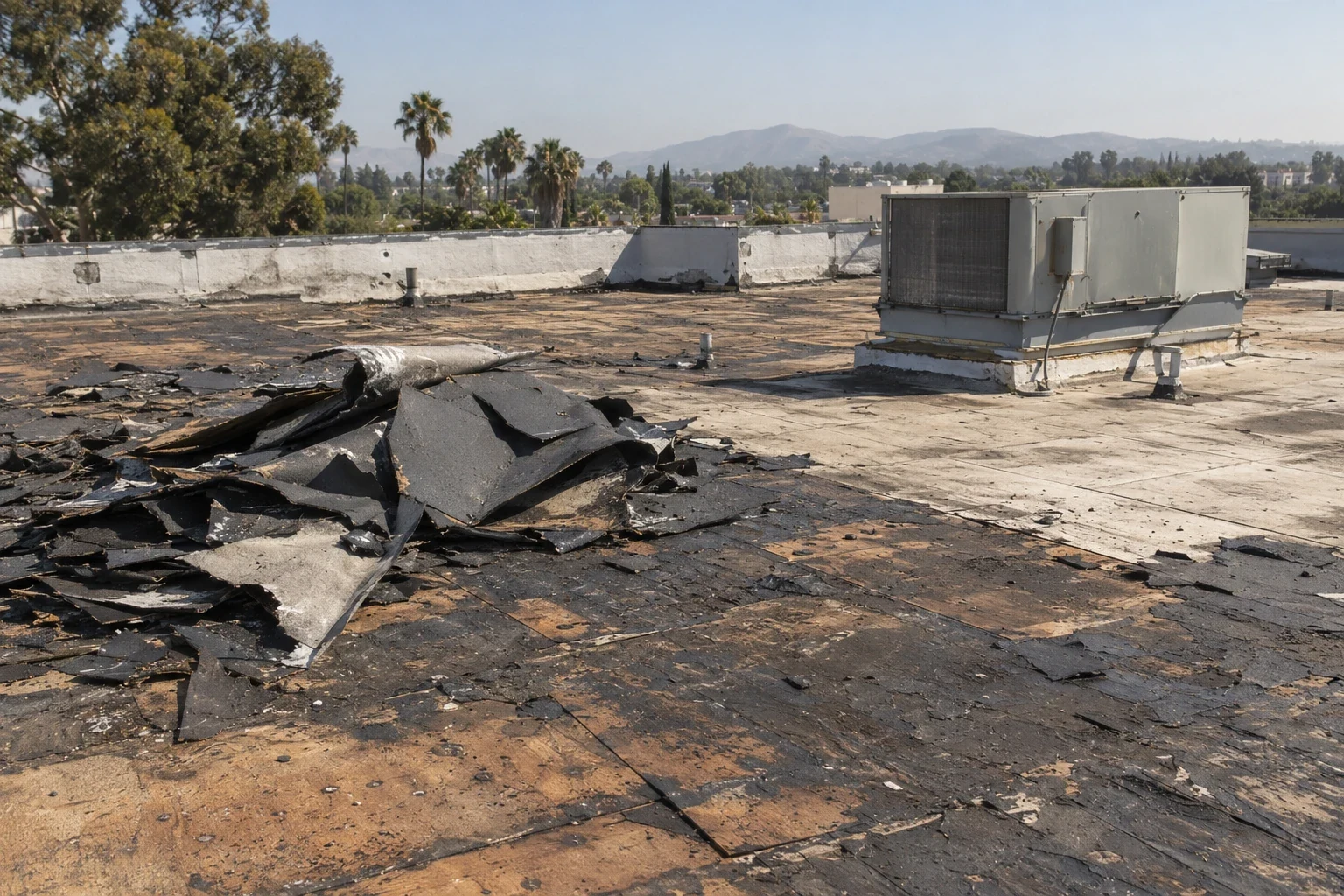
Commercial Roof Replacement in Murrieta, CA
See how this work fits the roof, the building and the schedule.
Learn More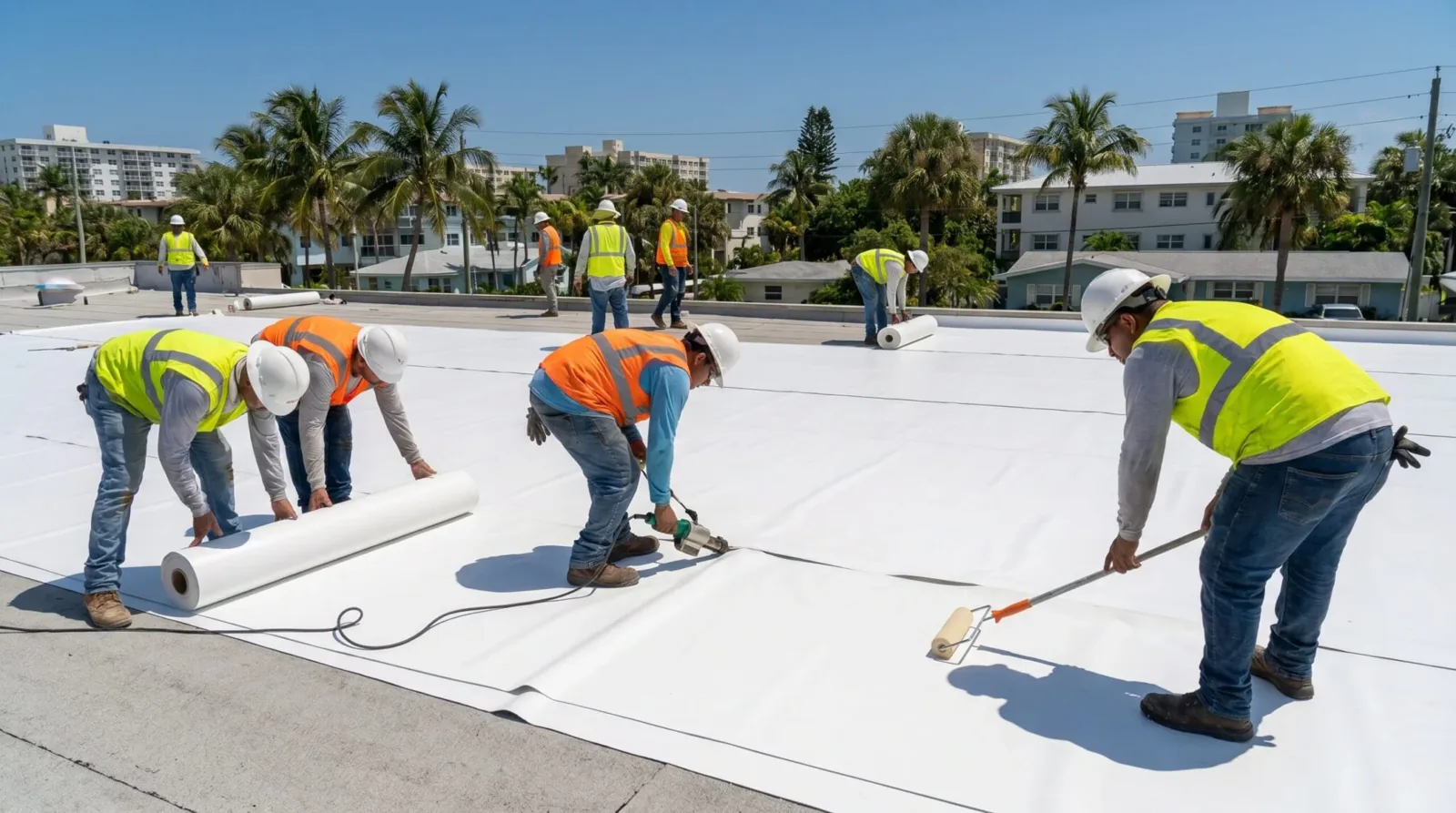
Commercial TPO Roofing in Murrieta, CA
Related scope, access notes and questions to ask before work starts.
Learn More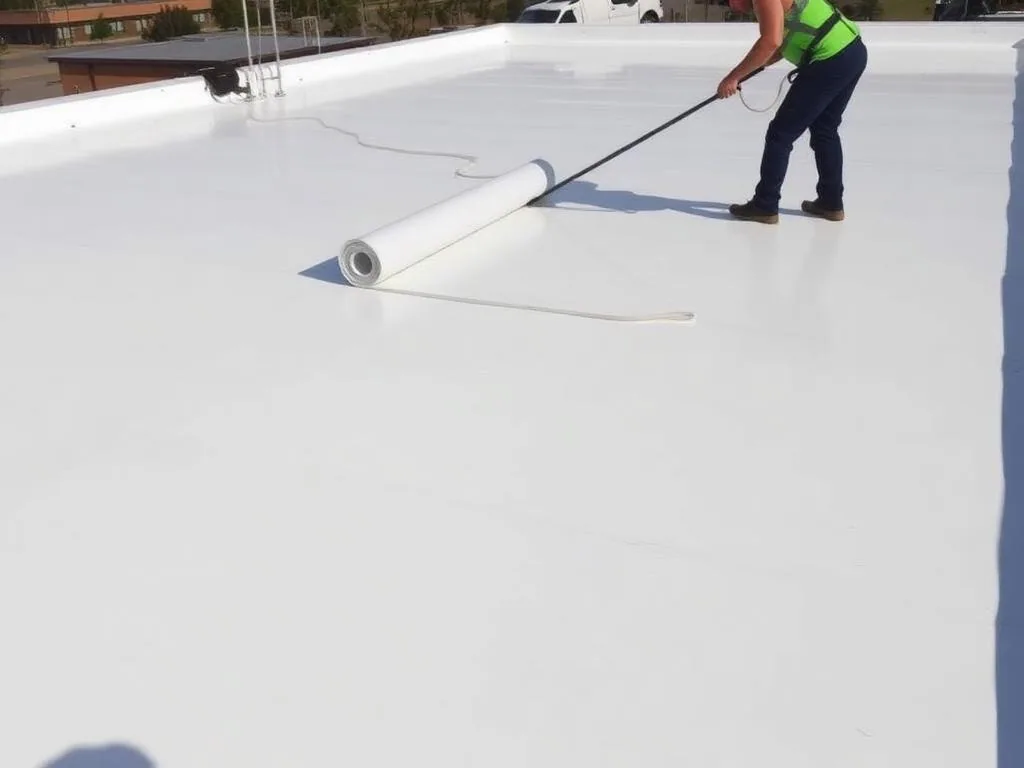
Commercial Roof Coating Restoration in Murrieta, CA
Read the full description and the questions owners ask about it.
Learn MoreArrange a commercial roof walk in Chino
Send the property’s roof history, current symptom, and available access window. We will map the affected sections, document the repair boundary, and return a scope for review.