
Infrared Roof Moisture Survey in Murrieta, CA
Use an infrared roof moisture survey in Murrieta to identify areas for confirmation, then guide test cuts and repair decisions with documented findings.

A warm roof patch after sunset may be a clue, but it is not a moisture test by itself. An infrared survey compares thermal patterns across a roof and identifies locations that deserve closer inspection. We review the roof type, weather and operating conditions before interpreting the image, then recommend test cuts where the pattern and surface evidence support opening the assembly. In Murrieta, CA, the heat-risk model compares a 1950-2005 historical average with future scenarios and uses 105.1°F as its extreme-heat-day threshold. Roof materials can release heat differently, so survey timing and interpretation matter. Sun exposure and surface color can also change the thermal contrast. They do not turn a thermal image into proof that insulation is wet. We pair readings with roof observations, photographs and confirmatory checks, then explain what the findings mean for repair or replacement. A roof inspection can set the survey boundary; a leak review can focus on a reported entry path.
Before Scanning: Understand the Surface and the Weather
Thermal imaging works best when conditions create a useful temperature difference between roof areas. Recent rain, cloud cover, wind, insulation type, rooftop equipment and interior conditions can alter the pattern. We review those factors and determine whether the roof is suitable for scanning at the planned time. A coated surface, reflective membrane or standing water may change how the camera reads the area. Equipment exhaust can create local heat that should not be confused with trapped moisture. We note the conditions and compare suspicious areas with visible defects, leak history and roof layout. The scan should be planned to cover the relevant sections rather than collect imagery without a question. I-215 bisects Menifee as its primary transportation corridor, and nonresidential uses also cluster along several roads. That local context speaks to different building settings, not to any roof's insulation. For each property, we still establish the assembly and operating conditions before interpreting the thermal map.
Thermal Patterns: Treat Them as Leads, Not Conclusions
An area that releases heat differently from surrounding roof sections may contain moisture, but other conditions can produce a similar signal. Differences in insulation, membrane color, shading, repairs, ballast or equipment can affect temperature. We mark anomalous patterns and compare them with what can be seen from the roof. The report should distinguish a thermal indication from a confirmed wet assembly. Test cuts expose the layers and allow us to document moisture directly. Their number and placement depend on the roof construction and the pattern being checked. If a cut confirms wet insulation, we map the affected boundary before pricing removal or repair. If it does not, the owner avoids treating a camera image as a reason to replace sound material. For single-ply roofs, the scan area can be paired with a TPO seam and membrane review, while the test locations are recorded in a photo condition report. Each method answers a different part of the question.
Confirmation: Open Only What the Evidence Justifies
A test cut gives a direct view of the roof layers at one location. We document the membrane, insulation and deck condition, note moisture where present and restore the opening with a compatible repair detail. A sample is local evidence, so it should be placed where it can answer the question raised by the thermal pattern. Multiple sections or assemblies may need separate confirmation. The owner should understand the test plan before work begins: where openings will be made, how they will be repaired and how the results affect the next scope. When moisture is confirmed, the findings can define a localized repair, a larger area of removal or the need to evaluate replacement. When readings remain inconclusive, we explain the limit and identify whether another method is warranted. Lake Elsinore has 16 geographically defined district plans; that framework does not determine how many roof assemblies need testing. The survey remains specific to the property. A recover review is appropriate only after moisture and attachment conditions are understood.
Survey Conditions: Coordinate Building Use and Equipment
Access to the roof and interior spaces can improve the survey. A building contact can identify leak locations, past repairs, equipment cycles and areas where indoor conditions differ from the rest of the property. We note whether rooftop units were operating and whether the roof surface was affected by recent weather. If the scan needs a particular cooling or heating cycle, that should be arranged with the facility team rather than assumed. A survey can be limited by safe access, wind, rain or conditions that flatten the thermal contrast. We identify any unscanned sections so the report does not imply complete coverage. Temecula’s business-attraction priorities include advanced manufacturing, including medical-device work and injection molding. Production schedules can affect rooftop equipment cycles and indoor temperatures, so we note those conditions before interpreting the scan. For an occupied building, the access coordination plan can help schedule interior checks and roof openings. The work should leave every test location watertight and traceable after the visit.
Results: Turn the Map Into a Specific Roof Scope
The final report should include thermal images, a roof-area key, observations from the visual review, test-cut locations and the result of each confirmation. It should separate suspected areas from verified wet material and note any conditions that limited the survey. We explain whether the findings support a repair, further testing, recover or replacement analysis. If an owner has active leaks, the report can compare the thermal pattern with interior symptoms and identify follow-up inspection areas. If the scan finds no confirmed moisture, that result is still useful when recorded with method and conditions. It narrows the next decision and may prevent unnecessary removal. A replacement evaluation should consider the confirmed condition of the assembly, not thermal color alone. The manager can retain the map with roof plans and service records, then compare it with later inspections. The objective is a documented finding with a defined next action, whether that action is repair, monitoring or a broader scope review.
Commercial Roofing Questions
Does an infrared image prove that insulation is wet?
No. A thermal pattern identifies an area that may need confirmation, but surface materials, shade, equipment and recent weather can create similar differences. We compare the image with visible conditions and use test cuts where needed to verify the roof layers. The report labels the finding as suspected or confirmed.
What weather makes a roof survey useful?
The roof needs conditions that produce a meaningful temperature contrast, and recent rain, cloud, wind or surface water can affect the result. We review the forecast and the roof type before selecting the time. If conditions do not support a reliable scan, the work can be rescheduled or limited, with the constraint noted in the report.
Will the test cuts damage the roof?
A test opening is made at a selected location and repaired with compatible materials after the layers are examined. We record where each cut is made and restore it so the roof remains protected. The number and location of samples should be agreed before testing and should follow the pattern or condition that needs confirmation.
Can infrared testing find the source of an active leak?
It can help identify areas for investigation, but it does not trace water from an interior stain to the exact roof entry point. We compare the thermal pattern with roof details, interior symptoms and moisture findings. A focused leak inspection may still be needed to locate the opening and specify the repair.
How do survey results change a replacement decision?
Confirmed wet areas, their extent, attachment and the condition of the surrounding roof help shape the comparison. A thermal indication alone is not a basis for full replacement. We show what test cuts confirm and explain whether localized removal, a recover or a larger replacement scope fits the observed assembly.
Related Roofing Work
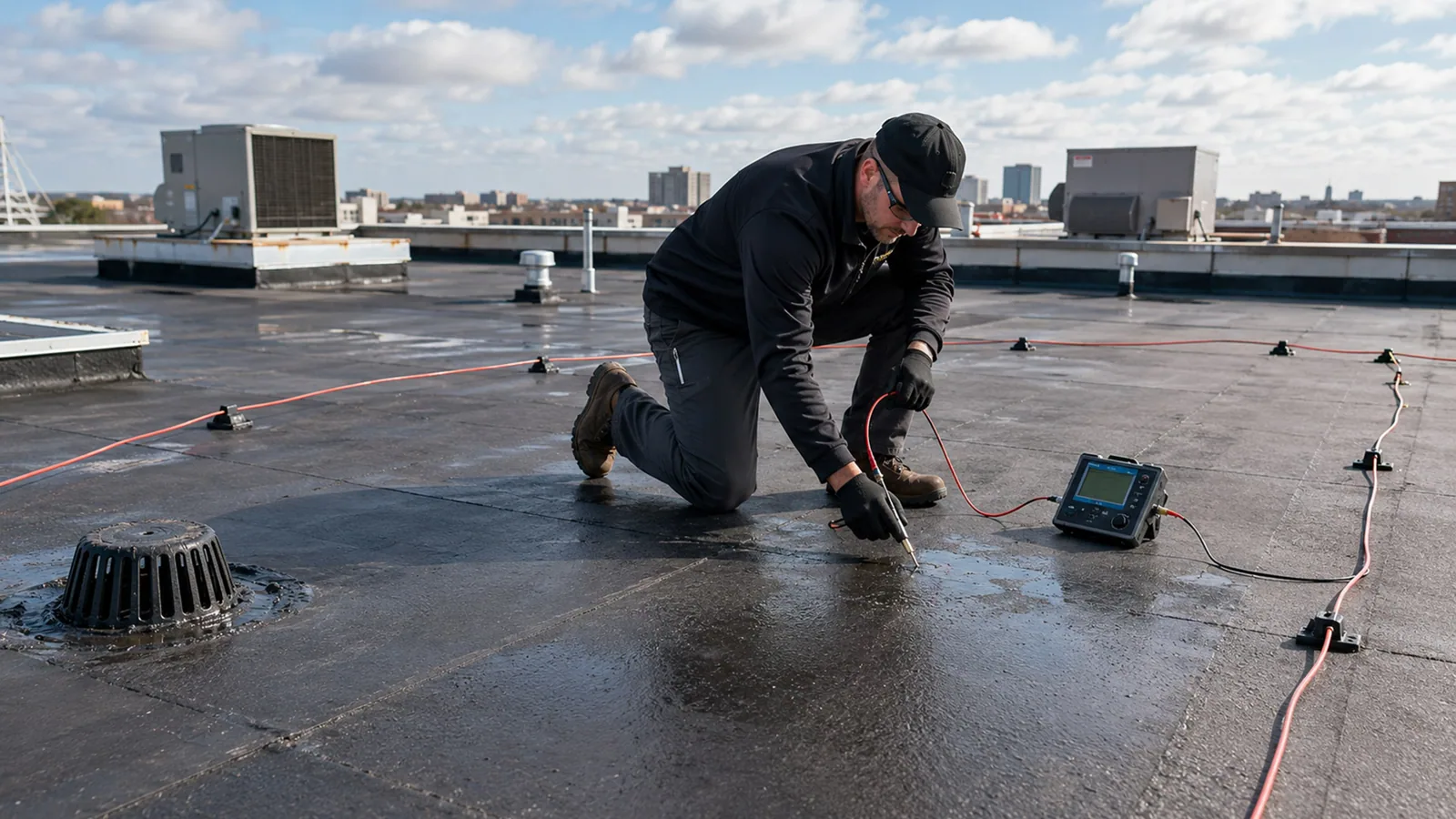
Commercial Roof Inspection in Murrieta, CA
See how this work fits the roof, the building and the schedule.
Learn More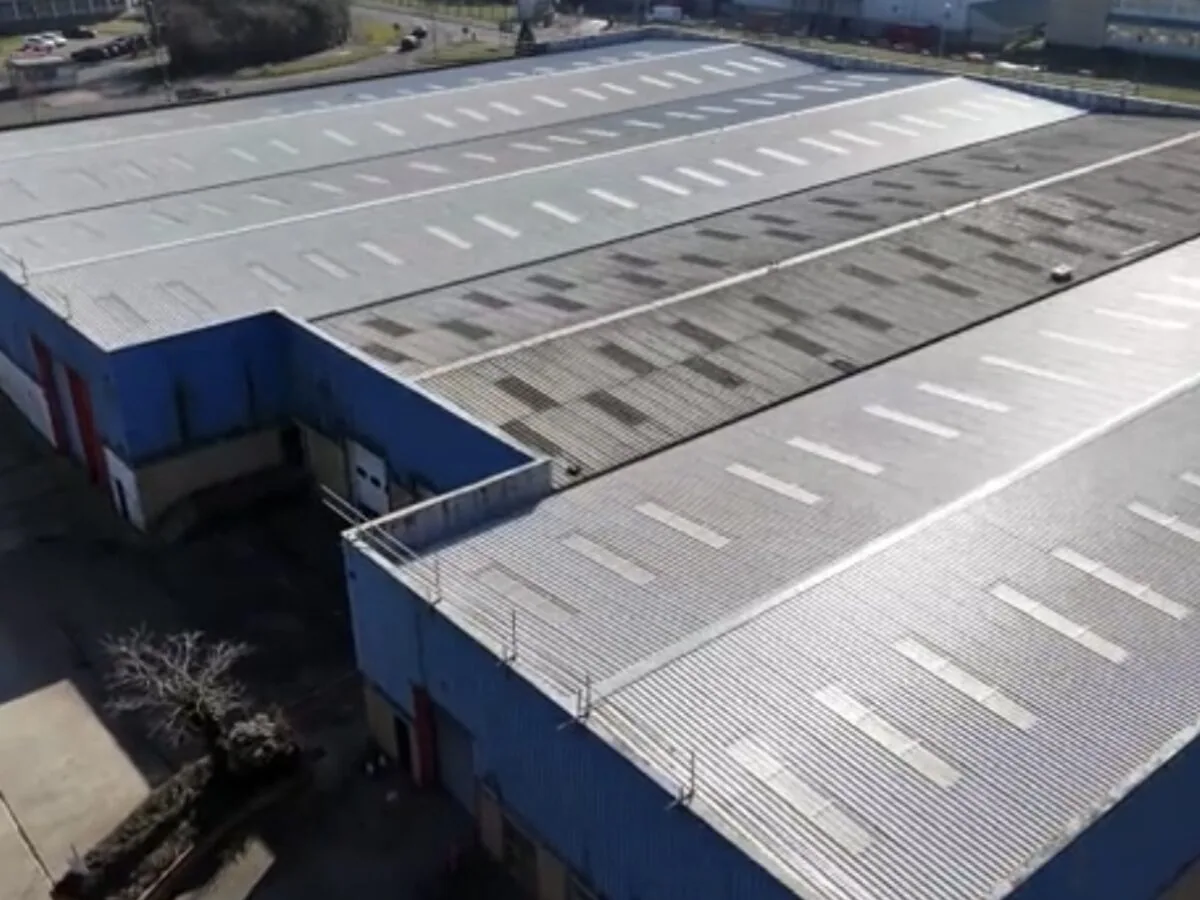
Commercial Roof Leak Repair in Murrieta, CA
Related scope, access notes and questions to ask before work starts.
Learn More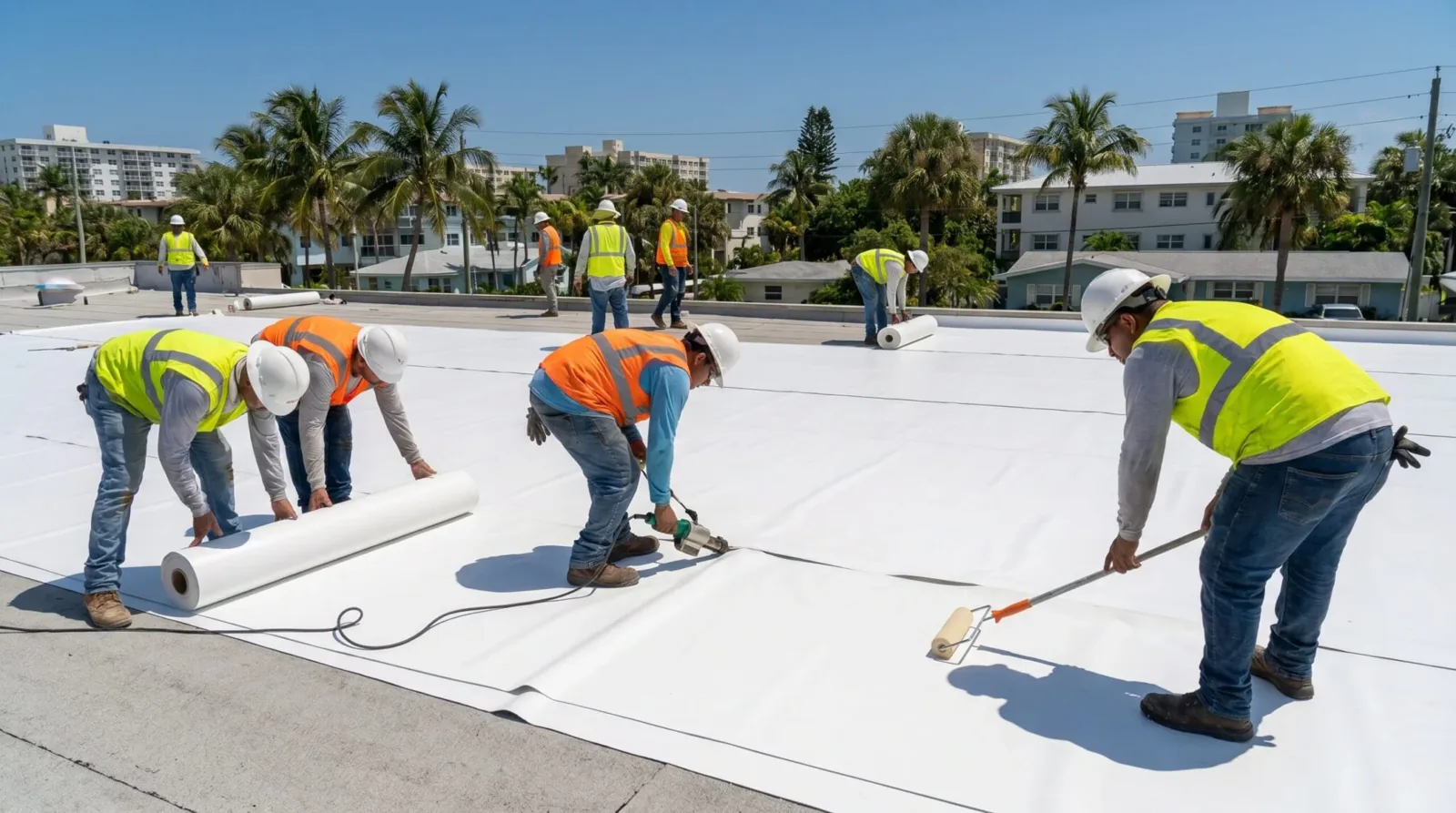
Commercial TPO Roofing in Murrieta, CA
Read the full description and the questions owners ask about it.
Learn More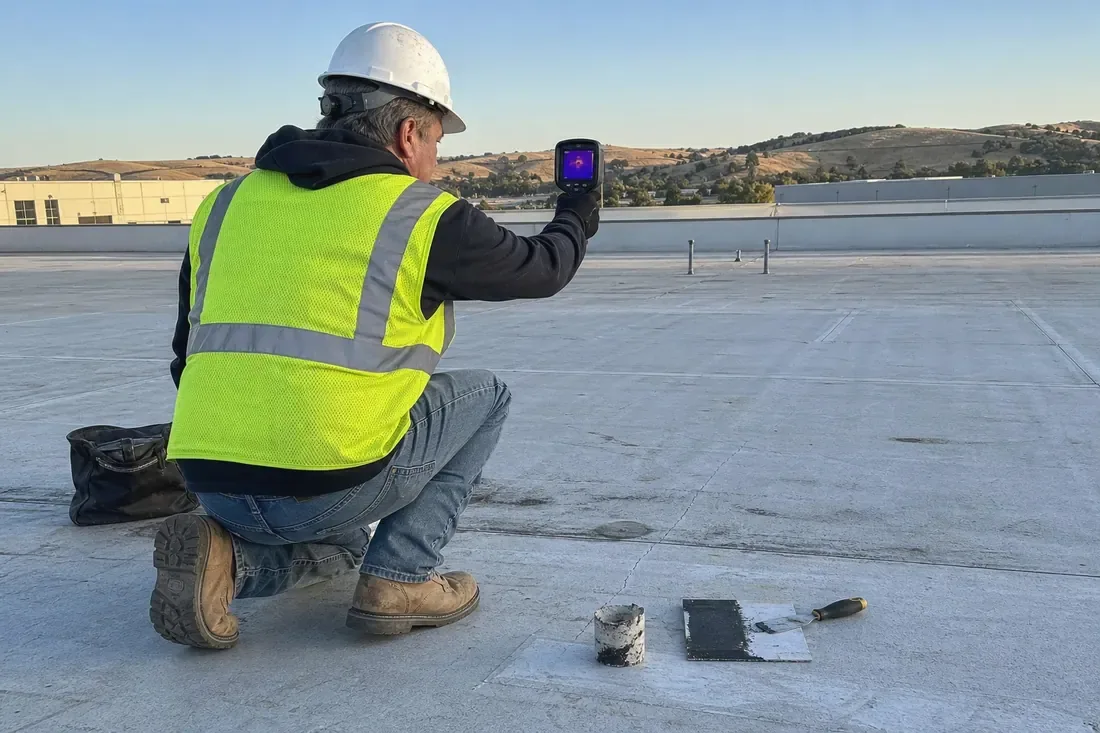
Commercial Roof Condition Reports in Murrieta, CA
See how this work fits the roof, the building and the schedule.
Learn More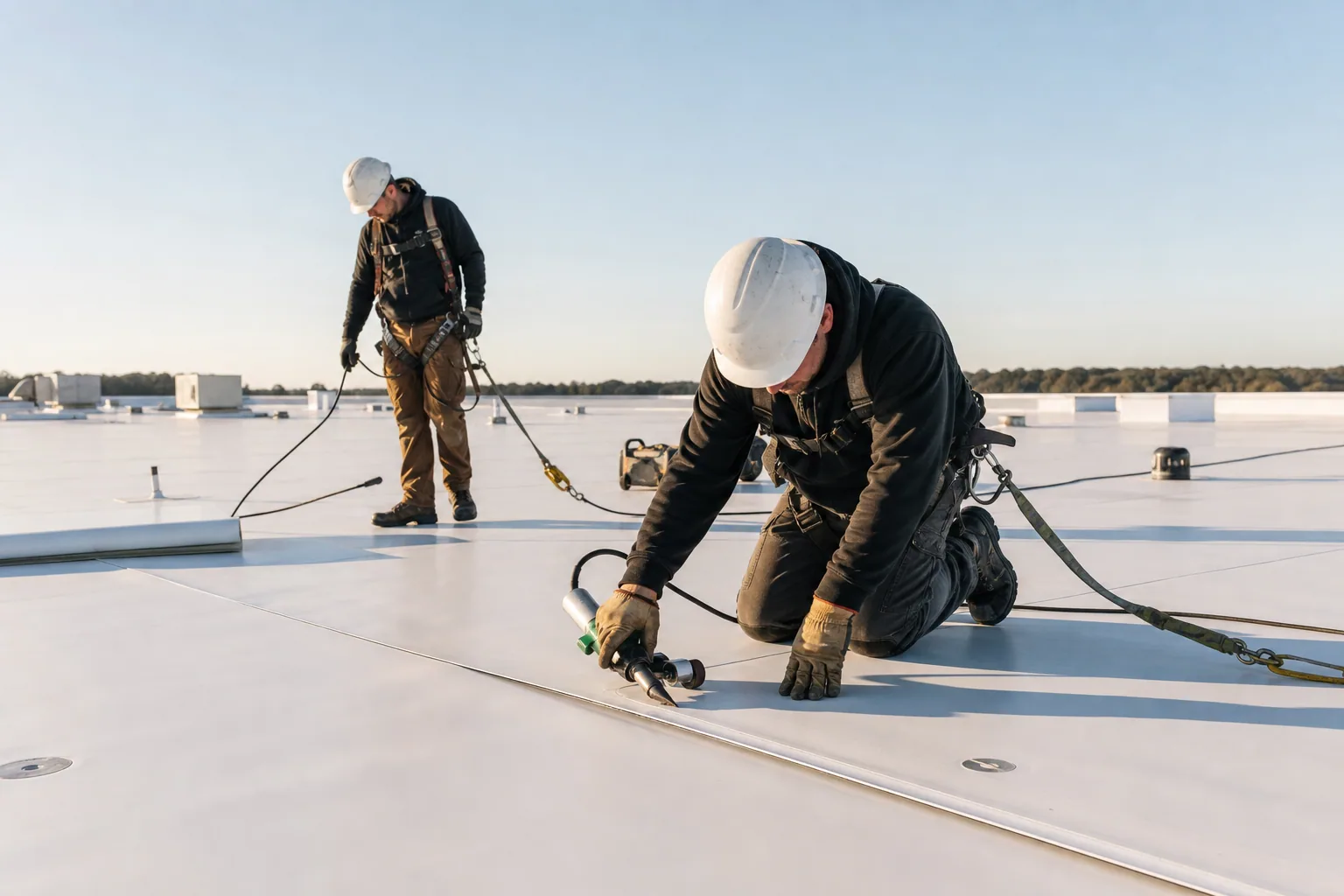
Commercial Roof Recover in Murrieta, CA
Related scope, access notes and questions to ask before work starts.
Learn More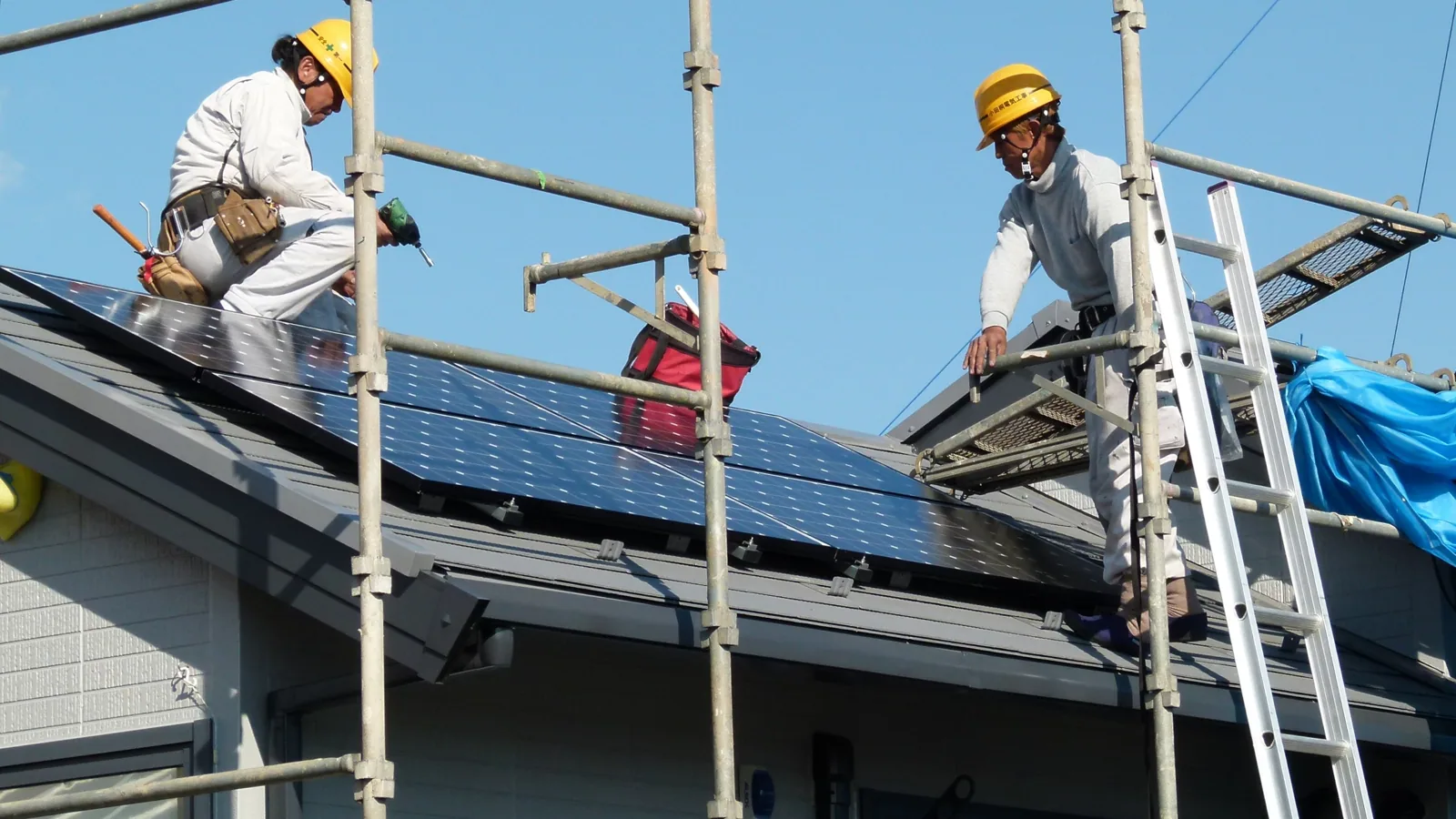
Occupied-Building Commercial Reroofing in Murrieta, CA
Read the full description and the questions owners ask about it.
Learn MoreConfirm Suspected Roof Moisture
Schedule an infrared roof survey in Murrieta with test locations and follow-up recommendations tied to your building’s roof assembly.