Commercial Fire Damage Roof Repair in Murrieta, CA
Commercial fire damage roof repair in Murrieta evaluates membrane, deck, insulation and smoke residue before defining dry-in, removal and replacement limits.
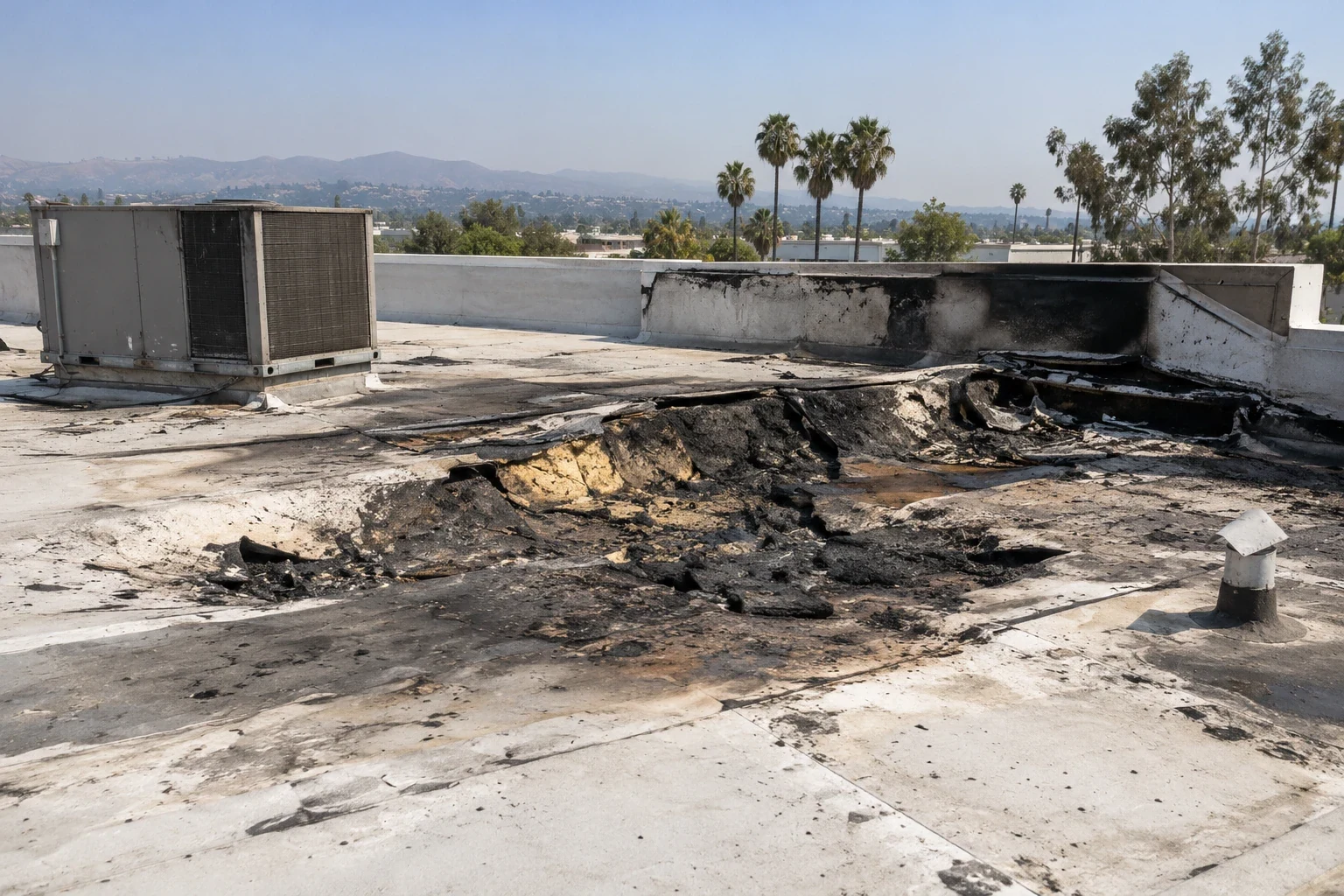
A fire may leave the roof visibly intact while heat has softened membrane, insulation or deck around a penetration. The first roof visit after fire suppression should identify the affected section and protect the occupied space below, not assume the damage ends at the char line. We inspect the roof surface, underside where accessible, flashing, rooftop units and the path water could take through openings. Murrieta’s existing business-park inventory exceeds two million square feet, but that citywide figure does not identify any individual roof assembly. Each building requires its own findings. Our damage-response service documents visible conditions, temporary dry-in needs and the repair boundary for ownership and facility staff.
Heat and Suppression Water: Map Separate Effects
Fire can affect a roof through direct flame, radiant heat, smoke residue, debris impact and water used to suppress the event. Those effects do not necessarily stop at the same point. We mark membrane blistering, changed surface texture, open seams, damaged curbs, displaced metal and areas where water may have entered. Inside, the facility contact can identify rooms, equipment or inventory that were wet, while our roof inspection records the assembly above them. That comparison helps distinguish a roof opening from condensation, plumbing or water that entered through another building component. We do not treat soot alone as proof that a membrane has lost strength. When evidence is unclear, selective removal can expose insulation and deck condition before the permanent scope is priced.
Assembly Review: Check What Remains Serviceable
Different roof systems respond differently to heat and cleanup. A thermoplastic sheet may shrink or lose a sound weld; EPDM can be cut by debris or damaged where hot material contacted it; modified bitumen can blister or separate at a lap. Coating systems need an inspection for loss of adhesion, softening and contamination before recoating is considered. We identify the installed surface, review available repair records and test the bond around the affected area. If the deck or insulation is exposed, we check whether it is dry, stable and ready for a new tie-in. A commercial roof inspection can document the observed condition; a claim documentation visit can organize photos and repair descriptions for the property file. The carrier determines coverage, while the roof assessment defines the work needed to restore the assembly.
Murrieta Permitting: Align Repair Scope and Review
Murrieta’s Ordinance 625-25 adopted the 2025 California Building Standards Code, including the California Building Code, effective January 1, 2026. New permit submittals filed from January 1, 2026 forward follow the newly adopted codes. After a fire, an owner may need a repair that restores a limited area or a larger rebuild that changes structural, insulation or drainage components. We describe the existing assembly, proposed work and affected boundaries so the project team can determine which submittals and reviews apply. The code date is a planning fact, not a conclusion about a particular permit. Properties near Interstate 15 and Interstate 215 may also have active deliveries and recovery trades on site, so access and debris staging should be coordinated before roof removal begins.
Dry-In and Rebuild: Sequence the Work
If an opening exposes the building, we first install temporary protection appropriate to the condition and secure the edge against water entry. Permanent work follows after the damaged material is removed, the substrate can be evaluated and the replacement layers are ready to close in. The scope may include deck repair, insulation replacement, a new membrane section, flashing reconstruction and tie-ins to retained material. We identify what can remain and what must be removed rather than pricing the entire roof from a single burn mark. A targeted repair can preserve a serviceable section; broader deterioration or discontinuous tie-ins may call for a replacement assessment. Where water from suppression is still present, a drainage and moisture check helps separate trapped water from heat damage. If the event damaged a curb or wall transition, a flashing review receives its own measured boundary.
Removal is sequenced to keep the opening protected while the repair boundary is exposed. We stage replacement materials before opening the assembly, protect drains from debris, and keep a temporary cover ready if the substrate reveals more damage than the initial inspection showed. On a working facility, we confirm where lifts, dumpsters and foot traffic can move without crossing customer or loading routes. When the repair extends into a second shift, the dry-in condition and secured perimeter are documented before the crew leaves. That sequence protects the building and gives the owner a clear point to review with the recovery team.
Closeout: Keep Roof and Recovery Records Together
The closeout should include dated photographs, a roof sketch, material removed, materials installed, temporary protection and any remaining access restriction. Keep those items with the fire-recovery file so an adjuster, facility manager and later contractor can see the repair limit. If cleanup crews or mechanical trades return to the roof, the repaired area should be identified before work resumes. A condition report can also place the affected section beside the balance of the assembly for future capital planning. Our service area includes Wildomar and Murrieta; the roof record stays tied to each property, not combined across a regional portfolio. The owner can then distinguish completed restoration from follow-up work and assign the next inspection to the exact roof section that changed.
Before final acceptance, we walk the repaired area with the property contact and review photographs against the marked roof sketch. We note any section not opened during the work, explain why it remains in place, and identify the condition that should trigger another inspection. If damaged HVAC components or cabling will be replaced later, we record the safe access route and the points that need protection. That gives the next trade a practical boundary and helps keep the roof work from being disturbed during the interior restoration.
Commercial Roofing Questions
Can a roof membrane be damaged without visible burn marks?
Yes. Radiant heat can affect a material beyond the point of direct flame, while suppression water may travel through seams or openings. We check the surface and its attachment, then compare roof observations with the interior report. Where the remaining bond cannot be confirmed from above, selective removal can show the layers beneath.
Should the roof be covered before the claim inspection?
Protecting an active opening is the immediate concern. We photograph the condition before work when it is safe to do so, install temporary dry-in and keep removed material or records available as the project requires. The property owner can coordinate the evidence with the adjuster while our scope describes the roofing work and repair boundary.
How do you separate fire damage from water damage?
We map each observation by location and compare roof conditions with the suppression-water path and interior reports. A heat-affected membrane may need replacement even where no water entered. Wet insulation may extend beyond visible fire damage. The repair plan separates those conditions so removal follows evidence rather than a single label.
Will a small affected area require a permit in Murrieta?
Permit requirements depend on the proposed work and the code review for the project. Murrieta states that new permit submittals beginning January 1, 2026 are subject to its adopted 2025 codes. We document the repair scope and materials so the owner and design team can confirm the applicable submittal path with the city.
What if smoke residue is on an otherwise intact roof?
We inspect the membrane, laps, drains and equipment details, then coordinate any cleaning with the roof-system requirements. Residue does not by itself establish a need to replace a sound assembly. If heat or suppression water affected the substrate, those findings are recorded separately and evaluated before the roof is returned to service.
Related Roofing Work
Storm Damage Roof Repair in Murrieta, CA
See how this work fits the roof, the building and the schedule.
Learn More
Commercial Roof Inspection in Murrieta, CA
Related scope, access notes and questions to ask before work starts.
Learn More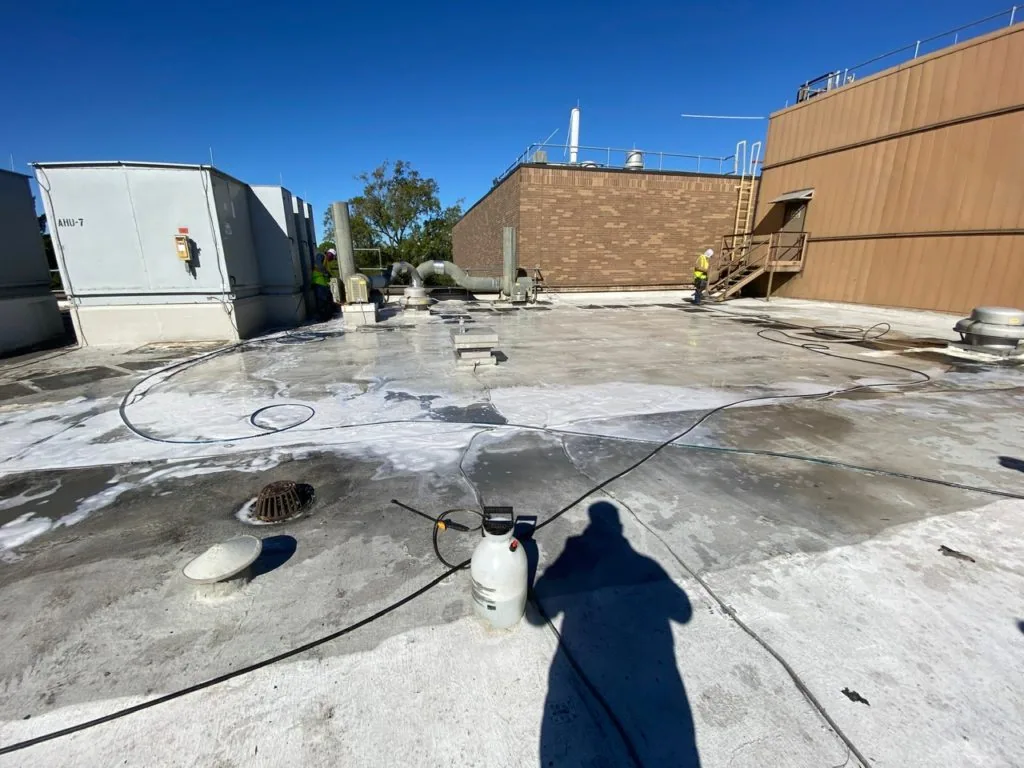
Roof Insurance Claim Assistance in Murrieta, CA
Read the full description and the questions owners ask about it.
Learn More
Commercial Roof Repair in Murrieta, CA
See how this work fits the roof, the building and the schedule.
Learn More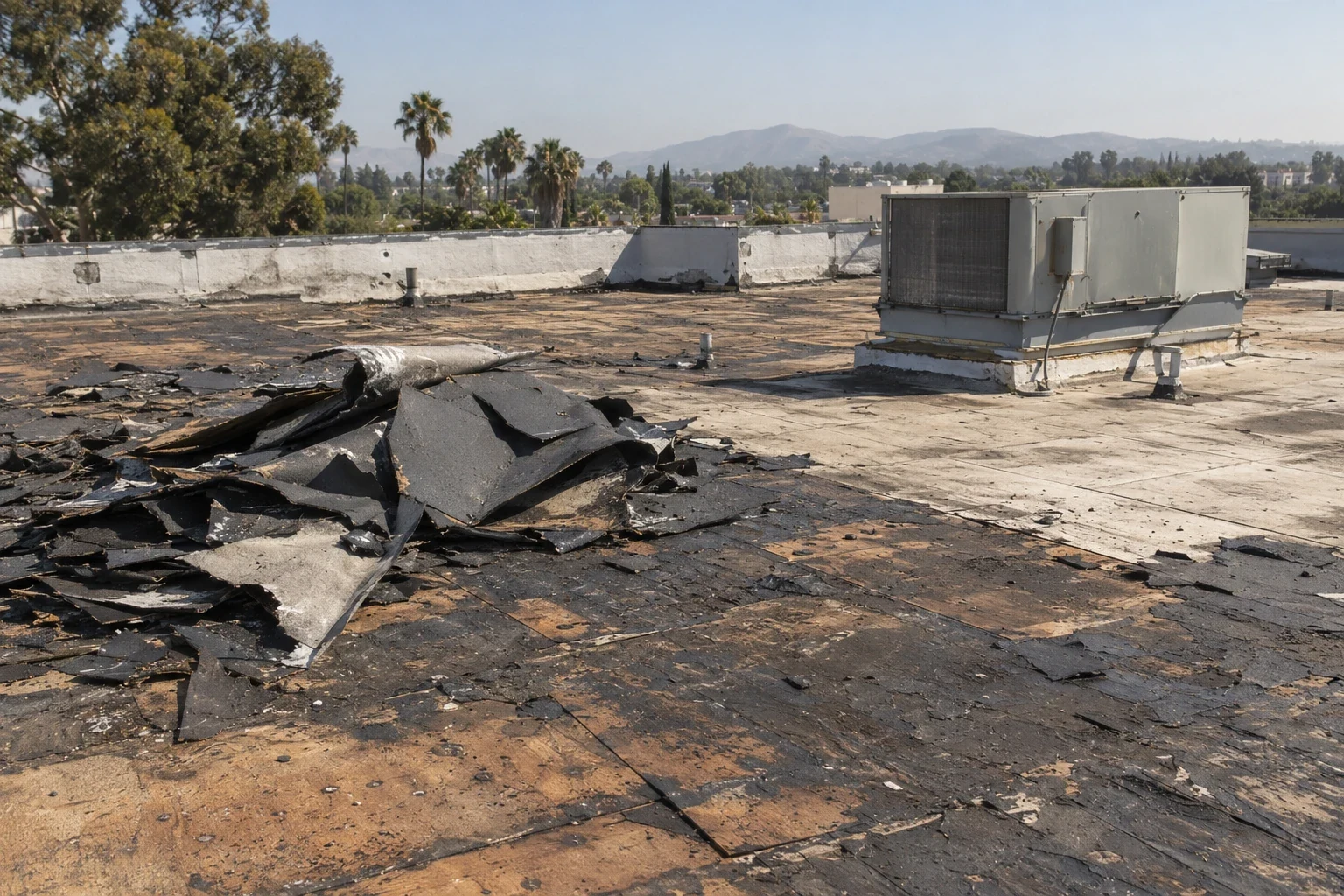
Commercial Roof Replacement in Murrieta, CA
Related scope, access notes and questions to ask before work starts.
Learn More
Commercial Ponding Water Roof Repair in Murrieta, CA
Read the full description and the questions owners ask about it.
Learn MoreDocument the roof before rebuilding
Schedule a post-fire roof inspection to map affected material, protect exposed areas and define the permanent repair. We will provide a written scope and photographs for the building file.